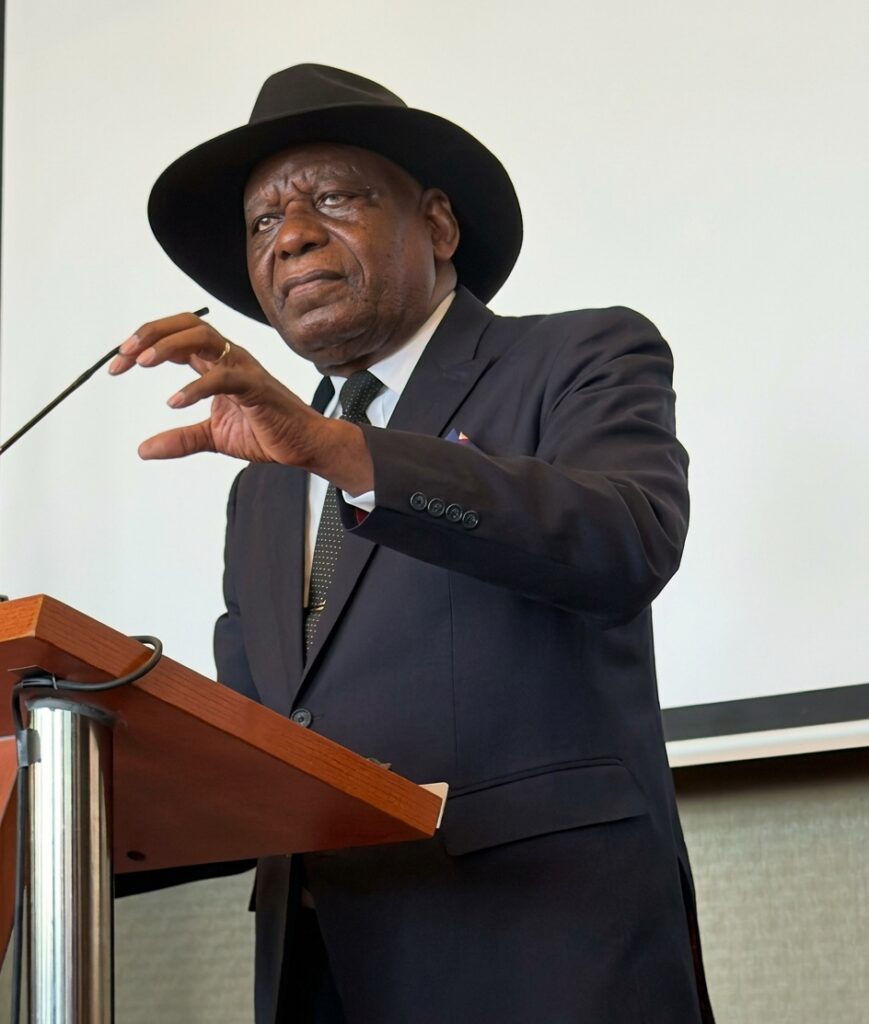
Avani Hotel, Windhoek, on 7 October 2026.
Special remarks by Lt Gen (Rtd) Epaphras Denga Ndaitwah, First Gentleman of the Republic of Namibia, at the Male Engagement Symposium on “Coordinating Namibia’s Work with Men and Boys for Gender Equality and Wellbeing in Namibia”.
Programme Director,
Honourable Dr Emma Kantema, Minister of Gender Equality and Child Welfare,
Mrs Monica Geingos, Third First Lady of Namibia and Executive Chairperson of the One Economy Foundation,
H.E. Ana Beatriz, the European Union Ambassador to Namibia,
Ms Diene Keita, Executive Director of the United Nations Population Fund (UNFPA),
Distinguished guests,
Boys and men,
Ladies and gentlemen,
I am extremely delighted to stand here today at this significant symposium, a gathering devoted to the boys, men and fathers of our nation, and to the families and communities they belong to.
Allow me to commend the UNFPA and other partner organisations that saw this cause as worthy and chose to drive it with me. Your trust and commitment mean a great deal.
Ladies and gentlemen,
Allow me to commend the Honourable Minister of Gender Equality and Child Welfare and her team for the Third National Gender Equality and Equity Policy 2025–2035 and the Ministry’s Strategic Plan 2025–2030. This policy sets out a vision that, among other things, clearly states: “A gender-just society where men, women, boys, and girls enjoy equal rights and live freely with dignity.”
The policy further recognises that in higher education, “male students are lagging, and there is, therefore, a need to develop affirmative action measures to address this gender imbalance.” The policy therefore calls on us to empower boys to share responsibility for the protection and upliftment of girls.
Honourable Minister, you said it well in August when you declared that the development, protection and empowerment of the boy child are not being ignored and are receiving attention. Today, we are here to turn that attention into coordinated action.
Ladies and gentlemen,
Today, I want to talk about the “Power of Coordination and Collaboration” and how best we can get it right to achieve lasting results. The power of coordination in male engagement programmes lies in its ability to transform uncoordinated, isolated efforts into unified, gender-transformative interventions. Historically, engaging men and boys has suffered from systemic duplication, fragmented messaging and structural inefficiencies. It must be underscored that effective cross-sectoral coordination will unlock scalable, sustainable and culturally resonant behavioural change.
Ladies and gentlemen,
From the foregoing, I must inform you that I launched the DEN Impact Foundation on 18 August 2026. The launch of the Foundation was prompted by the realisation of the “Boy Child Crisis” in Namibia and globally. This includes the realisation that the growing social, educational and psychological neglect of boys and young men for more than three decades, if left unaddressed, will weaken the very fabric of our society, affecting boys and girls alike.
Another worrying trend worth noting is the crisis of male mental health and a deep-seated culture of silence that drives disproportionately high rates of suicide among boys and men.
These observations shaped the aspirations of the DEN Impact Foundation: the deliberate and intentional empowerment of the boy child through sport, agriculture, technical training, skills development and character building, pursued in a way that strengthens, rather than competes with, the important gains our nation has made for the girl child.
The good news is that Namibia is not starting from zero. Our non-governmental organisations, faith-based organisations, community groups and traditional leaders are doing remarkable work with boys and men. To each of you, you deserve a big thank you. You kept this flame alive long before it became a national conversation.
Notably, Government, too, has moved this agenda forward, hence we are talking about a policy and strategic plan. The excellent work already underway aims to produce tangible national results that deserve recognition.
We are only at the starting point, as a long journey lies ahead. To achieve our ultimate goal, we must be bold and proactive in reaching the boys who are hardest to reach. We must ensure that no child is left behind on this empowerment journey.
My strongest plea today is to all boys and men in this room, and those online: let us stand together to turn the plight facing our boys and men into opportunities for change. Let this become a tangible success story felt in every family, every school, every church and every community in Namibia.
Through coordinated and structured efforts, Namibia made progress in addressing the HIV pandemic. We can do the same when we coordinate and work together in the drive to empower the boy child.
To all implementers,
Boys and girls are equal in dignity, but not the same in their needs. A programme designed for girls cannot simply be renamed and handed to boys. Let us therefore create programmes that respond to the unique needs of boys.
As boys and men, the success of this dream must rest squarely in your hands. You must be the drivers of this agenda.
Let us all leave this symposium not only with good ideas, but with commitments that will lead to action. Let us leave as one movement, with one voice and one coordinated national effort for the boys and men of Namibia.
I thank you.