
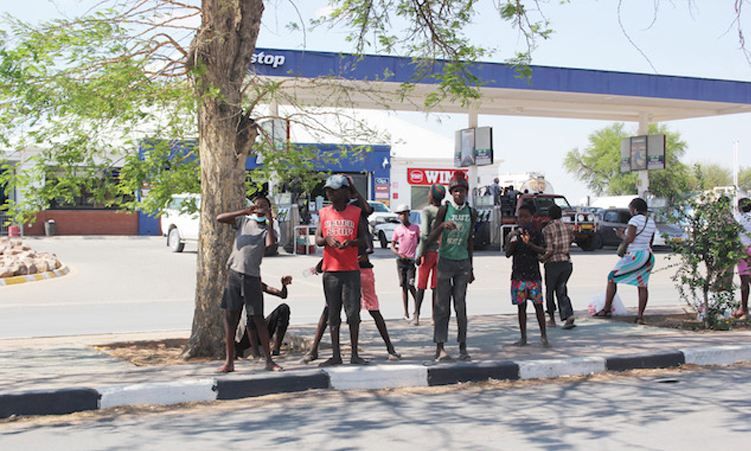
The number of Namibian children receiving support for living and working on the street has declined by more than 40% over the past decade.
These findings are contained in the government’s Child Care and Protection Statistics Report (2014-2023).
The Ministry of Gender Equality and Child Welfare attributes the decline to improved reintegration into families, schools and communities.
The report indicates that the number of children covered by the programme fell from 857 in 2014 to 485 in 2023, although the figures fluctuated over the reporting period.
The report, launched in Windhoek on 22 July, shows the ministry assisted 6 543 children through the programme between 2014 and 2023. Of these, 1 792 interventions resulted in family reintegration.
The Ohangwena region recorded the highest number of children assisted between 2014 and 2023 with 797 cases, followed by the Oshikoto (753) and Hardap (751) regions.
“We must know where children are most at risk, what forms of harm they face, which services they are accessing, and where the gaps remain,” minister of gender equality and child welfare Emma Kantema says.
She says the integration programme seeks to strengthen children’s social well-being by equipping them with life skills while reintegrating them into families, schools and communities.
Ministry spokesperson Lukas Haufiku says the decline should be viewed as evidence of progress in reintegration rather than an indication that vulnerable children no longer require support.
“This is an encouraging indication of the ministry’s sustained efforts to identify vulnerable children early, provide psychosocial support, reunite them with families and facilitate their return to school and community life,” he says.
He says although the number of children assisted increased to 692 in 2022 before dropping again in 2023, the ministry had supported 6 543 children through the programme over the 10-year period.
Of these cases, Haufiku says 1 792 interventions involved family reintegration, while rehabilitation programmes continue to demonstrate encouraging results despite ongoing challenges.
As part of these efforts, the ministry, in partnership with the National Youth Council, earlier this year conducted a five-week pilot rehabilitation programme for children living and working on the streets at Henties Bay.
The programme enrolled 81 children, of whom 75 completed the rehabilitation programme.
Haufiku says participants showed improvements in personal hygiene, discipline, self-esteem, teamwork, conflict resolution and hope for the future. He says reintegration remains an ongoing process requiring continuous family support, education, supervision and follow-up.
Responding to questions about the increasing visibility of foreign children, particularly Angolan children, on Namibia’s streets, Haufiku says the ministry does not classify street children according to nationality.
“The ministry assists every child identified as needing care and protection, regardless of nationality. Each child is assessed individually, and the appropriate authorities are involved where documentation, family tracing or cross-border matters must be addressed,” he says.
Haufiku says the ministry continues implementing interventions that include rehabilitation and life-skills training, psychosocial counselling, substance-use management, medical care, family reintegration, school placement, temporary residential care and continued monitoring by social workers.
He says the interventions are implemented in partnership with the National Youth Service, the ministries of education and health, the police, local authorities and community organisations.