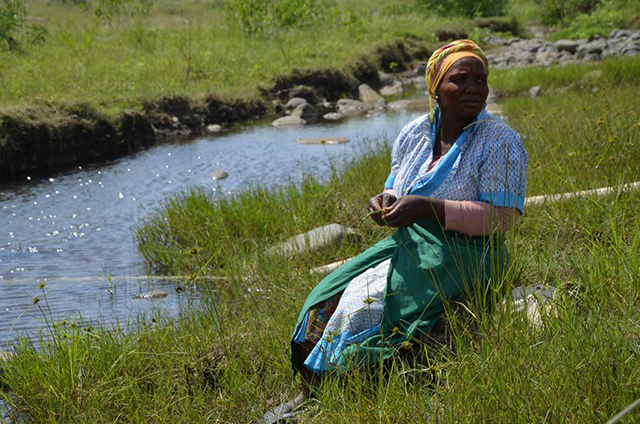
KWAMUSI – At the height of the 2015 drought that parched South Africa’s eastern KwaZulu-Natal province, Julie Mkhize had to pull carcasses of dead cows from the dry riverbed near her village, after the desperate animals perished seeking water.
Soon people in her community were collapsing as well from dehydration, with 10 dying from drought-related illnesses as drinking water ran short, Mkhize said.
In the years since, the village has seen water flows recover. But this year they are beginning to shrink again, producing deep-seated fear in KwaMusi, a village of 4 000 people, more than two hours’ drive north-west of Richard’s Bay.
“Cows, donkeys, goats, children, farmers and families are all competing for the same water,” said Mkhize (63) a small-scale vegetable farmer, sitting in the shade of a community produce-packing shelter. “We live in fear of the drought, every day.”
Around the world, stronger El Niño weather patterns and climate change are bringing harsher and more frequent droughts – and already-dry southern Africa has been particularly hard hit.
Water shortages have killed crops, forced farmers to migrate to look for work, hobbled the hydropower dams much of the region depends on for electricity, and threatened the region’s rich wildlife as water-holes disappear.
In 2017, South Africa’s Cape Town made headlines as its mayor launched a countdown to a feared “Day Zero” when taps were expected to run dry – a crisis averted only by the city making an aggressive push to conserve water.
But much of the water-scarce country still suffers from poor water management, according to South Africa’s Institute for Security Studies.
Scientists predict that as temperatures continue to rise with global warming and populations keep on growing, the region will see harsher water shortages – and will need to find clever solutions to ensure there is enough water for all.
With supplies scarce, fights over water are on the rise globally, with water think tank, the Pacific Institute recording a surge in the number of related conflicts from about 16 in the 1990s to about 73 in just the past five years.
DRIP BY DRIP
In KwaMusi, a drip irrigation system – funded by the Siyazisiza Trust, a non-profit food security group – means Mkhize’s vegetable cooperative, the Siza Bantu Nazareth Garden, can now grow and sell crops even through dry periods.
Slim hoses woven through the garden allow river water to slowly drip into plants, minimising losses to evaporation.
Since 2012, KwaZulu-Natal has suffered below-average rainfall, said Phatisa Mfuyo, a spokeswoman at the province’s Department of Agriculture, Environment and Rural Development.
But KwaMusi’s hoses have cut the water needed for irrigation and helped the 18 members of the cooperative maintain a steady income of at least N$200 per person per day.
That’s a huge improvement from 2015, when “we ate mostly cabbage”, remembered Lucas Thungo, the only male member.
“We couldn’t even eat our staple food of pap (maize porridge) because it required using too much water.”
KwaZulu-Natal’s periodic water shortages have sometimes been called a “green drought” because sporadic rains still bring new plant growth.
But the province’s rivers – the bigger source of water – are fast being used up, according to a report by the Institute for Security Studies.
“I know it looks beautiful now, but wait until the drought,” Thungo said. “Then all you see are rocks and dust. Everything becomes ugly. Even the relationships between different communities change for the worse.”
‘THE NEXT WAR’
About 120km south of KwaMusi lies the village of Nxamalala, just a few kilometres from the controversial US$17 million homestead of disgraced former president Jacob Zuma, accused of using taxpayer funds to pay for the compound.
Residents in Nxamalala say drier conditions are provoking a growing “water war” between adjoining communities.
“Sometimes if you go to a nearby water source, other communities are standing guard at the water. They will beat you if you come near it,” said Talent Zuma (31), who is not related to the former president.
“People say the next war will be over water, but here it feels like it has already begun.”
During the 2015 drought, more than 1 000 chickens raised by Zuma’s farm cooperative died.
Community members also remember how the 2015 drought brought itchy skin, fainting spells and, for some, kidney failure and cholera.
In many rural villages, limited access to water has resulted in near-daily negotiations about how the little available should be shared and used, and how more might be acquired.
In the drought-parched village of Vuna, talks have led to water being trucked in, bath-water being shared – and plenty of thirsty animals.