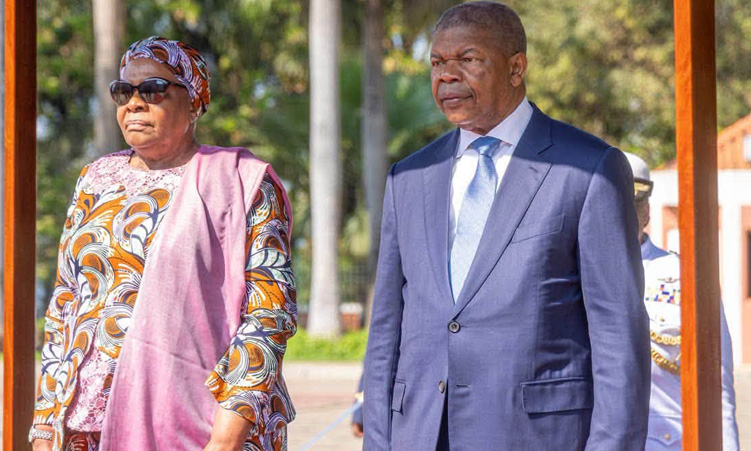






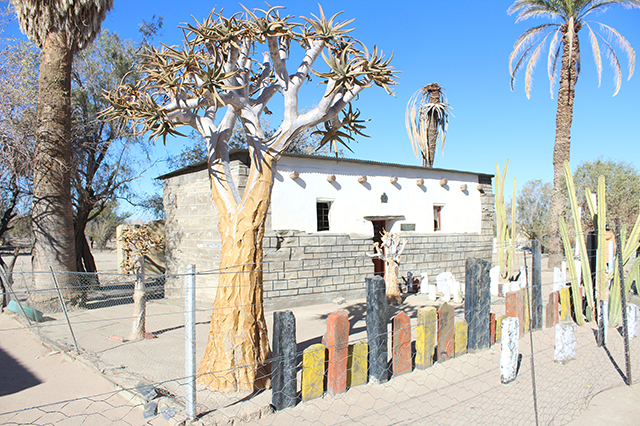
The southern regions of Namibia often seem left out and forgotten in terms of national development and the upliftment of these communities.
Sanlam Namibia targeted the Hardap and //Karas regions this year to shed light on the Nama people, who make up the largest cultural group in the area. Five days, two regions and historically rich southern towns were on the programme and YouthPaper was delighted to tag along.
Mariental
Growing up, Mariental was our halfway point where we would stock up on padkos, petrol and energy when travelling from the capital down south. And for many others, this town serves the same purpose. However, there’s more to Mariental than meets the eye. Situated near Hardap Dam, the largest reservoir in the country, the town is the administrative capital of the region and has been home to the Nama people for many years. The town was founded in 1912 and served as railway stop between Windhoek and Keetmanshoop. It was named after Maria, wife of the first colonial settler in the area, Hermann Brandt, by Rhenish missionaries. It was proclaimed a town in 1920 and a municipality in 1946.
Gibeon
A short drive south from Mariental is the quaint village of Gibeon. Like most southern settlements, the dusty streets of the town welcome visitors to the friendly people of Gibeon. Home to the Witbooi (/Khowesin) clan, Gibeon is rich in historical sites including colonial buildings, churches and the home and heritage site of kaptein Hendrick Witbooi (!Nanseb gaib /Gâbemab).
Gibeon, originally known by the name Khaxa-tsûs, received its name from Kido Witbooi, the first kaptein of the /Khowesin – a sub-tribe of the Orlam. He arrived with his followers in about 1850, shortly after a Rhenish mission station was established there.
“During the interactions with the Germans by kaptein !Nanseb, they demolished the old church building of !Nanseb. After that, when the peace process came, they built the current church building that is there,” says Salomon Josephat Witbooi, a descendant of the Witbooi clan, while describing the town’s historical sites. Witbooi explains that kaptein !Nanseb set up places of worship wherever he travelled. Gibeon is certainly a pleasant surprise as the people are friendly, the guesthouses are delightful and the history is well worth exploring.
Keetmanshoop
Often described as the capital of the south, Keetmanshoop is a bigger town with a more modern and technologically advanced lifestyle compared to others in the area.
Before colonial times, the settlement was occupied by the Kharo!oan clan, who broke away from the largest sub-tribe of the Nama, the Rooinasie or Red Nation clan. The settlement was first known as #Nu-#Goaes or Swartmodder, which both mean ‘black marsh’ and hinted at the presence of a spring nearby.
The first white settler Guilliam Visagie arrived here in 1785 while in 1860, the Rhenish Missionary Society founded a mission there with first missionary Johann Georg Schröder arriving on 14 April 1866 – the date now marked as the founding of Keetmanshoop.
The mission station was named after the German trader and director of the Rhenish Missionary Society Johann Keetman, who supported the mission financially, although he never visited the town himself.
Bethanie
Also going by the names Klipfontein or |Ui‡gandes, Bethanie is a village between Keetmanshoop and Lüderitz and is the home of true southern hospitality. Welcomed to a bohemian home and guest house, Bethanie captured my heart with its friendly inhabitants.
The surrounding areas originally belonged to the Rooinasie until the Bethanie Orlam obtained rights to settle there in the 18th century.
One of the most famous sites in the town is probably Schmelenhaus, home of reverend Heinrich Schmelen who arrived in 1814 as a missionary of the Kai/khauan (Khauas Nama) and their leader Amraal Lambert. It was long regarded as the oldest building in Namibia until it was later discovered that the church and the pastor’s house in Warmbad, both destroyed in 1811, were older, and that the fortification of //Khauxa!nas predates all European constructions.
The chairman of the !Aman Traditional Authority, councillor Johannes Swarts says Bethanie is a unique and cherished village. “You find the two-tower church, the Schmelenhaus and the fountain,” he says, citing the heritage sites.
“Bethanie is a place we received from our forefathers and the original Nama name is Ui–≠gandes. There was water under a rock, and our ancestors found the water, and that’s where the name came from,” Swarts says. The councillor mentions that the town had a strong Christian foundation, however, with time, this started to change – a development he wants reversed.
Lüderitz
We all know the saying: Die bucht maak moeg. Arriving at our last stop in the south, that saying is certainly true.
Lüderitz’s history is tainted with the marks of the Nama/Herero genocide at the hands of the Germans, however, there are several other elements the town should be celebrated for. Like Swakopmund, the harbour town is known for its German colonial architecture with art nouveau finishes in the vintage homes, and vast wildlife including seals, penguins, flamingos and ostriches.
The bay on which Lüderitz is situated was first known to Europeans when Bartolomeu Dias encountered it in 1487, and named the place Angra Pequena.
The town was ‘founded’ in 1883 when Heinrich Vogelsang purchased Angra Pequena and some of the surrounding land on behalf of Adolf Lüderitz, a Hanseat from Bremen, Germany, from the local Nama chief Josef Frederiks II at Bethanie. When Lüderitz did not return from an expedition to the Orange River in 1886, Angra Pequena was named Lüderitzbucht in his honour. Deputy mayor of Lüderitz Brigitte Fredericks says culture is an important and integral part of life and thanked Sanlam Namibia for not forgetting about the south.
“Lüderitz is the place where the Hereros and Germans were fighting for land. Our people died for this piece of land,” she says. “Our town is also known for mining and fishing. Lüderitz is really a ‘wow’ town, I don’t know why people don’t see that.”
The south, although often arid, is home to the some of the most beautiful architecture, friendliest people and the most delicious geel tee that will ever touch your lips, and should be honoured as much as the rest of the country.