




As the Namibian Police report 4 405 cases of gender-based violence (GBV), 1 345 of them the crime of rape, a photographic exhibition from the past finds relevance in the present.
Initiated by Ombetja Yehinga Organisation (OYO) director Philippe Talavera and first exhibited in 2005, ‘The Caring Namibian Man’ returns to the Franco-Namibian Cultural Centre (FNCC) until 11 July.
“Back in the day, gender-based violence (GBV) was already a problem in Namibia. And the problem is that men are always described as the perpetrator, the rapist, the murderer. There is a risk that it becomes the norm – that masculinity becomes associated with those traits. But what about the good men, the caring men?” says Talavera.
“Those do not make headlines. They do not make the news. We never talk about them. We, therefore, asked teenagers in various regions of Namibia to capture images of positive male role models in their communities, and the first exhibition was presented in 2005.”
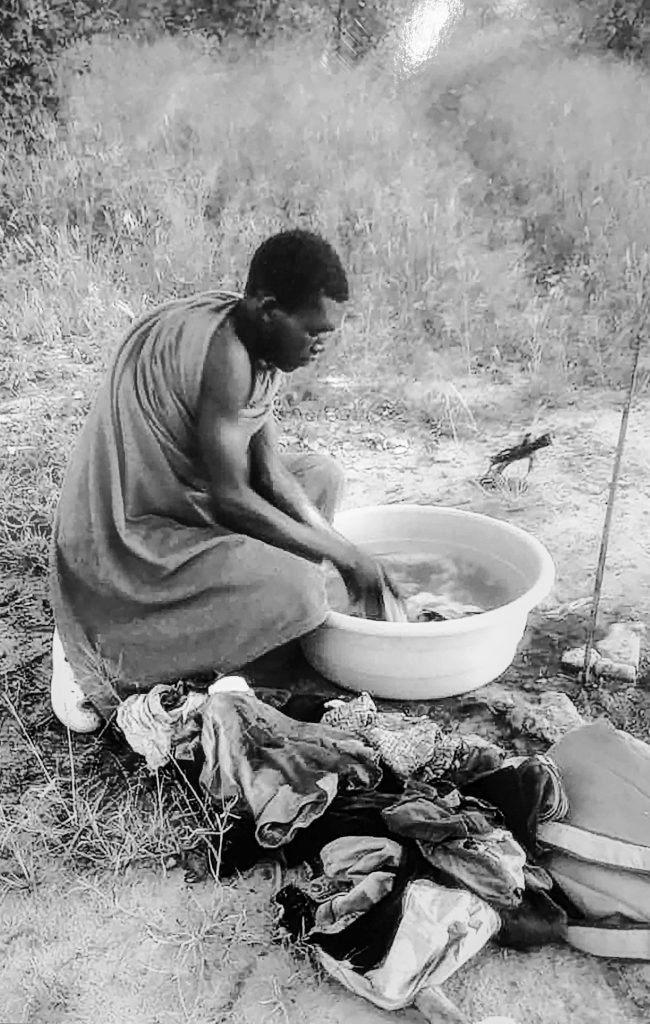
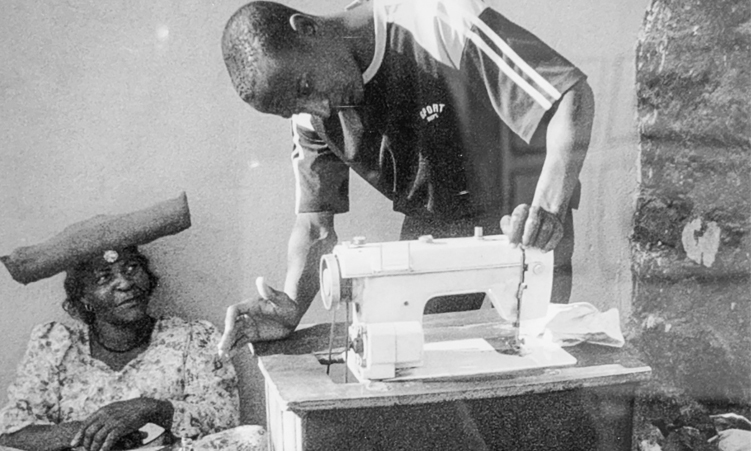
Some of the photos captured in 2005 are currently on display at the FNCC. They depict images of men feeding children, grocery shopping, embracing their loved ones, cooking pap, pounding mahangu, doing women’s hair, bathing and tending to children, carrying little ones on their back, gently teaching, helping with homework and handing out sanitary products amid much more.
“We used those photos extensively in schools between 2006 and 2009. Fast forward, post-Covid, we realised that we need to have similar discourse. We need to talk about positive masculinity again,” says Talavera.
In 2022, a second iteration of the project engaged pupils at schools in the Omusati and Ohangwena regions. While photos were shot on disposable cameras in 2005, almost 20 years later, schools shared one digital camera and could also submit images taken on their cellphones.
This year marks 20 years since the first project and, to celebrate this milestone, the FNCC invited OYO to exhibit a retrospective. The current exhibition is a selection of photos taken in 2005 and in 2022.
Photographing a security guard watching over an IK Tjimuhiva Combined School gate in 2022, young Veisaneua Kavari shows appreciation through photography.
“I took this picture because this particular tate is polite to all learners,” Kavari writes in a caption. “Whenever pupils want to go out, he asks them for the reason and makes sure the teachers know about it while other securities are just sitting and don’t even mind when you open the gate to go out.”
Viewed in the wake of the murder of Roswinds Fabianu (6) who was initially reported missing from school at Okahandja in April of this year, Kavari’s image speaks to the ongoing issue of security at schools and celebrates those who actively safeguard the nation’s children.
“2025 has been a difficult year. From the case of the 18-year-old at Usakos who murdered his family and then burnt the house in March to the dramatic murders at Okahandja in April and the case of the 18-year-old at Keetmanshoop who raped three girls in May, GBV has again been on everybody’s minds,” says Talavera.
“The exhibition was opened by Epaphras Ndaitwah, first gentleman of Namibia, who started his speech by asking: Are there any caring Namibian men in Namibia? Is Namibia as peaceful a country as people often describe it?”
As rates of sexual and GBV and violent crime escalate across the country, Ndaitwah’s question is one that Namibians should reflect upon deeply with a view towards turning back the tide.
“I hope there are more caring Namibian men than rapists and abusers in Namibia. Because they never make the news, it can give the feeling that they are few. But when teenagers went to their communities, they did find examples of such men,” says Talavera.
“In schools, we use the exhibition to address gender stereotypes and perceptions around masculinity and femininity. But ultimately, we also ask teenagers what type of man do you want to become? Do you want to be a rapist or a man abusing his partner, or do you want to be the one caring for his children and loved ones?” Talavera says.
“If we normalise positive masculinity, it is my hope we can change the narrative,” he says. “It would be terribly sad if, come 2045, we still need ‘A Caring Namibian Man’ photo project in Namibia.”
– martha@namibian.com.na; Martha Mukaiwa on Twitter and Instagram; marthamukaiwa.com