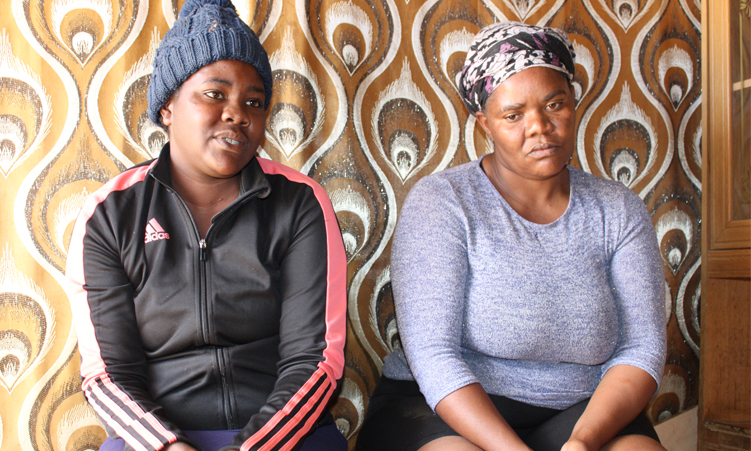
Two former sex workers in Windhoek say they have been left traumatised after one of their colleagues recently died of AIDS.
They are done with sex work, they say.
“She introduced us to sex work, and watching her die from the disease has been the most traumatising and alarming thing ever,” says John-Lisa van Wyk (34), who has two children.
The name of her deceased colleague, who died at 40 as the single mother of one child, cannot be revealed to protect her family.
Van Wyk and Laimi Emvula (28), who also has two children, both live at Havana informal settlement in Windhoek.
They have been friends for years, and entered the world of sex work after being faced with desperate circumstances. Their friend and colleague died of an AIDS-related illness a few months ago.
Van Wyk says her hair and clothes were always impeccable, and she had a phone they wished they owned.
Both Van Wyk and Emvula are currently unemployed.
“We looked up to her because she made more money and would travel to Oshikango and Angola for regular clients,” Van Wyk says.
HIGH PRICE
But upon her death, they had to face the stark reality of their own lives, the dangers involved, and the toll their choices had taken on them.
“Being in the game for so long, I came up with ways of getting more clients, and that is by visiting different clubs and standing on the side of the road in town.
“Losing my friend was very scary, yet awakening. I have an 18-year-old daughter, and I would never want her to experience all that I have encountered in life,” Van Wyk says.
She says the most she has made from sex work at a time was N$700, and the least was N$100.
“I would set my prices according to what the clients look like, so if he looked capable he would pay a high price, and if not, then I would charge just N$100 or N$200,” she says.
Van Wyk says the money she made from sex work also bought her baby milk, and her younger siblings food.
She says the worst experience she has had was when a client refused to pay her for her services.
“Sometimes they will not pay you, and that is very sad, because we do this to help our families at home and to put food on the table,” she says. Emvula, who has been selling her body since she was 17 years old, says she would never wish this kind of lifestyle upon anyone.
“There were times that I would quit, but when things got hard, I would go back and make fast money to take care of my son.
“I had to give my other child to another family to take care of. I now live with my one son.
“But I have realised as I am getting older I should consider the example I am setting for my children. It’s about time I get a decent job and start taking care of my children,” Emvula says.
She says being a sex worker requires you to be very strong – both physically and emotionally.
This has made her depressed, she says.
“I remember this one time I had a client at Ludwigsdorf. That man physically abused me when I demanded my payment.
“He refused to give me a penny after I slept with him, and what made it worse was that I didn’t even have taxi money to get back home,” she says.
REALITY
Jeremiah Katoore, a member of the Havana Community Development Committee, says he is proud of the two women quitting sex work.
“Their story is so sad. I am proud to hear they are willing to find proper work to take care of their families,” he says.
Rosa Namises, a social activist and the director of Women’s Solidarity Namibia, says turning to prostitution due to unemployment is a reality for a lot of women in Namibia.
“This is normally the fate of younger women in our country – especially when they do not complete their education. They end up falling pregnant early after being introduced to early sexual encounters and sometimes even sexual abuse,” she says.
Namises says when individuals, specifically young women, are trying to rehabilitate from addictions, driving them to sex work, there is no readily available support for them in Namibia.
“It is so sad. We have no rehabilitation centres for men and women who would want to overcome the addictions the social system has forced them into,” she says.
Namises encourages women in the two sex workers’ position to try and find their own ways of strengthening themselves economically.
She says the community centres at Katutura offer programmes that teach people skills like making soap and gardening, which could eventually put food on the table.
‘YOUTH HAS LOST HOPE’
Landless People’s Movement (LPM) youth leader Dominga Ndala says Namibia is currently in a sad economic state.
“Young people are embroiled in poverty due to the high unemployment rate, a lack of opportunities, and a lack of access to finance. They have lost hope and confidence in the incumbent government and resort to sex work as a result,” she says.
Ndala says the LPM has been engaging youth institutions and local authorities to implement psychosocial support programmes for young people.
“The unemployment rate in the country has skyrocketed. At least eight out of 10 young people are unemployed. If not dealt with properly this could cause public uproar and youth revolt,” she says.
Popular Democratic Movement (PDM) parliamentarian Inna Hengari says sex workers sell sexual services to earn a living.
“The vast majority of sex workers choose sex work because it is the best option they have at making a living.
“Many sex workers struggle with poverty and destitution and have few other options for employment,” she says.
Hengari says Namibia needs to declare war on poverty and provide the necessary arsenal to uplift those who live below the poverty line.
PATRIARCHY LEADS TO JUDGEMENT
Windhoek-based psychologist Shaun Whittaker says losing a loved one leads to a period of bereavement and grief, and this sense of loss may last long.
“There is a tremendous stigma around sex work, and in the patriarchal society we live, we tend to judge women much more then men, which is very unfair towards woman, because there are two people involved in the transaction,” he says.
Whittaker says sex work is dehumanising, and women do not want to do it, but is often driven by desperation due to unemployment.
He says sex should not be a commercial transaction, and people should have the right to bodily autonomy.