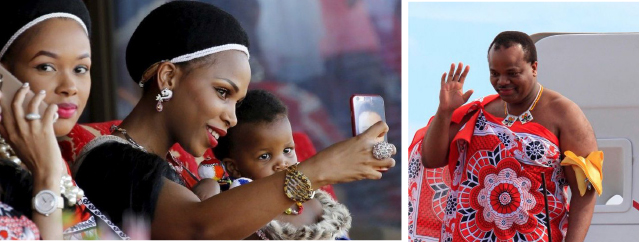
King Mswati III, the absolute monarch of Eswatini, has changed that.
His vast business interests first raised eyebrows and set tongues wagging in 2004 when he acquired 10% shares at mobile telecommunications service provider MTN Swaziland.
The availability of the MTN shares in the market had not been advertised.
The Swaziland Post and Telecommunications Corporation, a public enterprise, had handed over its shares at MTN to the king on a silver platter. By giving the king 10%, the SPTC share was reduced to 41%.
By acquiring the shares, it was argued, the king had boldly and loudly announced his first move into business.
In 2009, Forbes Magazine listed King Mswati III as one of the 15 richest royals, worth about US$200 million.
In November 2018, he bought a fleet of about 12 Rolls Royces for himself and the royal family.
The purchase of these luxury vehicles was heavily criticised by among others the United States (US) embassy in Eswatini.
This purchase has intensified the criticism of King Mswati's lavish lifestyle, while 63% of his people live in abject poverty.
Since the open acquisition of shares at MTN, the king and the royal family have not looked back and have continued to expand their business interests.
In some businesses, it has been alleged, he is a sleeping shareholder.
ROYAL CONGLOMERATE
King Mswati's acquisition of businesses has been an addition to the royal 1968 conglomerate, Tibiyo Taka Ngwane, created by his father, King Sobhuza II, by a royal charter.
Tibiyo was established at independence by King Sobhuza, who stated the company was being set up to empower emaSwati, and to assist the government to develop the country.
However, as Tibiyo grew to become a significant player in business, its initial mandate changed significantly.
This change became more visible during the reign of King Mswati.
Tibiyo has turned into a behemoth that only serves the interests of the royal family.
Political formations in Eswatini are reported to have raised the matter of the royal family's wealth during the Southern African Development Community (SADC) troika's visit to the country on a fact-finding mission in July last year, following violent pro-democracy protests.
This was in the aftermath of the June 29 politically motivated unrest.
BOYCOTTS AND SABOTAGE
In Eswatini, there are increasing public calls by pro-democracy campaigners to boycott business entities linked to King Mswati and the royal family, who are estimated to own about 50% of the country's economy.
Some of the businesses connected to the king, the royal family as well as others linked to the tinkhundla system of governance have also been sabotaged.
In March this year, for example, heavy machinery belonging to Inyatsi Construction, a company rumoured to be linked to the king, was burnt by unknown arsonists at Sicunusa where it was preparing to start construction of a road.
Inyatsi has been winning high-profile civil construction projects such as the construction of an international airport at Sikhuphe and the International Convention Centre and Five Star Hotel.
The royal family's control of the economy is done through Tibiyo Taka Ngwane, which holds significant shares in different companies, mainly in the agricultural sector, particularly the sugar and forestry industry.
COMING OUT
There are other business entities believed to be cash cows of the royal family.
Others have come out in public to declare their shareholding as not connected to royalty to avoid being targeted by a disgruntled population tired of the royal family's greed, such as Southern Star, a haulage company.
Lincoln Motsa, a co-director of Linac Investments running the OK chain of stores in the country, did the same.
The other director, he said, is his wife.
King Mswati III, the absolute monarch of Eswatini, has changed that.
His vast business interests first raised eyebrows and set tongues wagging in 2004 when he acquired 10% shares at mobile telecommunications service provider MTN Swaziland.
The availability of the MTN shares in the market had not been advertised.
The Swaziland Post and Telecommunications Corporation, a public enterprise, had handed over its shares at MTN to the king on a silver platter. By giving the king 10%, the SPTC share was reduced to 41%.
By acquiring the shares, it was argued, the king had boldly and loudly announced his first move into business.
In 2009, Forbes Magazine listed King Mswati III as one of the 15 richest royals, worth about US$200 million.
In November 2018, he bought a fleet of about 12 Rolls Royces for himself and the royal family.
The purchase of these luxury vehicles was heavily criticised by among others the United States (US) embassy in Eswatini.
This purchase has intensified the criticism of King Mswati's lavish lifestyle, while 63% of his people live in abject poverty.
Since the open acquisition of shares at MTN, the king and the royal family have not looked back and have continued to expand their business interests.
In some businesses, it has been alleged, he is a sleeping shareholder.
ROYAL CONGLOMERATE
King Mswati's acquisition of businesses has been an addition to the royal 1968 conglomerate, Tibiyo Taka Ngwane, created by his father, King Sobhuza II, by a royal charter.
Tibiyo was established at independence by King Sobhuza, who stated the company was being set up to empower emaSwati, and to assist the government to develop the country.
However, as Tibiyo grew to become a significant player in business, its initial mandate changed significantly.
This change became more visible during the reign of King Mswati.
Tibiyo has turned into a behemoth that only serves the interests of the royal family.
Political formations in Eswatini are reported to have raised the matter of the royal family's wealth during the Southern African Development Community (SADC) troika's visit to the country on a fact-finding mission in July last year, following violent pro-democracy protests.
This was in the aftermath of the June 29 politically motivated unrest.
BOYCOTTS AND SABOTAGE
In Eswatini, there are increasing public calls by pro-democracy campaigners to boycott business entities linked to King Mswati and the royal family, who are estimated to own about 50% of the country's economy.
Some of the businesses connected to the king, the royal family as well as others linked to the tinkhundla system of governance have also been sabotaged.
In March this year, for example, heavy machinery belonging to Inyatsi Construction, a company rumoured to be linked to the king, was burnt by unknown arsonists at Sicunusa where it was preparing to start construction of a road.
Inyatsi has been winning high-profile civil construction projects such as the construction of an international airport at Sikhuphe and the International Convention Centre and Five Star Hotel.
The royal family's control of the economy is done through Tibiyo Taka Ngwane, which holds significant shares in different companies, mainly in the agricultural sector, particularly the sugar and forestry industry.
COMING OUT
There are other business entities believed to be cash cows of the royal family.
Others have come out in public to declare their shareholding as not connected to royalty to avoid being targeted by a disgruntled population tired of the royal family's greed, such as Southern Star, a haulage company.
Lincoln Motsa, a co-director of Linac Investments running the OK chain of stores in the country, did the same.
The other director, he said, is his wife.
In an age of information overload, Sunrise is The Namibian’s morning briefing, delivered at 6h00 from Monday to Friday. It offers a curated rundown of the most important stories from the past 24 hours – occasionally with a light, witty touch. It’s an essential way to stay informed. Subscribe and join our newsletter community.

The Namibian uses AI tools to assist with improved quality, accuracy and efficiency, while maintaining editorial oversight and journalistic integrity.
Stay informed with The Namibian – your source for credible journalism. Get in-depth reporting and opinions for
only N$85 a month. Invest in journalism, invest in democracy –
Subscribe Now!