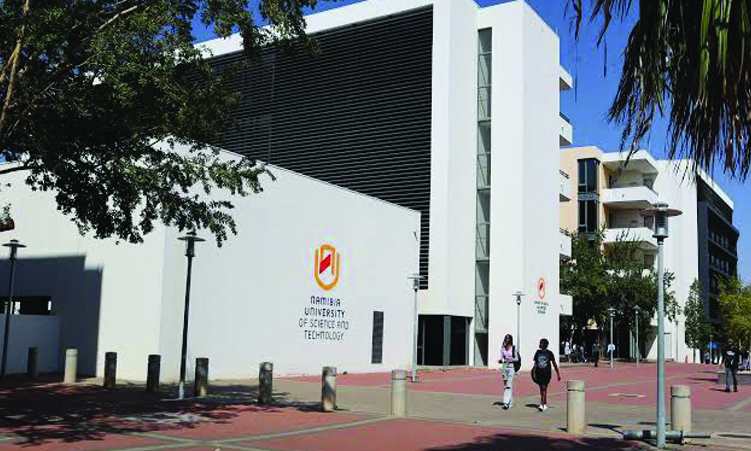
In Namiba, english is our official language, used in government, business, and schools.
No one disputes its importance, but we must ask a necessary question: Should a pupil’s intelligence and academic progression be determined primarily by their ability to pass English?
Across our education system, pupils who fail English are often required to repeat the entire grade, even if they perform well in mathematics, science, or practical subjects.
This policy may be designed to maintain standards, but we must reflect on its fairness.
Intelligence is not one-dimensional.
A pupil may struggle with grammar or essay writing yet demonstrate exceptional ability in agriculture, entrepreneurship, or technology.
Should they be labelled a failure because of one language subject?
Nations such as Japan, Germany, China, and France educate citizens in their own languages and lead in innovation.
Their success proves that mastery of English is not the sole determinant of competence.
Namibia is a multilingual country rich in indigenous languages like Oshiwambo, Otjiherero,
Nama/Damara, and Rukwangali.
When a pupil repeats a grade solely because of English, it sends a damaging message that their home language and identity are inferior.
This does not mean English is unnecessary; it opens doors to global communication.
However, perhaps it is time to consider alternative approaches.
We could allow pupils who pass the majority of their subjects to progress while receiving additional structured support in English, or introduce remedial programmes without forcing full grade repetition.
Research shows that pupils grasp concepts better when taught in a language they understand deeply.
Supporting indigenous languages in early education actually strengthens overall learning.
Repeating a grade can lower self-esteem and increase dropout risks.
As a nation striving for youth empowerment, we must ensure our system nurtures talent in all its forms.
A child who cannot perfectly articulate ideas in English may still be the future engineer or farmer who innovates food production.
The national curriculum promotes learner-centred education and recognises diverse abilities.
Education should unlock potential, not restrict it.
Let us open a national dialogue to refine our standards in a way that reflects fairness and the true meaning of intelligence.
English is a tool; it should not be a gatekeeper.
– Nocky Kaapehi