







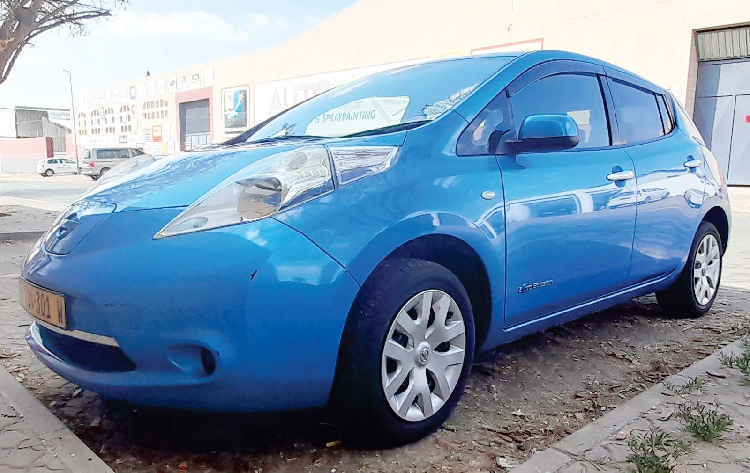
ARNOLD KEYATHE Nissan Leaf has been quite an elusive car to come across since its introduction in the market in 2010, simply because even the Nissan dealerships have not been stocking the car.
To some extent someone with a business mind would understand why that is.
The simplicity of running any form of corporation or business entity is to turn a profit.
And many car companies not only make a premium when they sell the car, but additional profits roll in from the service packages, the spare parts, and the resale profit the cars carry on the trade-ins.
Enter the Nissan Leaf, which simply edges out the added premium value cars carry, because of the simple fact that one rarely needs to service the car or buy service parts as the car runs on electric energy.
On the rare occasion that the battery malfunctions, one may need to replace it.
Currently in its second-generation cycle from 2017 to present, the Nissan Leaf has become a rare commodity as even older models are still high in demand.
According to Jens Denk from Electric Vehicles Namibia, the main importers of Nissan Leafs in Namibia, maintenance entails replacement of a pollen filter, anti-freeze, brake fluid, gear oil and a check over every 50 000km or every three years.
Brakes last up to 300 000km, so it’s no wonder it’s hard to find locally.
The 2011 car of the year is one of the best priced electric cars on the market, with even first-generation Nissan Leafs still fetching a premium.
With the flexibility of improved technology, the car’s battery can be replaced even after degradation, and at best with even better kilowatt-capacity batteries that give an improved range.
Currently, a single charge of the Nissan Leaf’s battery to 100% maximum capacity can be done within four hours, using a domestic 16A socket at home or the office.
For a premium price of roughly N$160 000 it’s a huge bargain, putting into consideration that one can practically drive the car for five years or more with zero fuel and maintenance costs.
The added premium from speaking to several Leaf owners is that the car does not consume as much electricity as it would consume petrol, with a single full charge costing roughly N$40.
There is, however, the ever-present range anxiety that many car owners will be concerned about with the older versions with the 24kw battery.
With new advances in battery technology, things are currently looking up with the latest Nissan Leaf Plus coming with a 62kw battery, with a range of up to 363km.
The current five-trim levels come with various improvements, including a standard 147 horsepower electric motor that powers the front wheels with a 40Kwh battery pack, and the plus version with 214 horsepower with a 62 Kwh pack.
It remains to be seen, however, if the electric vehicle wave will gain traction with motor dealers, with many having reservations on the sustainability of the car.
Considering practicality, the Leaf would be suitable for the daily work-to-home commute, but not for long-distance trips.
Electric Vehicles Namibia’s models currently sell from N$160 000.
The cars have high safety standards, with six airbags, keyless entry, aircon, power steering, surround camera system, reverse camera, seat and steering heating, LED lights, and a remarkable BOSE sound system.
There are currently nearly 30 odd Nissan Leafs in the country, with plans underway to add free charging stations to Maerua Mall and Grove Mall.
Contact Electric Vehicles Namibia for more information.