






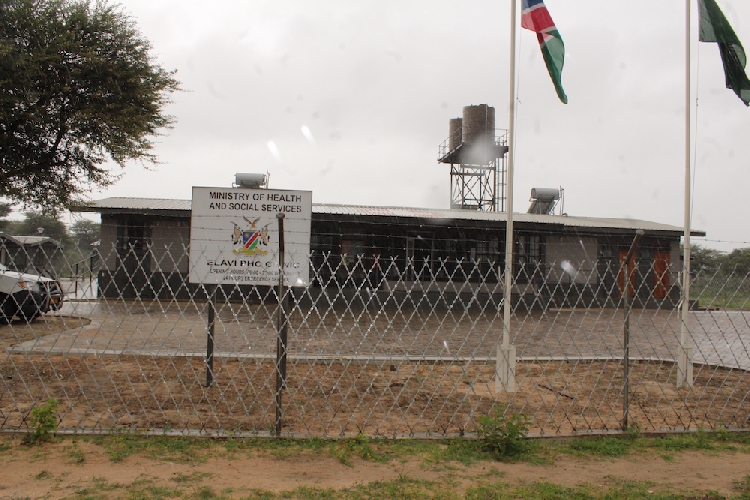
COMMUNITY members in the Elavi area of the Nehale Lya Mpingana constituency in the Oshikoto region say they are going through hardships because of a lack of services.
Some of their complaints are about the lack of water, electricity, mobile communication network, as well as police and health services.
The residents of Elavi, Ombakana and Onalusheshete told The Namibian last week that the nearest police station was at the Bravo Gate, some 70km away.
Businessman Onesmus Kanutus said his business was heavily affected by the lack of a mobile network coverage.
“If your shop is broken into, you will not get the message on time.”
He said at one time his shop was broken into, and he heard about it two days later.
Bamba Nghipandwa said the lack of a mobile network was heavily affecting the nearby school and clinic.
“It is not only about the community. People have to think of the school and clinic,” he added.
Nghipandwa said people no longer communicate with relatives because of the network problem, and that they also hardly listen to the radio.
“When you enter this zone, your phone becomes useful as a torch only,” he stated.
A teacher at the Elavi Primary School, Edmund Haikombo, said the unavailability of a mobile phone network and electricity was affecting them.
“Electricity is the main problem. You cannot use a computer, projector or even watch television. The world has now advanced, and without these things, we are locked out,” he noted.
Haikombo said as a teacher, he sometimes missed out on workshops and other educational gatherings because of poor communication services.
“In normal circumstances, teachers call one another when there are workshops. But for us here, it is tough because people cannot call you, and the circuit office is far, at Oshivelo. The principal cannot go there regularly,” he continued.
He accused Nehale Lya Mpingana constituency councillor Leevi Shiningombwa of doing nothing to address these issues.
“We don’t know him. Since we elected him, we did not see him,” he said.
Nurses at the Elavi primary health centre also spoke about the mobile network issue.
The nurses, who spoke on condition of anonymity, said working at the clinic made them feel as if they were not in Namibia.
“Is this Angola, or what?” asked one junior nurse.
The nurse said Namibia was a resource-rich country which should be able to supply the clinic with piped water, electricity and mobile network coverage.
At the moment, she said, they had to drink brackish water.
“Here, even if your son passes away, you cannot hear the news on time. You will just see people coming to tell you about it two days later,” she said.
At one time, the nurses recounted, an ambulance driver took a patient to the Tsumeb hospital, and then there was another emergency just after he had left, but they could not contact him.
“Now is malaria time. Many patients will need to be transported to Tsumeb. One day somebody will die here, and they must not blame us,” the nurses stressed.
Councillor Shiningombwa said he was aware of the problems.
“I told the people during a meeting about the plans we have for the constituency, and how far the regional council was with it,” he said.
Shiningombwa also said as part of the plans to develop the vast constituency, all schools would be electrified next year, while the four main roads would be upgraded.