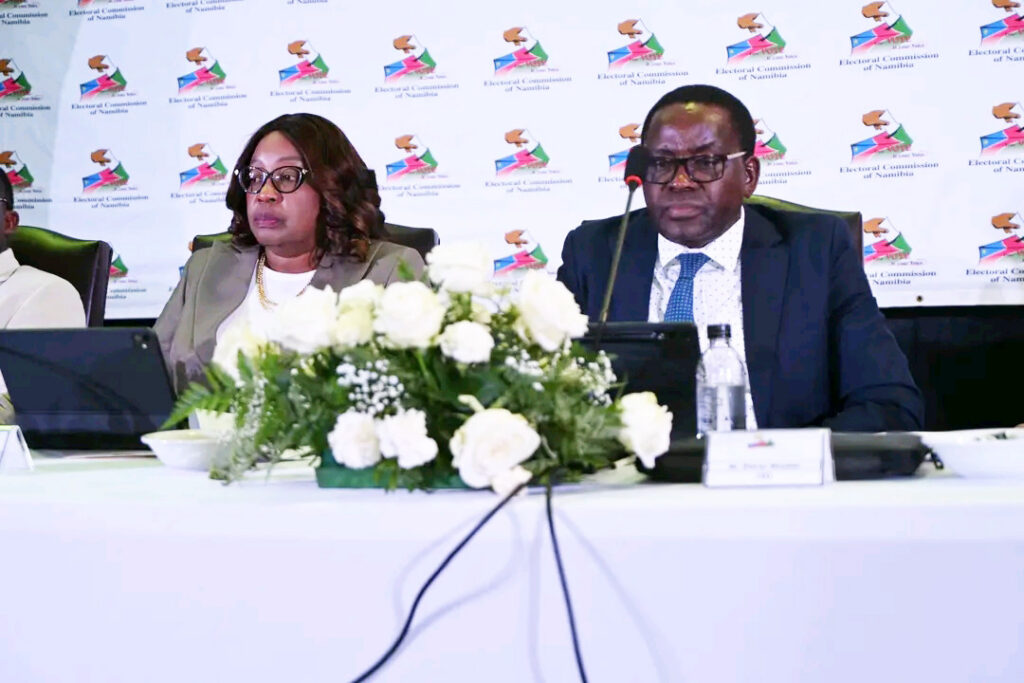
The proposed amendments to the Electoral Commission of Namibia (ECN) Act 5 of 2014 will now compel commissioners to declare their assets, a move political parties say could strengthen public trust and transparency in the country’s electoral system.
ECN spokesperson De Wet Siluka confirmed the development yesterday, saying stakeholders have until 30 June to submit written objections or proposed changes to the bill.
During a stakeholder engagement held in Windhoek last Wednesday, ECN chief legal adviser Heidi Jacobs explained that commissioners would be required to declare their assets within 60 days of the act coming into force and thereafter annually within 30 days after the end of each financial year.
“Declarations must be submitted to the speaker of the National Assembly, and failure to comply constitutes grounds for neglect of duty or misconduct in terms of Section 11(4) of the Electoral Act,” Jacobs said.
The amendments also introduce a new Section 17A, which establishes the position of deputy chief executive for a five-year term.
Siluka said the deputy chief executive will provide strategic support to the commission and oversee areas such as risk management, research, statutory compliance, governance, planning and decentralised functions.
Reacting to the proposed amendments yesterday, United Democratic Front spokesperson Mabasen Narib welcomed the asset declaration provision, saying it could help ease concerns over alleged corruption and bribery linked to electoral processes.
“People involved in elections are often accused of bribery and corruption. Annual asset declarations will reassure Namibians, but it should not end there. Lifestyle audits must also be introduced,” he said.
Narib stressed that electoral officials must be beyond reproach to ensure confidence in the democratic process.
“We as participants in the democratic process must be fully assured that those entrusted with overseeing elections are not influenced by external factors such as bribes and corruption,” he added.
He also welcomed the creation of the deputy chief executive position, saying it would improve administrative efficiency within the commission.
Narib further called for simplified financial reporting requirements and amendments that formally recognise social media publications under the Electoral Act.
He said allowing digital publications would help political parties and associations cut operational costs while broadening access to information.
“We are migrating to the digital era, and this would be a much-needed change.
Asset declarations should also be made public because all Namibians are stakeholders in the electoral process,” he said.
Meanwhile, Affirmative Repositioning Khomas regional chairperson Sem David commends the ECN for what he describes as progress in improving its operations and responsiveness.
“It is evident that the ECN has learned from the pressure applied by the electorate and contributions made by members of the Political Parties Liaison Committee.
“This shows that our electoral body is beginning to listen and implement concerns raised by stakeholders, “ he says.