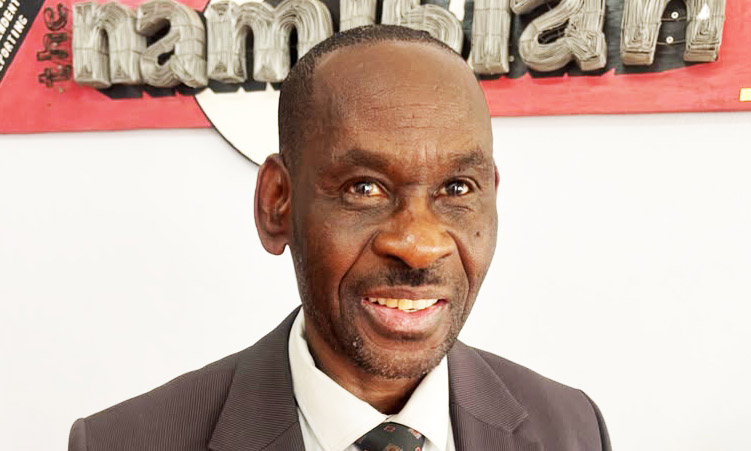
Opinions on road conditions will always be expected as long as motorists do not have alternatives, road expert Felix Tjozongoro says.
This comes after road users and residents have blamed the Western Bypass’ sharp curves and steep descent for contributing to two crashes involving trucks on Monday.
The accidents claimed a truck driver and 46 head of cattle, with two people left seriously injured, the police have confirmed.
While drivers are saying the road is in a poor condition, Tjozongoro says other factors such as driver fatigue and attitude may have contributed to the accidents.
“Those opinions will always be there, but do we have an alternative?” he asks.
He says closing the road completely to allow construction work to be completed would force motorists onto already congested roads.
Tjozongoro says road users must exercise caution and drive responsibly until the necessary upgrades, including pedestrian bridges and other infrastructure, have been completed.
“This road has been in use for a long time. We should have had those accidents earlier. It really boils down to us as drivers to manage ourselves in the meantime,” he says.
Khomas crime investigations head deputy commissioner Frederick Ndjadila yesterday confirmed the death of the passenger who succumbed to his injuries in one of Monday’s accidents.
Ndjadila said the man’s next of kin have been informed of the incident.
He said Isaacks Geoffrey, who was driving the truck carrying the cattle, is alive and remains admitted at Katutura State Hospital.
“The truck that carried the cattle remains at the accident scene while the surviving cattle are being loaded. The truck will be towed from the scene,” Ndjadila said.
He said further updates will be communicated as the investigation progresses.
A total of 26 head of cattle are missing after some ran into nearby bushes, the deputy commissioner said, while 24 have been recovered and are alive.
He said the truck of which the driver died has been successfully removed from the roadway and the cargo has been collected and removed by the owner.
National Unity Democratic Organisation member of parliament Vetaruhe Kandorozu says while some accidents are due to driver error, many are the result of inadequate planning and underinvestment in road infrastructure.
He says recent measures, such as the installation of speed humps on highways intended to protect pedestrians, have increased vehicle crashes, as drivers are forced into unsafe conditions, calling for evidence-based solutions rather than “politically motivated quick fixes”.
“The B1 road, in particular, has become the leading accident hotspot in Namibia, largely because of the absence of detours that could ease congestion and reduce risks,” he says.
Independent Patriots for Change shadow minister of works and transport Nelson Kalangula says while police investigations have yet to determine the exact role played by driver error and mechanical conditions, there is no doubt that the physical geometry of the stretch of road is a major contributing factor.
He says heavy vehicles on steep descents are vulnerable to brake fading, unexpected momentum buildup, and centre of gravity shifts during cornering.
“When a road’s engineering design leaves zero margin for minor human error or sudden mechanical distress, the road design itself becomes a passive hazard.
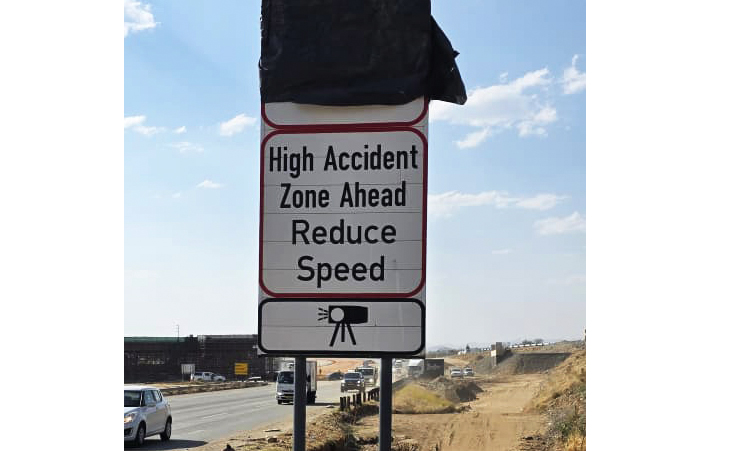
“However, caution should be exercised at all times in this high accident risk zone, with more signs alerting of the high risk,” Kalangula says.
He says the road should be fitted with runaway truck ramps on steep downhill sections leading into sharp curves to allow out-of-control heavy vehicles to stop safely without overturning.
He also proposes enhanced speed-calming measures, including solar-powered electronic speed warning signs and additional signage identifying the area as a high-risk accident zone.
“The Ministry of Works and Transport and the Roads Authority’s response has predominantly been reactive, focusing on ad-hoc traffic-calming interventions after public outcry or fatal incidents occur, rather than proactive structural engineering,” Kalangula says.
He calls for the Roads Authority to conduct routine, independent road safety audits of high-density freight routes across the country to identify and address infrastructure risks before more lives are lost.