Windhoek. 21 July 2026.
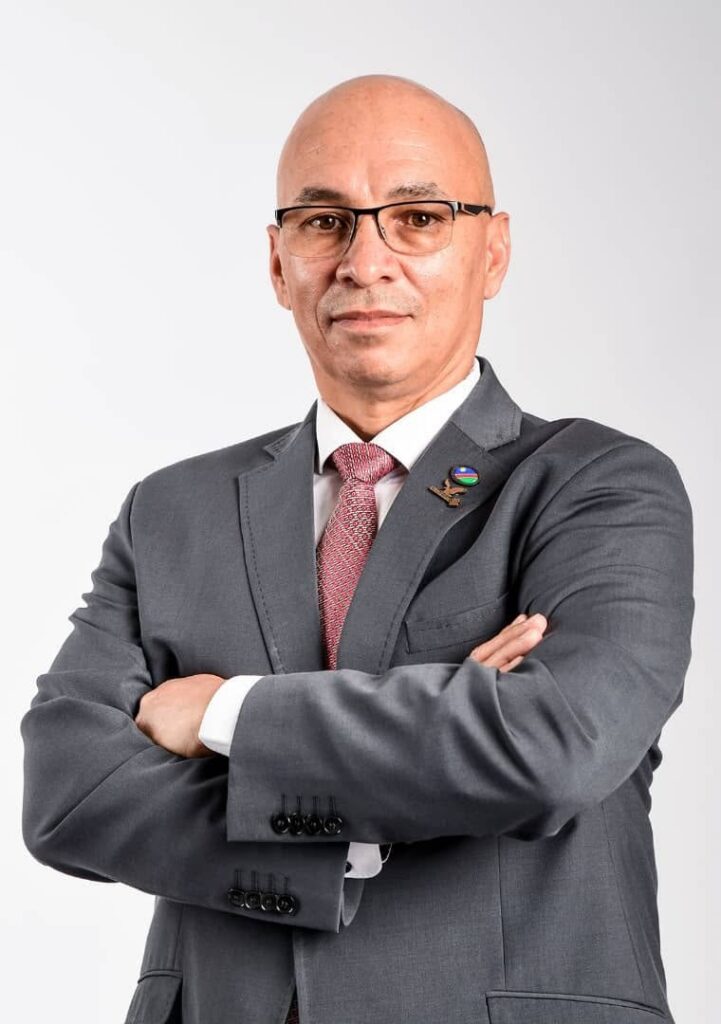
Address by Dr. Bryan Eiseb at the African Ombuds Research Centre Training on Corruption Prevention Measures to Improve Service Delivery.
Distinguished Delegates;
Ladies and Gentlemen,
Good morning.
It is a privilege to address this distinguished gathering on the importance of Corruption Prevention Measures to Improve Service Delivery because this subject lies at the heart of good governance, public trust and institutional accountability.
As the saying goes, “Prevention is better than cure,” and it is within this context that I wish to make my remarks.
As oversight institutions, we are often among the first to hear the voices of citizens when government systems fail. We receive complaints relating to service delivery delays, maladministration, abuse of power, unfair treatment and procurement irregularities.
While these complaints may initially appear administrative in nature, they frequently point to deeper governance weaknesses and corruption risks.
The challenge before us, therefore, is not only how to investigate corruption and maladministration after they occur, but how to prevent them from occurring in the first place.
Corruption is a Service Delivery Problem
Corruption is often viewed as a criminal justice issue, and rightly so. However, more importantly, it is a service delivery issue.
Whenever a procurement contract is manipulated, a school or hospital remains unfinished. When a public official improperly awards a licence, deserving applicants are denied economic opportunities. When public funds are misappropriated, essential services such as healthcare, water, housing and education remain unrealised, leaving many citizens vulnerable.
The ultimate victims of corruption are not public institutions. Rather, they are the most vulnerable members of society, including our elderly, orphans and vulnerable children.
For this reason, corruption prevention should not be viewed merely as a compliance exercise. It should be regarded as an indispensable mechanism for improving the quality, accessibility and efficiency of public services. It should be our first response to a social evil that undermines national development across our countries.
Corruption tears at the very fabric of society and undermines our hard-earned democracies. It is therefore imperative that we prevent it wherever possible, rather than attempting to remedy its consequences after the damage has already been done.
The Importance of Corruption Prevention
The importance of corruption prevention is widely recognised by the international community.
The United Nations Convention against Corruption dedicates an entire chapter to preventive measures. It calls upon States to establish anti-corruption bodies, strengthen integrity within the public sector, promote transparency in public procurement, adopt codes of conduct, improve public financial management and encourage citizen participation in governance.
The Convention recognises that effective anti-corruption efforts require strong preventive systems, not merely investigations and prosecutions.
While governments must adopt a balanced approach that combines prevention with enforcement, prosecution should remain the last resort. When invoked, it should ensure that offenders face the full force of the law, irrespective of their status or position.
At the continental level, the African Union Convention on Preventing and Combating Corruption promotes accountability, transparency, ethical leadership, public participation and strong oversight institutions as essential tools for preventing corruption.
Similarly, the SADC Protocol Against Corruption calls upon Member States to establish effective mechanisms for preventing, detecting and combating corruption while strengthening cooperation among institutions responsible for governance and accountability.
Together, these instruments recognise a simple but powerful truth:
Preventing corruption is more effective, less costly and more sustainable than combating it after it has occurred.
Namibia’s Domestic Anti-Corruption Framework
In Namibia, the Anti-Corruption Act established the Anti-Corruption Commission as an independent institution mandated not only to investigate corruption but also to prevent it through public education, awareness campaigns, institutional reviews and the promotion of integrity.
The Act expressly recognises corruption prevention as a fundamental pillar of Namibia’s anti-corruption framework and reflects international best practice.
A successful anti-corruption strategy should not be measured solely by the number of arrests or prosecutions. Rather, it should be measured by the extent to which opportunities for corruption are reduced and public services are improved in ways that positively transform the lives of ordinary citizens.
Linking Corruption Prevention and Anti-Money Laundering
Ladies and Gentlemen,
It is impossible to discuss corruption prevention without also addressing money laundering and related predicate offences.
Corruption and money laundering are intrinsically linked. Corruption generates illicit proceeds, while money laundering conceals those proceeds.
Every corrupt transaction generates an unlawful financial benefit, whether through bribery, kickbacks, procurement fraud or abuse of office. Ultimately, the beneficiary seeks to disguise and enjoy these illicit gains.
This is where anti-money laundering measures become critically important.
In Namibia, the objectives of the Anti-Corruption Act complement the country’s anti-money laundering framework established under the Financial Intelligence Act.
While the Anti-Corruption Commission focuses on preventing and investigating corruption, anti-money laundering systems seek to identify, trace and disrupt the proceeds of crime.
As financial systems become more transparent, opportunities for corrupt individuals to conceal illicit wealth become increasingly limited.
Corruption prevention and anti-money laundering should therefore be viewed as mutually reinforcing components of a comprehensive national integrity framework.
Unexplained Wealth as a Preventive Tool
An increasingly important concept in the global fight against corruption is unexplained wealth.
Unexplained wealth refers to situations where an individual’s assets, expenditure or lifestyle significantly exceed what can reasonably be justified through lawful sources of income.
Simply put, the question becomes:
“How was this wealth acquired?”
For Ombudsman institutions, unexplained wealth should be regarded as an important warning sign.
Where complaints, procurement records, declarations of interest or other information reveal a substantial disparity between legitimate income and accumulated assets, such cases may warrant referral to law enforcement agencies for further investigation.
The significance of unexplained wealth lies in shifting attention beyond the corrupt act itself to the benefits derived from corruption.
After all, if corrupt individuals cannot safely enjoy the proceeds of their crimes, the incentive to engage in corruption is significantly reduced.
Corruption Risk Assessments
Another important preventive measure is the use of Corruption Risk Assessments.
Namibia’s National Risk Assessment identifies corruption and bribery among the country’s highest-ranking predicate offences.
Corruption Risk Assessments involve identifying institutional vulnerabilities before losses occur.
Particular attention should be given to:
• Procurement;
• Recruitment and promotion processes;
• Licensing and permit systems, particularly within extractive industries; and
• Other high-risk operational areas.
Citizen Participation and Whistleblowing
Citizen participation is another essential component of corruption prevention.
Both the United Nations Convention and the African Union Convention recognise the importance of public participation in combating corruption.
Citizens are often the first to observe misconduct.
Effective prevention therefore requires:
• Anonymous reporting channels;
• Secure whistleblower protection mechanisms;
• Accessible complaints systems; and
• Public awareness programmes.
Citizens must be empowered to report wrongdoing without fear of retaliation because institutions become stronger when citizens actively participate in accountability processes.
Ethical Leadership
Distinguished Ladies and Gentlemen,
No legal framework, investigation or technological innovation can substitute for ethical leadership.
If any delegate is interested, there is a digital newsletter entitled The AI African Dream which recently released Episode 42, titled “How Can AI Help Africa Fight Corruption?”
The publication confirms much of what we discussed earlier today.
Corruption leaves a digital footprint in every tender, invoice, payment and procurement process.
Artificial Intelligence can assist through real-time monitoring and predictive analytics by identifying irregular bidding patterns, repeated contract awards and duplicate payments, thereby alerting investigators and decision-makers before public funds disappear.
Such technology enables governments to focus resources on high-risk projects and conduct more targeted investigations where they matter most.
In preventing corruption, public institutions should actively promote:
• Codes of conduct;
• Integrity training;
• Conflict-of-interest management;
• Financial and other relevant disclosure measures; and
• Accountability mechanisms.
Leadership shapes organisational culture.
Where leaders demonstrate integrity, transparency and accountability, those values naturally permeate throughout the institution.
Conclusion
Distinguished Delegates,
In conclusion, Namibia’s anti-corruption framework, established through the Anti-Corruption Act and reinforced by international and regional instruments, points us in one clear direction.
It calls for stronger institutions, greater transparency, financial integrity, public participation and enhanced accountability.
As Ombudsman institutions, you occupy a unique position within this integrity ecosystem.
You hear the voices of citizens, identify governance weaknesses, uncover systemic risks and help shape reforms that prevent future harm.
In the spirit of an all-inclusive government approach, we must use every complaint as a source of intelligence, every investigation as an opportunity for institutional reform, every digital record as a tool for prevention and every recommendation as a pathway towards better governance.
Because when corruption is prevented, public resources are protected.
When public resources are protected, service delivery improves.
When service delivery improves, public trust grows.
And when public trust grows, democracy, accountability and the rule of law are strengthened.
Allow me to leave you with a personal belief:
Being brave was never meant to be easy.
I thank you.