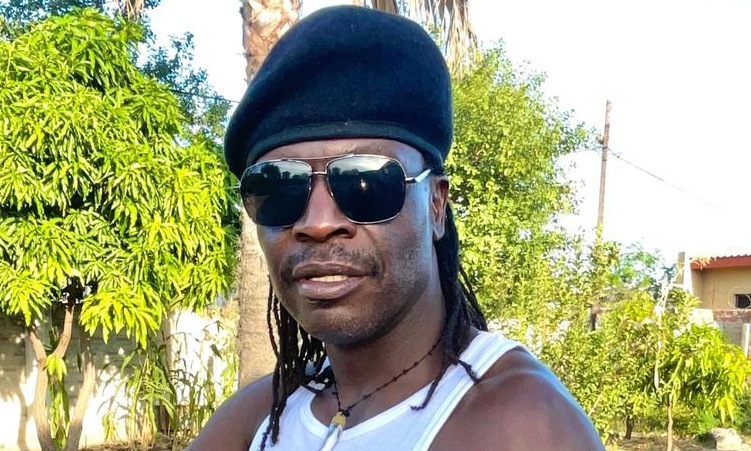
Exile-born Felix Johannes, known by his stage name Shikololo, is regarded as the first artist to popularise Oshiwambo rap.
Born at Jamba in southern Angola, Shikololo spent his youth in Angola, Magdeburg, Germany, and later in Namibia after returning to his motherland in 1990.
“I was part of the children that were sent to the German Democratic Republic because some of our parents either died during the liberation war or, in other cases, the parents were sent overseas to go study. I grew up as a Swapo pioneer and I am a faithful cadre until today,” Shikololo says.
“My interest in music started when we were taught liberation songs. Almost everything we did was in song. We learned about our leaders through song and we were taught to hate our enemies, the people and countries that withstood our liberation, also through singing.”
He says people in exile were mostly communicating in Oshikwanyama.
“I was exposed to rap music when I went to study in Germany, although the people there rapped in German and English. The dress code I became familiar with I also picked up from Germany. That was the trend in Europe back in the day,” Shikololo says.
“People in Namibia did not like us because of what we described as a strange dressing style of big trousers, shirts and jackets, and bandanas.”
Shikololo says he was particularly inspired by a group of older boys from exile known as the Native Tribes, who were rapping, breakdancing and playing the piano on TV.
In 1994, he and a few friends from exile decided to form their own group as well.
“We were schooling at the People’s Primary School and we connected with Fidel Nambundunga, who was working at Katutura Community Radio, who agreed to air us on his music programme,” Shikololo says.
“I opted out of the group and went solo in 1997. I also felt that I had enough of the English rapping thing and I took a very conscious decision to rap in my vernacular, not knowing then that what I have started would spiral into a whole national trend.”
Shikololo left for Germany in 1997 after finishing his matric at Delta Secondary School.
He attended a vocational training college, where he trained in tiling and bricklaying, while also gaining attention in Stuttgart for his dancing and rapping, with some beginning to see him as a rising star.
“I was on top of the world. Everything I did was considered phenomenal by the people of Stuttgart. Everything was working out for me and my reputation went through the roof when I beat Harry Simon in a fist fight,” he says.
“I was hanging out with the coolest girls … I allowed fame to get a hold of me and I ended up on the wrong side of the law and got deported eventually.”
The outspoken rapper enjoyed a strong run in 1998, with his profile rising after his appearance on the Namibian Broadcasting Corporation programme ‘Penduka’.
Shikololo and the Moongo twins, Edward and Erastus, took Windhoek by storm.
Shikololo dropped his first single ‘Takamisa’, then followed it up with ‘Ondumbo Naise’.
“My previous two songs were hits but it was my superhit ‘Ondjila Oile’ that defined me as a solo artist. My music was always inspired by liberation and I prioritised singing about relevant stuff. It was not in my space to sing about girls, cars, bars et cetera,” Shikololo says.
“At one point I was even invited by people from the Oukwanyama kingdom at the time they were campaigning about installing their king. I had to do some research to make my song choice relevant because we released an album.”
Shikololo says he had a successful music career and was one of the most in-demand performers at Swapo and election rallies, until he was allegedly victimised by a Rally for Democracy and Progress member.
He says he was inspired by 2Pac’s music, Mike Tyson’s perseverance and Bruce Lee’s pursuit of physical and mental fitness, and is currently in the studio recording, with plans to release a full album soon.
Shikololo, the Oshakati East representative of the Swapo-affiliated Namibian Exile Kids Association, currently earns a living from performances while also engaging in youth motivation against social ills.
“I am always telling our youth, especially the young musicians, never to sell their traditional values for fame and money. They must always remember where they are coming from and not sell their values in order to belong to the so-called elite.
“Some of our musicians have entered a world that is giving them sleepless nights. They may shine during the day and drive fancy cars but their struggles start at night time, while the struggles of the majority of our artists are visible during the day,” he says.