




In today’s digital age, social media has become one of the most powerful tools for communication.
It connects communities, spreads information quickly, and provides a platform for people to express their views.
Used responsibly, it can strengthen democracy by allowing citizens to raise concerns, celebrate achievements, and hold leaders accountable.
However, when misused, it can become a platform for endless criticism, misinformation, and blame without offering solutions.
ALWAYS BLAMING LEADERS
This trend has become increasingly noticeable at Divundu.
Every challenge facing our town – from neglected public spaces to damaged infrastructure and untidy public facilities – is often immediately attributed to the leadership.
While leaders certainly have a responsibility to govern effectively, it is equally true that communities have a responsibility to protect, maintain, and respect public resources.
Take the Divundu Open Market as an example.
The market was established to create opportunities for local traders and improve livelihoods.
Yet, over time, some users have failed to keep the facility clean, dispose of waste responsibly, or report maintenance issues through the appropriate channels.
When the market begins to deteriorate, many are quick to post photographs on social media accusing the leadership of neglect.
Rarely do we ask ourselves an equally important question: What role have we, as users of the facility, played in preserving it?
Public infrastructure belongs to all of us.
Roads, markets, parks, toilets, and community halls are not the private property of the local authority; they are community assets funded by public resources.
Their condition reflects not only the performance of leadership but also the attitudes and behaviour of the people who use them every day.
Constructive criticism is essential in any democratic society. Leaders should welcome accountability and be prepared to respond to legitimate concerns.
RESPONSIBILITY
However, criticism should be accompanied by responsibility.
Before posting complaints online, citizens should ask whether they have reported the matter through the appropriate office, participated in community clean-up campaigns, or contributed in any way to solving the problem.
Complaining without action rarely brings lasting change.
There is also a worrying culture of assuming every problem is someone else’s responsibility.
Broken bins, littering, vandalism, illegal dumping, and the misuse of public facilities often result from the actions of community members themselves.
When we damage what belongs to all of us and then blame the authorities for its condition, we ignore our own role in creating the problem.
Social media should be used as a bridge between citizens and leaders, not as a battlefield. It should encourage dialogue, promote transparency, share accurate information, and mobilise communities to work together.
Posting a concern online can raise awareness, but meaningful change often begins with direct engagement – reporting issues to the relevant authorities, participating in community initiatives, and working collaboratively to find solutions.
True development is a shared responsibility. Leaders are elected or appointed to provide direction, policies, and services.
Citizens, on the other hand, have a duty to obey regulations, safeguard public property, participate in development initiatives, and contribute positively to their communities.
Neither side can succeed without the other.
POTENTIAL
Divundu has enormous potential. It is one of Namibia’s important tourism gateways and a growing centre of trade and economic activity.
Realising this potential requires more than government investment; it requires a community that values responsibility, respect for public property, and active citizenship.
Instead of asking, “What has the leadership failed to do?”, perhaps we should also ask, “What have I done to improve my community?”.
That simple shift in mindset can transform blame into action and criticism into progress.
Every resident has a voice, and every voice matters. But the strongest voice is not the one that complains the loudest on social media. It is the one that inspires action, promotes unity, and contributes to making Divundu a cleaner, safer, and more prosperous place for everyone.
Social media is a powerful tool, but it should never replace personal responsibility.
Communities flourish when leaders lead and citizens participate.
Divundu’s future depends not only on those entrusted with leadership, but also on every one of us who calls this town home.
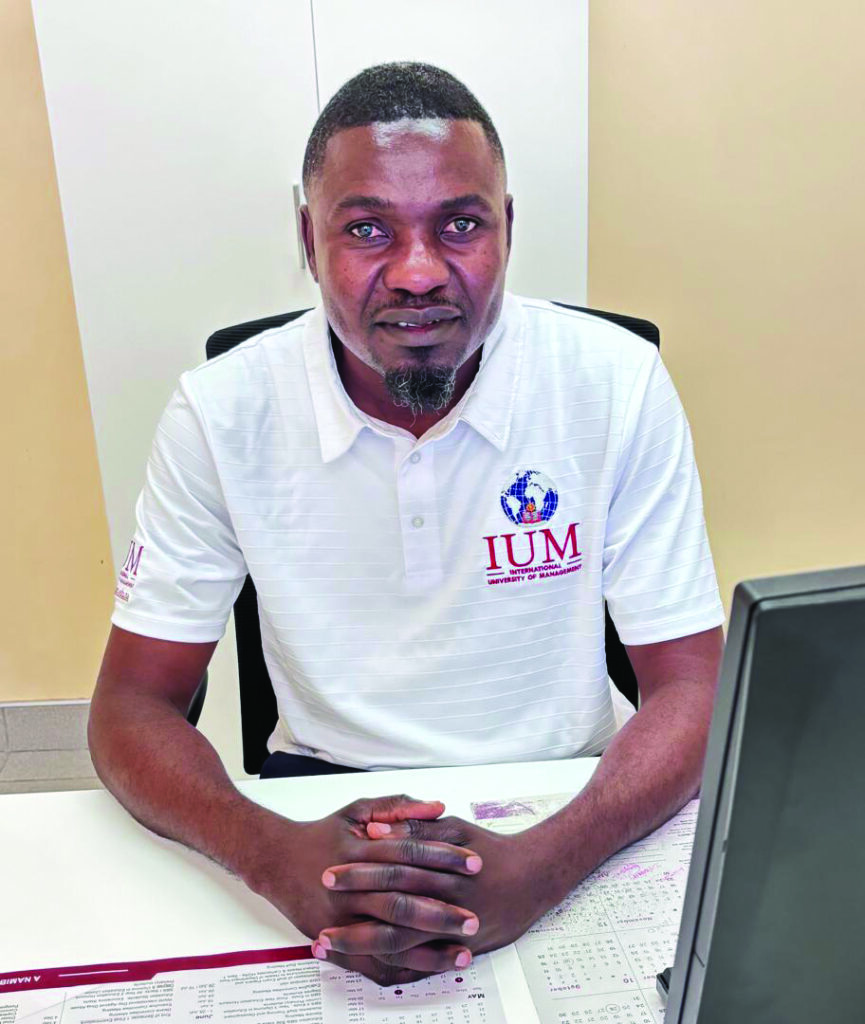
– Muñenda Muronga is a lecturer, researcher, and community development advocate.