


AGAINST the backdrop of the severe drought which has had a harsh impact on many rural communities’ livelihood options, rural communities all over Namibia face the challenge of generating much needed cash income in an ever changing world where cash is needed for virtually everything.
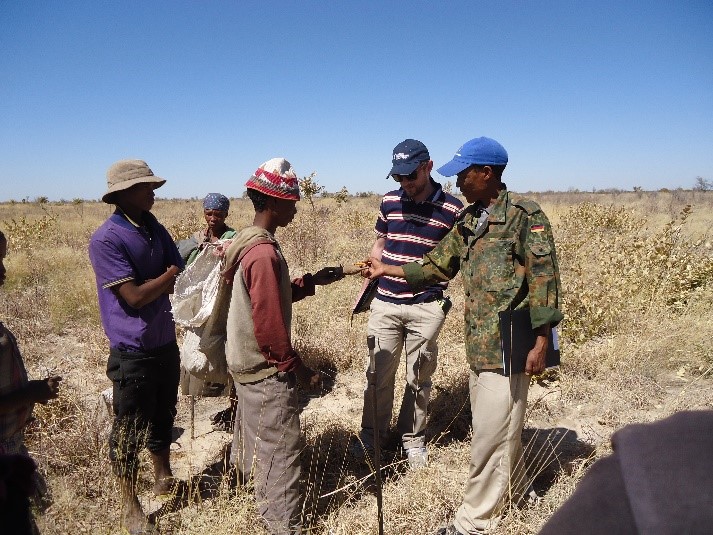
The circumstances for San communities residing in the Nyae Nyae and N#a Jaqna conservancies are no different, but in this case, many members have taken to harvesting and selling Devil’s Claw to earn much needed supplementary income.
Devil’s Claw is used all over the world as a non-prescription medicine, and is taken to relieve arthritis, lower back, knee and hip pain, amongst other ailments.
It can also be used to treat a number of other conditions including osteoarthritis, rheumatoid arthritis, gout, bursitis, tendonitis, loss of appetite and digestive disorders. Because of its healing properties, it is sought after, and Namibia is the largest supplier of Devil’s Claw in the world.
In Namibia, Devil’s Claw is listed as a protected plant. However, it allows for the harvesting and sale of this plant, for which permits are required.
The Devils Claw harvesting season recently ended in the Nyae Nyae and N#a Jaqna Conservancies, with both conservancies having reported a bumper harvesting season.
Harvesters have produced around 20 tonnes of organically certified Devil’s Claw.
This has generated just under N$1million in sales for approximately 450 harvesters directly.
In addition, the conservancies also managed to generate their own income which covered the costs of organising and implementing their Devil’s Claw activities. Of the total income generated, harvesters retain over 90%, creating a real self-sufficient money making endeavour.
The scale of income makes a significant difference in and to this marginalised and impoverished community.
The conservancies are currently being supported with an EU Climate Change Adaptation Grant, focused on food security and livelihood diversification, according to the Nyae Nyae Development Foundation of Namibia, which is implementing this project, amongst others in both conservancies. Many of the Devil’s Claw activities could not be implemented, were it not for the important work that is carried out by the conservancies’ Devil’s Claw coordinators; like N!aici Kaqece, who has been the Devil’s Claw coordinator in the Nyae Nyae conservancy since 2010.
He is responsible for numerous activities that enable the harvesters to harvest and sell Devil’s Claw.
It is essential that the harvesters and others comply with the standards that are required in order to be able to sell certified organic Devil’s Claw, and N!aici Kaqece ensures this is the case.
Namibia is the only source of organic Devil’s Claw in the world.
While complying with organic certification is a costly exercise for the conservancies, it differentiates their product from competitors.
Another important aspect related to organic certification is that it also ensures that a high quality product is produced.
This is important, maintains N!aici. “Devil’s Claw is a medicine, and therefore it must always be of the highest standard. Complying with these quality standards also ensures harvesters can earn more income – we are proud that our medicine is used by others all over the world”.
“Organic certification also ensures that sustainable harvesting methods are followed. It is important that we harvest sustainably so that we can continue to harvest and sell Devil’s Claw in the future.
It is for this reason that we monitor our harvesting and manage our resources”.
N!aici says “it is good for me to do this work as it builds my capacity and experience, it is also good to work with members of the conservancy by enabling them to earn an income.
This income is essential for the people of the conservancies as it allows them to buy food, clothes and even livestock; as well as giving them a sense of pride and self-worth by being able to provide for themselves”.
“Although it is sometimes challenging to work with communities, the key to success is to engage with harvesters so that problems can be identified and addressed, otherwise we will not move forward.”
In an age of information overload, Sunrise is The Namibian’s morning briefing, delivered at 6h00 from Monday to Friday. It offers a curated rundown of the most important stories from the past 24 hours – occasionally with a light, witty touch. It’s an essential way to stay informed. Subscribe and join our newsletter community.

The Namibian uses AI tools to assist with improved quality, accuracy and efficiency, while maintaining editorial oversight and journalistic integrity.
Stay informed with The Namibian – your source for credible journalism. Get in-depth reporting and opinions for
only N$85 a month. Invest in journalism, invest in democracy –
Subscribe Now!