



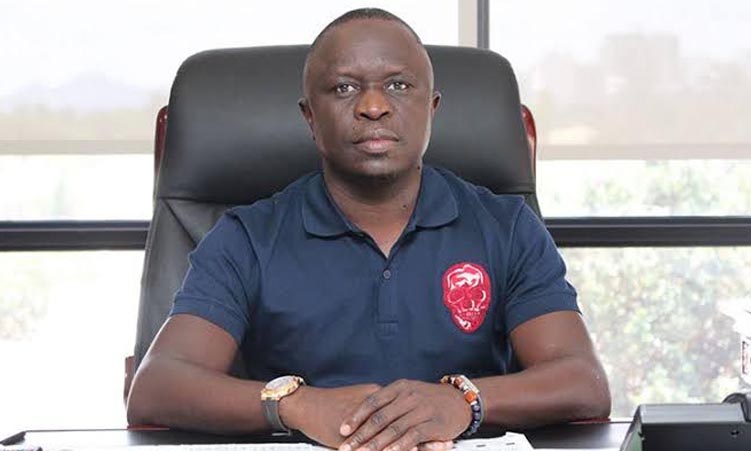
The Development Bank of Namibia has won a Supreme Court appeal against businessman Vaino Nghipondoka and his sister, resulting in a default judgement for payment of N$26.48 million being granted against them.
In a judgement delivered on Friday, acting judge of appeal Rita Makarau found that a settlement agreement reached between the Development Bank of Namibia (DBN) and two of Nghipondoka’s companies, Growmax Agri-Fertilizer and Profile Investment Holdings, in July 2023 did not also settle legal action the bank had taken against Nghipondoka and his sister Turki Nghipondoka.
The settlement agreement between the DBN and the two companies did not release Nghipondoka and his sister from liability for a loan Growmax Agri-Fertilizer obtained from the bank in May 2017, Makarau found.
She recounted that Growmax Agri-Fertilizer received a property finance loan in an amount of N$15.9 million from the DBN in May 2017.
A week after the company received the loan, Nghipondoka, his sister and Profile Investment Holdings entered into written suretyship agreements with the DBN.
In terms of those agreements, Nghipondoka, his sister and Profile Investment Holdings were bound as co-principal debtors for the loan given to Growmax Agri-Fertilizer, Makarau noted.
The DBN, alleging that Growmax Agri-Fertilizer had failed to repay the loan as agreed, sued the company, Profile Investment Holdings and the Nghipondokas for N$26.48 million in the Windhoek High Court in November 2022.
After the settlement agreement was reached between the DBN and the two companies in July 2023, the court granted a default judgement for the payment of N$26.48 million against the two companies.
The DBN wanted to continue with its legal action against the Nghipondokas, but an application by the bank for a default judgement against them was refused by a High Court judge, who found that the settlement agreement applied to the Nghipondokas as well and as a result absolved them from liability for the loan given to Growmax Agri-Fertilizer.
The DBN appealed to the Supreme Court against that decision of the High Court judge.
Makarau said the Nghipondokas were not part of the court-connected mediation session during which the DBN and the two companies reached a settlement.
As a result, she found that they did not settle their case with the bank.
She agreed with an argument that the Nghipondokas were not only sureties for the loan given to Growmax Agri-Fertilizer, “but had also agreed to be bound as co-principal debtors”.
In respect of the debt to the DBN, Profile Investment Holdings and the Nghipondokas “stood in the same position as [Growmax Agri-Fertilizer] by virtue of being co-principal debtors”, Makarau said.
“The bottom line was that all respondents could be sued for the debt, individually or collectively, provided their liability remained joint and several,” she said.
In the absence of evidence the DBN had an intention to release the Nghipondokas from their joint liabilities, they remained liable as contracted for the full amount of the debt and the bank was entitled to apply for a default judgement against them jointly and severally with Growmax Agri-Fertilizer and Profile Investment Holdings, Makarau stated.
She allowed the DBN’s appeal, set aside the High Court’s order, and replaced it with an order in terms of which a default judgement for the payment of N$26.48 million was granted against the Nghipondokas.
The Supreme Court also ordered that their liability to the DBN is jointly with the two companies, meaning the amount of N$26.48 million can be recovered from any of the four parties.
They must also pay interest on the amount to the DBN at First National Bank’s prime rate plus one percent, calculated from 3 June 2022 until the date of payment, the court ordered.
Appeal judge Hosea Angula and acting judge of appeal Shafimana Ueitele agreed with Makarau’s judgement.
Legal counsel JP Ravenscroft-Jones represented the DBN in the appeal.
The Nghipondokas were represented by lawyer Sylvia Tjipura.