






BEING associated with a world-renowned athlete is not an attractive proposition for Namibia’s private sector.
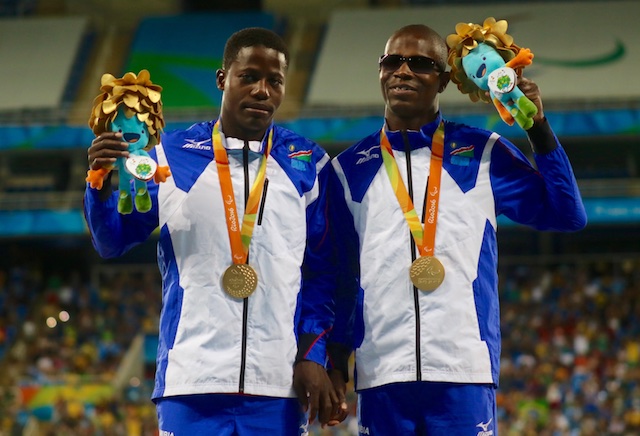
This is what Ananias Shikongo and Johannes Nambala continue to be reminded of on a daily basis. Both sprinters are multiple world champions, and last year were the only athletes to bring home medals from Rio de Janeiro, where the Olympic and Paralympic Games were staged.
Shikongo bagged a gold and two bronze medals, with Nambala securing two silvers to make the world sit up and take notice of Namibian sprinting once more.
Not since the heady days of the legendary Frank Fredericks has the country seen such consistent world-class performances by track athletes.
Just last month, Shikongo and London 2012 Paralympic Games standout performer Johanna Benson again put Namibia on the map when they scooped the African Union Sports Council (AUSC) Region Five’s top awards.
However, those achievements mean little when the athletes continue to battle to get endorsements from leading local businesses.
“When you look at our counterparts from other countries, like South Africa, those guys are well taken care of. When you see them and meet them, you can see it. They are used to market products and businesses in their country, and are rewarded for it. It’s not the same here,” said Namibia Paralympic Committee (NPC) secretary general Michael Hamukwaya.
“These are the same people our athletes compete against at the big events internationally. Our athletes are running against athletes who get the best preparation and support from their countries. and despite our challenges. they [Namibians] are still performing,” he added.
“We have approached many corporates to support the athletes. Maybe we are asking the corporates the wrong way. The athletes are delivering, so I don’t know what the problem is.
“All I know is, when we come back with medals, there is a lot of attention for a week, and then it just goes silent after that,” Hamukwaya lamented.
As it stands, the athletes are uncertain of their participation at the upcoming World ParaAthletics Championships in London, England, due to limited finances.
Presently, the NPC is heavily reliant on government funding, which has been slashed as a result of the country’s economic downturn.
Additional support comes from parastatals like the Motor Vehicle Accident (MVA) Fund and NamPower, while Coca Cola Namibia and Seaflower Whitefish Corporation are the only sponsors from the private sector.
“They [athletes] are Namibian products who are so good that other countries wish they had them. They are known all over the world as top athletes, but in Namibia we don’t see it,” Hamukwaya stated.
The world championships are just over five weeks away, and the country’s five representatives have not assembled for camp due to funds shortages, a situation that could hinder the athletes’ performances at the competition.
Along with Nambala, Benson and Shikongo, youngsters Lahja Ishitile and Eino Mushila have also qualified for the world championships.
“The athletes understand what’s going on in the country with regards to the financial issue, but it’s not easy to prepare under these circumstances. Right now, we are not camping as there are no funds to keep everyone in Windhoek until we leave for London. Despite our challenges, we are working hard to keep our level of competitiveness high,” said Hamukwaya, who highlighted the fact that the South African team is touring Europe as part of their preparations for the world championships.
In contrast, Namibia’s athletes have had very little competitive action in the lead-up to their London assignment, which leaves them at a disadvantage when pitted against their rivals who’ve enjoyed regular competition to fine-tune for the world champs.
Benson, who gave a below par showing in Rio owing to similarly lethargic preparations, Ishitile and newcomer Mushila’s only competitive outing this year was at the South African Sport Association for the Physically Disabled (SASAPD) national championships in March.
Similarly, Shikongo and Nambala only competed at the International Paralympic Committee Dubai Grand Prix in early March.
“Unfortunately, we have not been able to attend more events abroad as we would have wished due to the funding issue. Going to these competitions before major championships help you to learn what you’re up against,” Hamukwaya continued.
“Also, it’s always difficult to prepare if you don’t have a camp before major events as you don’t know what level all the athletes are.
“Nambala and Shikongo are in Windhoek, and are pushing as always in training. They are in good shape. But we don’t really know how Johanna or Lahja are training because they work and attend school outside Windhoek. It’s the same story with Mushila. We know they are training, but we can only assess their level properly if they are here,” Hamukwaya said.