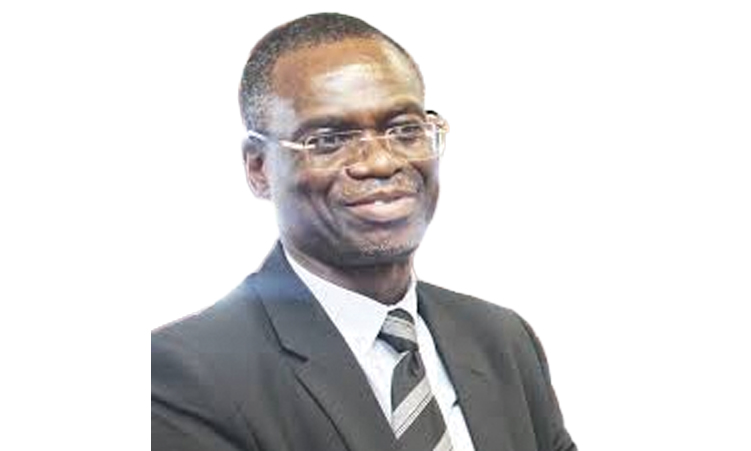





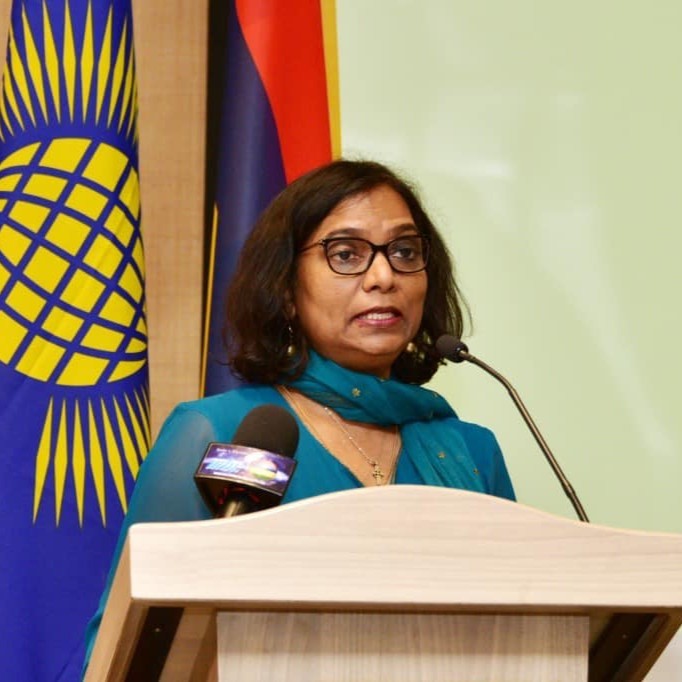
Ruth Kattumuri, the senior director of the Economic, Digital and Technological Innovation Directorate at the Commonwealth Secretariat, Windhoek, Namibia, 16 June 2025.
At the outset, I wish to welcome you all to the Senior Trade Officials Meeting (Stom II) here in Windhoek.
I would like to express my sincere appreciation to the government of Namibia for its warm hospitality and unwavering support in hosting this important gathering, and for its continued leadership in advancing our shared trade and development objectives. Additionally, I would also like to thank the government of Samoa, as chair-in-office, for their guidance, commitment, dedication and collaboration for this Stom II.
As we convene today, the world stands at complex crossroads. Trade tensions including tariff escalations, shifts in regional dynamics, climate instability, evolving technologies, and fragmented global markets are reshaping the future of commerce and investment. In such a world, the Commonwealth’s collective voice – representing five regions, 56 diverse nations, a population of 2.7 billion people, and a unique composition where 60% are under the age of 30 – must resonate with clarity and conviction. It is imperative that we harness our demographic dividend and translate our shared values into strategies that drive inclusive and sustainable economic growth.
Trade and investment must be central engines for this transformation. They are not only instruments of economic exchange but levers of innovation, resilience, job creation, and environmental stewardship. This meeting, and the broader discussions leading to the 2025 Commonwealth Trade Ministers Meeting, are critical opportunities to strengthen our cooperation and define practical pathways forward.
Over the next two days, we will deliberate on a range of interrelated themes that speak directly to the challenges and opportunities confronting our member states.
We will explore how to uphold and strengthen the multilateral trading system at a time when geopolitical shifts and rising protectionism are testing its very foundations. The Commonwealth has long championed a fair, transparent, rules-based and inclusive global trading system. As we look ahead to the World Trade Organisation (WTO) 14th Ministerial Conference in Cameroon, our collective leadership will be essential in advocating for meaningful progress on areas of mutual interest in trade, supporting WTO reform, and ensuring development-centred outcomes.
We will also examine how the Commonwealth can work together to unlock opportunities in the critical minerals sector. With rising global demand and vast mineral endowments in several member countries, we must ensure our strategies promote value addition, responsible mining, and resilient supply chains – benefiting both resource-rich and resource-dependent members.
Furthermore, discussions will focus on scaling up green trade and the circular economy, fostering innovation, and facilitating access to sustainable finance and green technologies. This is a key frontier for transformation, especially as the world transitions toward climate-aligned growth.
We will also engage on how to build long-term Commonwealth cooperation frameworks for trade and investment – exploring opportunities for deeper intra-Commonwealth collaboration. Our shared advantage, 21% lower bilateral trade costs and significantly higher intra-Commonwealth foreign direct investment offers a strong factual basis, but it must be underpinned by strategic action, institutional alignment, and a common vision.
The 2025 Commonwealth Trade Ministers Meeting will be an opportunity to build consensus around a multiplicity of issues critical to our economic future: from enhancing food and energy security, to tackling non-tariff barriers, supporting medium, small and microenterprises, enhancing regional integration, and sustainable value chains among others. Our deliberations over the next two days will shape that ministerial dialogue and define the commitments that emerge.
I encourage you to provide your constructive ideas, sharing your strength or diversity to advance a trade agenda that will ultimately unlock economic resilience and prosperity for our people including for our women, youth and marginalised communities.
With these words, ladies and gentlemen, I wish you productive deliberations and a successful meeting.
Thank you.