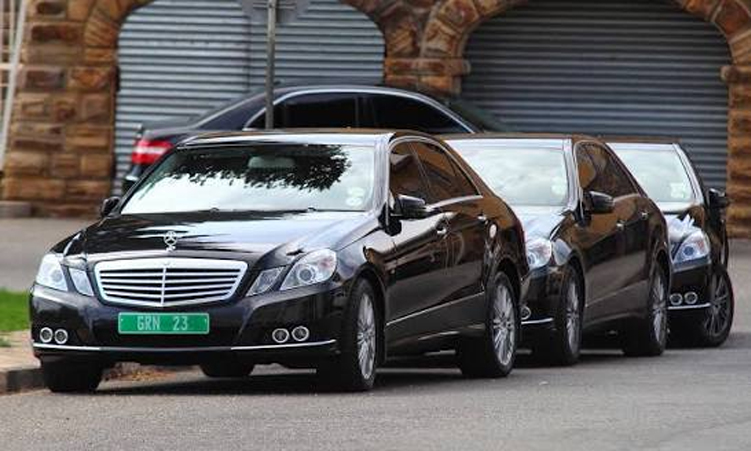
The City of Windhoek Council has removed a provision from its fleet management policy that allowed the spouses of council members to use municipal vehicles.
The provision formed part of the City’s Fleet Management and Auxiliary Services Policy, which the council reviewed and adopted last week.
“The removal strengthens policy integrity and ensures that municipal fleet resources are utilised strictly for authorised official purposes,” says the council agenda for its 27 August meeting.
The city’s fleet policy was first approved in 2019. The latest review introduces clearer rules on who may drive municipal vehicles, how vehicles and fuel should be managed, and the responsibilities of authorised users.
Landless People’s Movement (LPM) councillor Ivan Skrywer told The Namibian yesterday that the issue was not discussed as a separate proposal to stop councillors’ spouses from using municipal vehicles.
Skrywer said the previous policy referred to a “third party”, which could have been interpreted to include a spouse, but the term was never clearly defined.
“In the formulation of the policy, there was a third party. It applies to third parties. So, the translation or the interpretation of the word was that it could mean spouses,” he said.
He explained that the wording was removed because it had never been used and its meaning was unclear.
Skrywer said he is not aware of any councillor who has used the provision to allow a spouse to use a municipal vehicle.
“There has never been a case where a council has taken our window for a spouse. Honestly, I’m not aware,” he said.
Skrywer said ordinary councillors are not allocated individual municipal vehicles when travelling on council business, adding that they normally travel together, while the mayor and deputy mayor have designated vehicles.
Skrywer said the provision in the old policy was not clear enough for someone to simply use it to allow a spouse access to a municipal vehicle.
“It would not have been straightforward, because it was not clear in the old policy. It would have needed an interpretation, I think, before anyone used it,” he said.
He said councillors never understood the provision to mean that spouses could use municipal vehicles.
“We never thought about it that way. It’s just now, while removing it, that the explanation stated that it could have been interpreted that way,” he said.
Swapo councillor Fransina Kahungu, however, says the fleet management policy does not regulate vehicle benefits for councillors or senior municipal officials.
“But this policy is not talking about the usage of council vehicles by councillors or by the executive. Those are guided by another policy,” she says.
Kahungu says councillors’ benefits and entitlements are governed by separate conditions.
She says some senior municipal officials also qualify for vehicle benefits under a separate scheme.
“There is a scheme whereby some staff members qualify to buy vehicles under a scheme for the benefit of some officials at a certain level,” Kahungu says.
She says councillors and senior officials are, therefore, not covered by the fleet policy.
“These two categories, the executive and the councillor, are excluded from whatever is said in that policy. They are not part of it,” she says.
Policy analyst Johan Coetzee has welcomed the removal of the provision. Coetzee says spouses have no official role in the municipality.
“I think it’s high time that, I mean, the spouses have got nothing to do with the council at all. It’s only the position of the person himself that he’s representing the constituency that should be allowed,” he says.
Coetzee says municipal vehicles are funded with public money and should be used for council business.
“It makes sense to me from a transparency and from an accountability point of view. Because I mean, we pay so much for rates and services, as you know, and so that we can’t afford additional expenses that are not critical,” Coetzee says.
The revised policy also defines a “governor” as the mayor, deputy mayor or another person authorised by council to use a municipal vehicle for monitoring, control and limited private use.
The management committee recommended that the council approve the revised policy and rename the Municipal Fleet Division as the Fleet Management and Auxiliary Services Division.