Windhoek is slowly strangling itself.
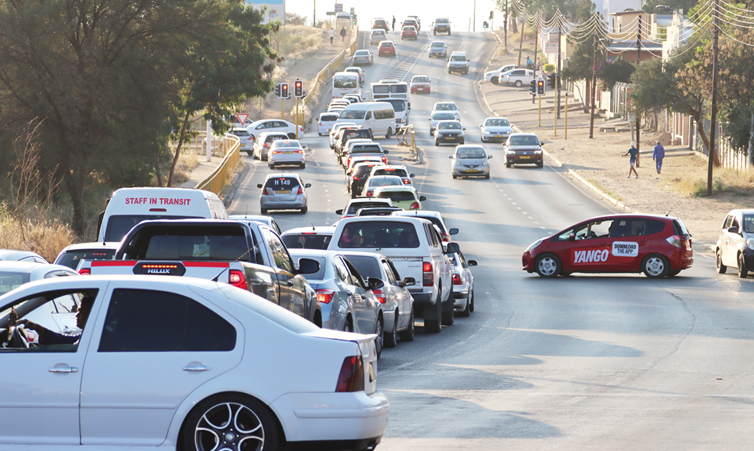
For thousands of commuters, what was once a brisk 30-minute journey has degenerated into an hour-long gruelling, pothole-riddled ordeal.
Windhoek is gridlocked from the northern corridor of Elisenheim, Osona and Okahandja onto the clogged arteries of the bumpy Western Bypass, to the south where commuters from Rehoboth, Groot Aub and Omeya clog the roads.
Yet, far more alarming than the queue of cars is the intellectual traffic jam at the heart of the city’s leadership.
The daily struggles of ordinary citizens paint a bleak picture of urban decay.
Commuters are forced to wake up at the crack of dawn, sacrificing precious time only to spend hours inhaling exhaust fumes.
Public transport users, especially those on the outskirts of Windhoek where half the city’s population lives, suffer the most.
They find themselves trapped in a system where basic infrastructure has failed to keep pace with population growth.
At a critical bottleneck near the Van Eck power station, the chaos is compounded by non-functioning traffic lights and potholes that make cars swerve into oncoming traffic.
Instead of solutions, the response of municipal authorities has been to deflect.
City mayor and Swapo councillor Sakarias Uunona’s defeatist claim that nothing can be done is as breathtakingly brash as it is politically out of touch.
To suggest the problem lies with households owning multiple vehicles is to ignore reality.
Perhaps if ministers or the president had to brave the Monte Christo road daily like the citizens who pay their salaries, we would see a miraculous completion and extension of that development.
The numbers behind this paralysis, provided by Simonis Storm, are staggering.
Windhoek’s population has surged to over 500 000, growing at an annual rate of nearly 3.5%.
Yet the city’s road network remains stubbornly radial, daily funnelling more than 20 000 inbound vehicles onto a handful of outdated routes.
The economic centralisation of the business district and the northern industrial areas creates a daily tide of congestion the current infrastructure simply cannot absorb.
Meanwhile, vital projects crawl forward at a snail’s pace, with the former Monte Christo road languishing in limbo while potholes have not been filled in many parts of the city since the last rain.
Rocky Crest and Otjomuise residents now have to deal with congested roads to go to and from work. Windhoek cannot afford this paralysis.
Traffic congestion is not a natural disaster. It is an engineering and planning challenge to be solved by city political leaders and their highly paid technocrats.
The municipality should urgently prioritise traffic flow studies, decentralise commercial hubs, and rapidly complete outstanding dual-carriageway projects.
More importantly, Windhoek must invest in a modern, reliable bus transit system to offer commuters a viable alternative to private car ownership.
If the city’s leaders continue to shrug their shoulders and look the other way, Windhoek will remain hostage to its own growth, and its roads will remain a daily nightmare.