



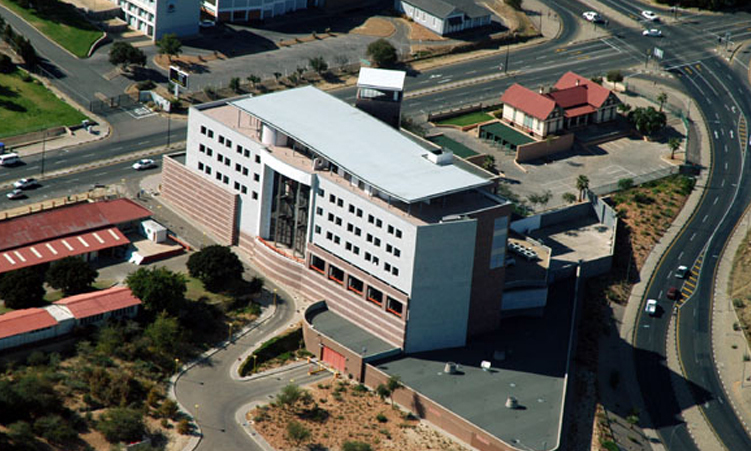
The Bank of Namibia (BoN) has decided to keep its benchmark interest rate at 7,75%, withdrawing the cost of living whip for the next two months.
With the repo rate kept at 7,75%, banks’ prime lending rates are also expected to remain at 11,5%.
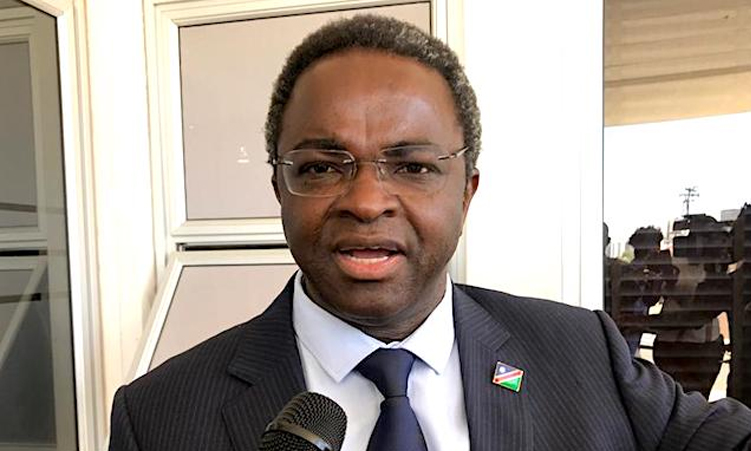
Announcing the decision at Oshakati yesterday, BoN governor Johannes !Gawaxab said at that rate, it was appropriate to continue safeguarding the peg between the Namibia dollar and the South African rand, and support the domestic economy.
High interest rates have been a headache for many, pushing up non-performing loans and commercial banks’ loan write-offs, and it is not expected that the rates will come down yet.
“It would not be surprising if non-performing loans increase as credit impairments jump, and this reflects pressure on Namibian consumers. Elevated consumer rates and inflation are bound to lead to an increase in bad debts,” said the governor.
He, however, added that commercial banks have robust balance sheets to absorb these losses.
“If you look at the capital adequacy from our banks in the country, that has improved from 15,4% at the end of March this year to about 15,7% at the end of June this year,” he said.
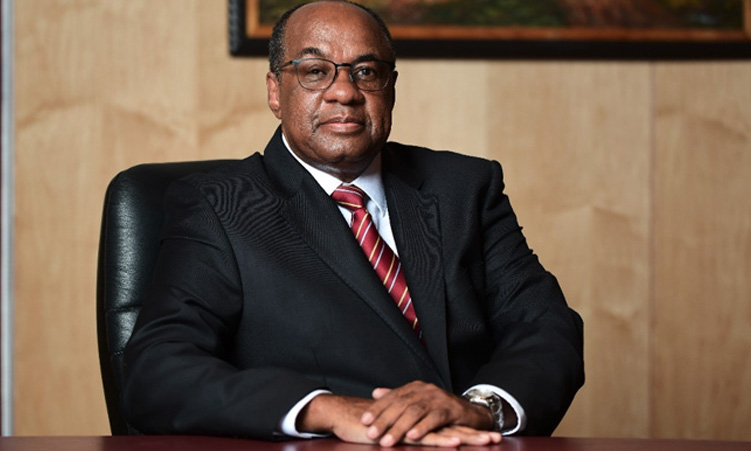
!Gawaxab noted that the BoN has observed a consistent increase in overdue loans for the first half of 2023 in the entire country, and the same trend was observed for impairments.
Although this remains a concern, there was still a member of the deciding committee that was pushing for interest rates to go up by 25 basis points to 8%, while the other four members opted for the rates to remain at the current level.
Analysts have indicated that Namibian consumers should still expect an increase in the interest rate before the end of the year to 8% – especially since the inflation outlook is still poised to increase.
This is because the US Federal Reserve (Fed), the Bank of England and the European Central Bank, as well as the Central Bank of Russia, raised rates since the last BoN Monetary Policy Committee meeting, to continue taming and anchoring inflation.
Analysts at Simonis Storm Securities also sided with this view.
“We expect one more 25 basis points hike before the end of the year by both the South African Reserve Bank and BoN in response to the Fed’s hike in July 2023. Thereafter, we expect rates to remain elevated and only see rate cuts taking place from the second half of 2024 onwards,” read a reaction note from the company.
Some are, however, of the view that consistent with moderating inflation, the 7,75% central bank interest rate for Namibia and 8,25% in South Africa is the end of the hiking era.

Commenting on the announcement, Oxford Economics analyst Gerrit van Rooyen said in line with the SARB, which is expected to keep its repo rate at 8,25% until the end of the first half of 2024 to anchor South African inflation expectations, he expects the BoN will follow suit, with the Namibian repo rate falling back to 7,5% in the second half of 2024.
The BoN estimates that overall inflation is expected to average 5,6% in 2023. Inflation was at 4,5% in July – the lowest it has been in 16 months.
Namibia’s average inflation rate rose to 6,2% during the first seven months of 2023, compared to 5,3% during the corresponding period in 2022.
The increase in consumer prices continued to be predominantly driven by food and housing price inflation.
As at 31 July 2023, Namibia’s stock of international reserves stood at N$54,2 billion, compared to N$53 billion at the end of June 2023 and N$49,7 billion reported at the last announcement.
In an age of information overload, Sunrise is The Namibian’s morning briefing, delivered at 6h00 from Monday to Friday. It offers a curated rundown of the most important stories from the past 24 hours – occasionally with a light, witty touch. It’s an essential way to stay informed. Subscribe and join our newsletter community.

The Namibian uses AI tools to assist with improved quality, accuracy and efficiency, while maintaining editorial oversight and journalistic integrity.
Stay informed with The Namibian – your source for credible journalism. Get in-depth reporting and opinions for
only N$85 a month. Invest in journalism, invest in democracy –
Subscribe Now!