





The issue of financing development within an African context is one that presents itself with challenges that are unique to both countries and in a continental context as a whole.
It is particularly necessary that the citizens of African countries understand, to some degree, the dynamics of post-conflict economic reconstruction. How we get to the destination of radical transformation as African countries is largely determined by the value and quality of the steps that we take in-between. We realise, however painfully, the prevalent ills that exist in our communities. These manifest as a lack of quality education, miseducation that manifests in the form of harmful perceptions held by a large populace, and gender inequality, among others. African leaders generally come under the most fire for the admittedly poor conditions of the countries under their rule.
In order for any investment towards development to be meaningful and lasting, it needs to be directed towards the areas that reflect the highest need and according to the highest degree of importance to society.
As an African leader, the first cornerstone that I would strengthen financially would be one which tackles the issue of disparity. Unequal access to resources harms developing countries significantly. The frustrating, growing gap between the rich and the poor is one that indirectly contributes to social uproar and ineffective communication between different classes in society. This is particularly harmful as social dynamics and good relations are vital to any society that wants to prosper. To maximise the benefits that my country could reap from this, I would continuously emphasise the importance of national harmony. We must sing the same song as a country. Commonly, the groups that are on the receiving end of inequality with regards to access to resources have been historically disadvantaged. Our shared past of colonialism as African countries is one that ought to make it relatively easy to understand the importance of financial redress in this regard. Moreover, I would facilitate, financially, welfare systems and other processes that enable the victims of past injustices to escape the cycle of poverty. The choice to opt into financial freedom is one which should be afforded to every child of the African soil. The narrower the gap between the rich and poor, the faster we reach our fullest potential as nations, and as Africa, collectively. Failure to address the inequality through financing will lead to perpetual poverty and stagnation for an African country and/or economy.
Furthermore, if I were an African leader, I would finance development and transformation by allocating financial resources to programmes that are dedicated to empowering the youth. The capacity of young people in the present manifests years after the current leadership has phased out. The way in which that capacity manifests has the power to make or break a country. As a leader, I would prioritise funding in areas that largely contribute to the healthy, holistic development of young people. Progressive youth are a key cornerstone of a stable community. That is pivotal in maintaining sustainability in a booming economy. Contributing to that progressiveness entails playing a positive role in the environment in which the youth grow into adults. I would make greater efforts towards investing in the education of my citizens, the importance of healthy parenting and how it affects children for the rest of their lives. Additionally, Africa continues to face the brain drain predicament. The youth, who do complete their education at high school level, usually go on to further their studies in developed, first world countries and do not return to their home countries for the sake of seeking a ‘better life’. This proves to be to the detriment of African countries. If I were an African leader, I would lessen the impact suffered by my country through making greater financial strides aimed at building tertiary learning spaces, equipped with state of the art equipment that facilitates active and effective learning.
Close to half the people of sub-Saharan Africa live in urban areas. Already, we are faced with the problem of lack of infrastructure. If I were an African leader, I would finance transformation through being deliberate in implementing policies that address problems that affect the majority of the citizens in the country under my rule. Simply put, holistic education, a narrower economic gap and empowerment of the youth is, theoretically, the formula to attaining the fruitful financial future that Africa is destined to have. I would remain conscious of the reality of the long way that we still have to go as a people. Financing development and transformation largely contributes to the quality of life that every citizen experiences. Practically, I would contribute to that quality by mobilising domestic resources through, for example, making use of the room available to boost tax revenues.
In conclusion, financial development and transformation is not an easily attainable dream, however it remains one that is attainable nonetheless. We cannot downplay the complexities attached to governing an entire country. We need to do better.
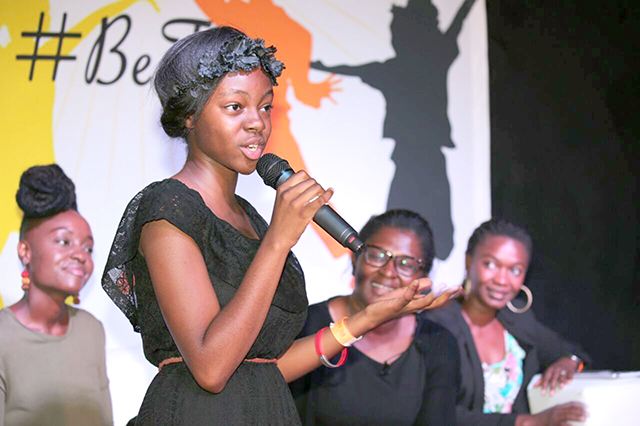
Bertha Tobias is an 18-year-old Namibian, currently studying at the United World College in Changshu China, where she is pursuing a pre-university, international baccalaureate.
She is a #BeFree ambassador, volunteer for One Economy Foundation and an intern at the United Nations Population Fund.
Contact her at missberthaj2000@gmail.com

