The first step in the career roadmap is to know yourself. Whether you are a first year student interested in learning how majors relate to careers, a final year contemplating post-grad studies or an alumnus considering a career change, it is crucial that you first identify your interests, values, skills and personality preferences in order to make a well–informed decision.
A career path is just that – a journey, rather than a single one-time decision. Every career path has milestones along the way. Most young people go through a moment of confusion when they have to select a career path that they should follow after they matriculate. There are so many careers that one can take a look at but you also need to learn and understand the type of person that you are and what your interests are, of which what you enjoy doing in your free time as a pupil could be of help to selecting your career path.
Partly, your approach to choosing the right career path is systematic. You need to consider different parts of the process, and conduct thorough research along the way. That way you will be in the best position to make the best decision. This week, The YouthPaper took a look at a career in radiography…
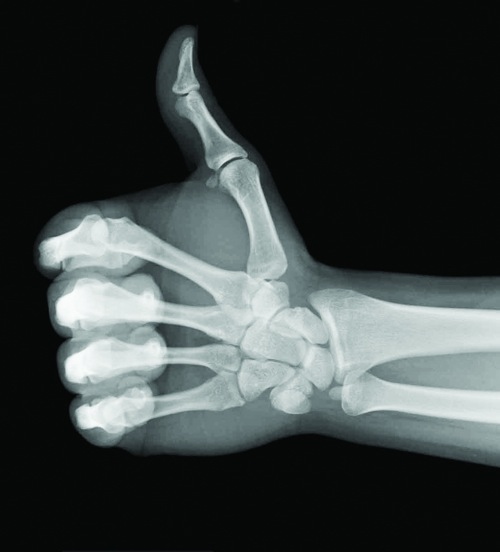
Radiography can be defined as an imaging technique that utilises electromagnetic radiation other than visible light, especially x-rays, to view the internal structure of a non-uniformly composed and opaque object. In Layman’s terms, radiography helps medical professionals see what is going on inside the human body.
Radiography is one of those careers that has a lot of different fields within it, such as general radiography (x-rays), fluoroscopy, mammography, computed tomography (CT scans) or magnetic resonance imaging (MRI), which all use different imaging techniques.
As a known developing country, Namibia is in dire need for medical personnel and aspiring radiographers can be one of the way to assist in the shaping of the future by utilising advanced equipment which is capable of assisting in the detection of many diseases such as tuberculosis and cancer which are well-known fatal diseases in the country. Having more of our own trained medical staff (radiographers, for example) will be another step forward.
A radiography graduate from the University of Namibia (Unam), Andrea Adriaans describes radiography as image projection of internal organs within the human body. As a radiographer, her role is to produce specific images using various positioning techniques which are then analysed by the doctor to make a diagnosis.
According to Andrea, “radiography can be very tiring!” “As a radiographer one needs to be willing to work hard and longer hours. It’s not your normal 8 to 5 job. As a qualified radiographer, you are expected to work night shifts or be on a call rotation. And as a student you spend a lot of time in clinical training while studying so you need to balance studying and working, but that is how it is with health professions. You need to work hard and train often to perfect the technique. Working with people’s lives, perfection is key. There is more to radiography than just pushing a button. It can be very interesting, especially when you find the human body fascinating. If you are unsure of whether it’s for you, I recommend you do job shadowing for a day just to get more insight,” she said.
A four year Honours degree in Diagnostic Radiography is offered at Unam. Speaking from experience, Andrea says that “one is required to have a minimum of 25 points on the UNAM Evaluation Point Scale. You have to be a holder of a Namibian Senior Certificate (NSSC) on higher or ordinary level, or an equivalent qualification. English is compulsory with a C symbol or higher for second language and a D or higher for first language. Mathematics and a science subject are also mandatory, with a C and D symbol or higher than that”.
If your are not the kind of person to do the ‘stuck behind a desk, same paperwork every day’ kind of job, but rather the kind of person who likes working with people and loves working with the human body, then you might as well as start considering pursuing radiography, it’s quite interesting.
• Evaluate your work style
• Know your talents
• Set financial goals
• Do the math before applying for school
• Assess your social needs
• Conduct informational interviews
• Use self-assessment tools
• Get a career coach
• Get real life experience
• Be patient