





TWO organisations representing Namibian employers have launched a High Court case against the president, the government and trade unions to have the suspension of parts of the Labour Act during Namibia’s Covid-19 state of emergency declared unconstitutional.
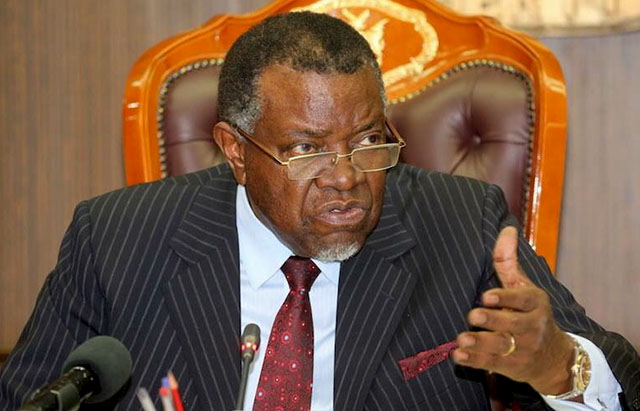
In an urgent application filed at the Windhoek High Court on Friday, the Namibian Employers’ Federation (NEF), the Namibian Employers Association and the companies FP du Toit Transport, JetX Couriers, John Meinert Printing, Huab Safari Ranches and Skycore Aviation are asking the court to declare parts of two proclamations issued by president Hage Geingob on 28 April and 4 May, and also parts of the Covid-19 state of emergency regulations, as unconstitutional.
In the two proclamations issued by the president, the suspension of the operation of some provisions of a number of laws – including the Labour Act of 2007 – was announced.
The proclamations stipulate that during the Namibia’s Covid-19 lockdown period, which started on 28 March and at this stage is due to end on 2 June, employers may not dismiss any of their employees because of the impact of the Covid-19 pandemic on their businesses, they may not force employees to take unpaid leave or annual leave due to the pandemic, and they may not reduce the pay of any employee for reasons related to Covid-19.
Employers are also required to reinstate employees who have been dismissed due to the effect of the pandemic on their business, and to negotiate with recognised trade unions, workplace representatives or affected employees themselves if they want to reduce or defer the payment of remuneration during the lockdown period because they are unable to pay employees’ salaries in full.
In addition to this, the regulations under the proclamations state that if employers have notified their employees of intended dismissals because of Covid-19, the dismissals would only occur 28 days after the end of the lockdown period.
Employers who breach the regulations by dismissing employees because of Covid-19, reducing their pay or forcing them to take leave, are commiting an offence for which they can be fined N$10 000 or given a jail term of up to two years.
The regulations further state that they apply retrospectively, with effect from 28 March, although they were published only on 28 April and 4 May.
The president, government, attorney general, ministers of labour and health, the labour commissioner and the National Union of Namibian Workers (NUNW), Trade Union Congress of Namibia (Tucna), Namibia National Labour Organisation (Nanlo), Namibia Transport and Allied Workers Union (Natau) and Mineworkers Union of Namibia (MUN) are cited as respondents in the case filed by the two employers’ organisations and the five companies questioning the constitutionality of the regulations.
The secretary general of the NEF, Daniel Strauss, states in an affidavit filed at the court many employers in Namibia are facing imminent demise if they are not allowed to use provisions in the Labour Act to try to cut their labour costs. However, those provisions in the law have been suspended by the regulations issued by the president.
Geingob “went much further than permitted by the Constitution” when he issued the proclamations containing the regulations on the Labour Act, Strauss claims.
According to Strauss, the suspension of parts of the Labour Act is not necessary for the protection of Namibia’s national security, public safety and the maintenance of law and order, as required by the Constitution, and the suspension is not reasonably justifiable.
In his affidavit, Strauss says the purpose of suspending a specific provision of the Labour Act must be to address the situation that gave rise to the Covid-19 state of emergency, which is the spread of Covid-19 itself.
“The Constitution gives no emergency powers to the president to make regulations to address the negative effects which are occurring in the Namibian economy because he made [the state of emergency and lockdown regulations],” Strauss states.
“There is a huge difference between addressing the situation which gave rise to the lockdown and addressing the consequences of the lockdown. The powers of the president allow him to address the former, not the latter.”
He also asks: “How does a suspension of a section of the Labour Act which prohibits retrenchments prevent the spread of the coronavirus?”
The respondents in the matter have been given time until 22 May to give notice if they intend to oppose the application and to file their answering affidavits.
The case has been postponed to 26 May for a hearing.