



WHEN *Kavee, at the age of 16, did not get periods like other girls her age, she discovered she was not normal.
Born at Omatjete in the Otjozodjupa region, and one of seven children, Kavee (25) did not know that she was living with a rare disease called Mayer–Rokitansky–Küster–Hauser (MRKH) syndrome.
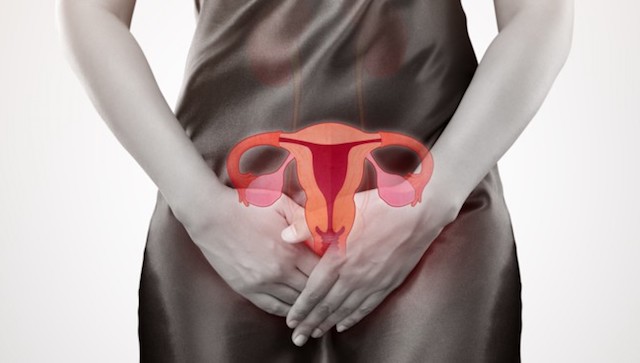
This involves that an individual has an absent or underdeveloped vagina.
Kavee is sharing her story hoping to raise awareness of people with her condition and to raise funds for corrective surgery.
At the age of 15, Kavee started suffering from headaches without menstruating.
She told The Namibian in an interview recently by the time she was 17, she knew something was wrong and started and visited the library at Omatjete, in search of answers.
She was working as a babysitter for one of her teachers at the Omatjete settlement at the time.
“I told her what my problem was and she agreed it was not normal. She took me to her doctor,” Kavee said.
According to the National Organisation for Rare Disorders, a non-profit American organisation, the MRKH syndrome is a rare disorder affecting children and symptoms vary from one person to another.
It is characterised by the failure of the uterus and the vagina to develop properly in women who have normal ovarian function and normal external genitalia.
“I cried when my teacher, who was also crying, tried hard to explain to me what was wrong. She said I do not have an opening to the vagina and I was in shock. I did not understand it at all,” she said.
Towards the end of her teenage years, Kavee found it hard to have a normal life as rumours would spread about her condition.
On top of this, there is no relief in sight if the condition is not treated.
She had no hope of ever being normal. Her mother did not understand. Her sister asked her to pray.
Her friends betrayed her and spread her story. She was stigmatised by her own community.
“I had little hope and had become suicidal,” Kavee said.
But there was hope . . .
When she was 21, Kavee was referred to Windhoek for further diagnosis and treatment. She visited the Katutura Intermediate Hospital before later being taken to the Windhoek Central Hospital where tests were done by the Namibia Institute of Pathology to confirm her diagnosis and seek treatment. According to her medical records, seen by The Namibian, Kavee indeed has no vaginal opening after a trans-abdominal and pelvic trans-vaginal sonar were conducted.
“A trans-vaginal sonar was attempted, but there seems to be no opening to the vagina. The right kidney is not demonstrated. The left kidney is enlarged 13 cm and in normal appearance,” it reads.
Kavee’s health passport shows she was diagnosed with MRKH syndrome in addition to having a hypo-plastic uterus, underdeveloped vagina and absent right ovary, as well as a missing right kidney.
She was told treatment is not available in Namibia. Kavee would need funding to travel to South Africa.
Her hopes were dashed when she went back to Omaruru and had to continue living with her condition.
“People spoke badly of me. Some tried to help by encouraging me not to care about people, and that it is part of God’s purpose, but it was not easy,” she said.
Kavee had a boyfriend who understood her condition.
“I would feel bad and cry sometimes, but he told me one day I could be fine,” said Kavee, whose biggest wish is to be treated.
Her aunt Mwapewa* was moved to tell Kavee’s story in the hope of raising funds for surgery.
Kavee’s elder sister, Mara*, said her sister has always been outgoing and at times would share her story with her friends, who would question her or make fun of her for having a boyfriend.
“This would hurt her feelings and she would at times stay in the house all week without eating,” her sister said.
Dr Kimera Lukanga, head of the department of obstetrics and gynaecology at the University of Namibia’s medical school, says this condition affects both the vagina and the uterus, which are vital organs for fertility and reproduction.
In an age of information overload, Sunrise is The Namibian’s morning briefing, delivered at 6h00 from Monday to Friday. It offers a curated rundown of the most important stories from the past 24 hours – occasionally with a light, witty touch. It’s an essential way to stay informed. Subscribe and join our newsletter community.

The Namibian uses AI tools to assist with improved quality, accuracy and efficiency, while maintaining editorial oversight and journalistic integrity.
Stay informed with The Namibian – your source for credible journalism. Get in-depth reporting and opinions for
only N$85 a month. Invest in journalism, invest in democracy –
Subscribe Now!