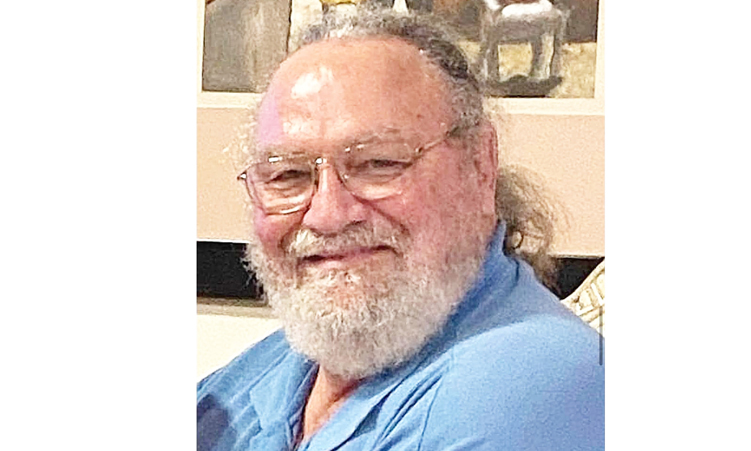








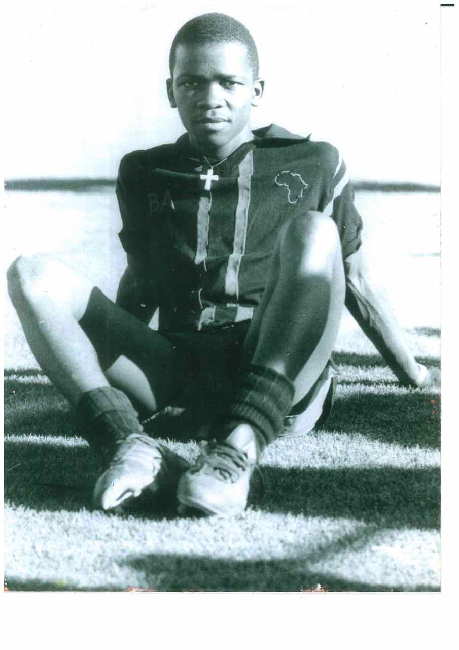
BLACK Africa is more than just a sports club, says one time Brave Warriors head coach and NFA technical director Seth Boois who is penning a memoir on the country’s most successful club.
It is a way of life that BA has always advocated for since taking its tentative steps in 1964 towards its present status.
Boois’ account is the latest in a series of works on Namibian football history that he intends to get published. He chronicles the establishment of the club, its position in the geo-political landscape of the country and its unprecedented on field success.
“It’s time to concretise my research work on this great football club whose mission of the founders is yet to be earnestly pursued.
Research on the football side is practically complete, but the netball component’s account in the club’s storied history is still a work in progress, Boois said.
“I felt that there was a need to give recognition to founding members. It’s a recognition of the contributions of countless playing and non-playing staff, men and women, youth and adults,” said Boois, who also served the club’s secretary in 1989 under the chairmanship of Bob Kandetu.
The club’s origin is credited to one Ben !Gonteb, a former Döbra [St Joseph’s Roman Catholic High School] student who went for priesthood studies in Lesotho in the early 1960’s. !Gonteb had been playing around with the idea of forming a club whose stature was to be closely associated with Döbra’s football first team.
“He was much more interested in development programs around the country from the junior secondary schools at Maria Bron (Grootfontein), St Michaels (Outjo), Otjiwarongo Roman Catholic School and the one in ≠Goas Junior Secondary School,” Boois narrated.
Gonteb discussed his ideas with the likes of Simon Mogane, Mihe /Goagoseb, Spokes Tibinyane and they formed Eleven Conquerors football club.
The team struggled to make much of an impression on the field in the formative years, regularly running up cricket scores against rivals. But fortunes changed after BA stumbled upon its established colours at a meeting to find a remedy. Club stalwart Ben Tsuob arrived at the meeting with black and red feathers of a cock and it was on the proposal of /Goagoseb, who was elected as the club’s first president, that the name change and colours were enacted.
“The football landscape of the South West Africa would never be the same again,” said Boois.
Soon after the name change, the SWA Bureau of State Security called in BA founding members Gonteb and /Goagoseb for questioning over suspected ‘terrorist’ activity.
“Once there oom groot Jan, deputy head of the Counter Insurgency Unit said ‘julle het now weer ‘n nuwe terroriste organisasie gestig om moord en vernietiging te skep [so, you have created another terrorist organisation to cause murder and mayhem]’”, Boois recounts.
“And /Goagoseb, answering in the affirmative said ‘ja, maar ons plan is ander sokker spanne te terroriseer. Maar ons het niks te doen met moord en vernietiging nie [yes, but we intend to terrorise other football clubs. But we have nothing to do with murderous havoc]’”.
They were let off with a warning and threatened with imprisonment should they be linked to anti-apartheid resistance movements.
But given that politics and sports, particularly football, were intertwining at the time, it was inevitable that the club would have a links to the political arena. Closely tied to the club were young political hopefuls such as Moganedi Thlabanello and Daniel Tjongarero, who in due course became BA chairman. Tjongarero is heralded for pushing the non-tribalist and non-sexist agenda of the club as well as championing the programme of action to venture into Africa, said Boois.
Black Africa ventured into Africa ten years after its formation, initially touring South Africa in 1972 before Namibia’s independence. That paved the way for competitive forays on the continent, a level of play the club is yet to come to grips with.
BA’s legacy is adorned by some of the country’s most iconic footballers. The memoir has a dedicated section on BA greats like Hubert Mootseng, John van Wyk, Fossie van Wyk, Gabes Dausab, Corree Uri-#, Josef Mombs Eiseb, Pele Eigobab, Five Hochobeb, Hasie Mingerie, Mike Hans, John Hans, Stouter Ochurub, Gawas, Malaka Somseb and Albert Louw Malaka Somseb who were all recruited from Döbra and starred for the side between 1971 and 1977. They were succeeded founding members by Ben Gonteb, Willibalt Thlabanello, Oom Simon Mogane, Atties Lambert, Josefat Swartz, Spokes Tibinyane and Victor Tibinyane, Ou Sutere, Immanuel Kutaru, Mister Romanu who held the fort between 1964 to 1970.