


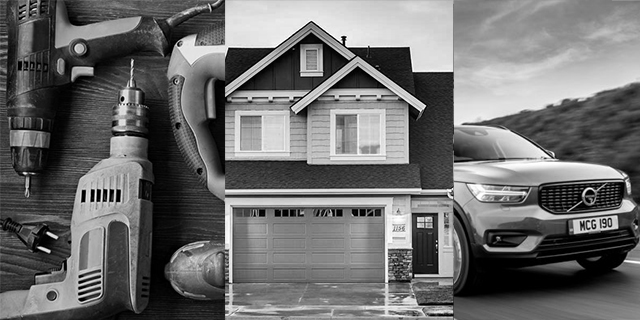
NAMIBIAN commercial banks have repossessed cars, properties, and equipment worth over N$157 million at the end of June this year, which is almost double the N$85 million reported for June 2020.
This increase is mainly due to the impact of Covid-19 on the economy.
These figures were released by the Bank of Namibia recently and depict a worrying picture, with the value of repossessions increasing by at least N$50 million this year alone.
The N$71 million yearly increase from June 2020, which is an 83% increase, comes at a time when the banking sector is rocked by a high number of non-performing loans.
At the end of June this year, these non-performing loans shot up to over N$6,9 billion.
This represents loan balances on which no payment of either the capital balance or interest have been paid for over three months.
Over N$5,3 billion in non-performing loans have been granted in the Khomas region.
While Covid-19 has accelerated the increase in non-performing loans, the alarms has been raised by the market countless times before – especially on mortgages.
Mortgage lending dominates non-performing loans, with a value of N$4,2 billion.
The Namibian reported in 2019 that the property sector could be a threat to financial stability in Namibia, given the value of loans extended to the sector.
This year the Bank of Namibia indicated that the properties of Namibian homeowners who owe commercial banks about N$26,1 billion in mortgage loans are valued at N$41,5 billion.
To this end, the bank said households have amassed N$14,9 billion in equity on these properties.
Although this is a monetary value it was still not clear whether it could be used as collateral on new loans.
The central bank’s analysis has emanated from an update by the national macro-prudential oversight committee’s assessment on the Namibian financial system, which found that the system remains “resilient, solvent and sound, despite the Covid-19 pandemic and otherwise challenging economic conditions”.
Of the identified strengths were that the committee did not observe any undue upward pressure on asset prices that could adversely impact the stability of the financial system.
This was particularly because “the property market was already under pressure over the last few years, and prices have stabilised,” the committee said in mid-July.
The committee, chaired by governor Johannes !Gawaxab, said a significant positive equity build-up was observed where current housing valuations exceeded outstanding mortgage balances by a substantial margin.
This involves the N$14,9 billion excess referred to above.
The value of repossed items, although small, could have been higher if banks were not auctioning off several properties and items.
With many Namibians unable to repay their loans, commercial banks have started scrapping repossessed items to ensure they generate some cash to supplement less profitable banking services.
According to the further analysis of the central bank in June this year, repossessed items by commercial banks have a market value of over N$251 million, and properties top the list at N$230 million.
Other assets include vehicles at N$21 million.
Email: bottomline@namibian.com.na
Twitter: @Lasarus_A