




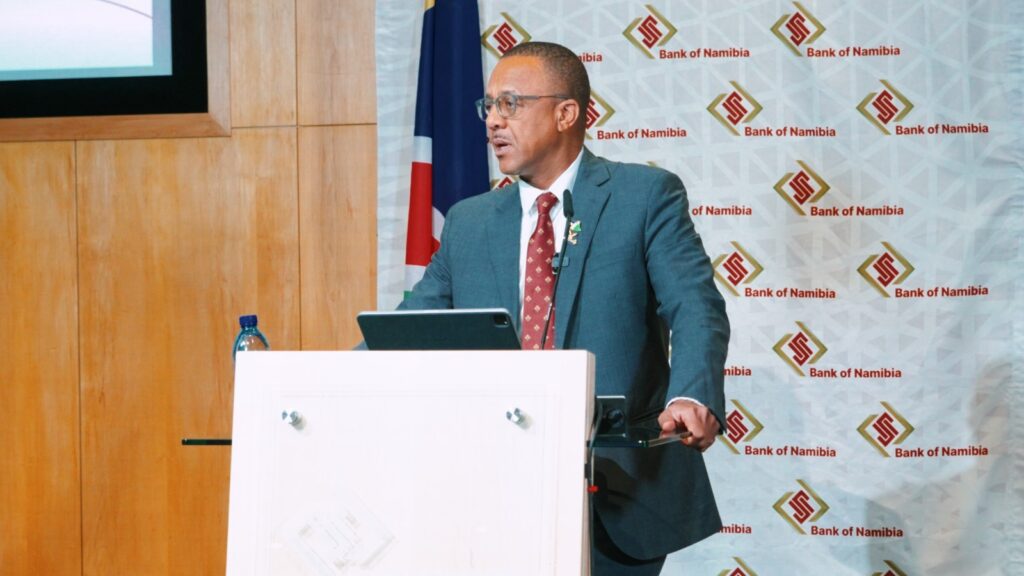
It is hard to believe we are approaching the midpoint of 2026, which marks six months since assuming my role as governor.
The global economic outlook continues to remain resilient, although marked by an ever-evolving landscape.
This changing landscape brings in complexities for policymakers, especially when there is uncertainty on whether a shock is short-lived or longer-lasting, hindering appropriate policy adjustments. In my initial blog post following the February Monetary Policy Committee (MPC) decision, I emphasised that Namibia does not operate in isolation.
As a small open economy, we remain highly susceptible to external shocks and vulnerabilities that typically materialise through various transmission channels.
We held our third MPC deliberations of the year and subsequently announced an increase in the repo rate by 25 basis points amid rising inflationary pressures.
While we had hoped for a more short-lived episode, our monitored indicators are responding to the severe supply shocks, particularly from oil infrastructure damage in major oil suppliers in the Gulf and the disruption of shipping through the Strait of Hormuz, which have triggered inflationary pressures and raised global energy prices.
The conflict in the Middle East officially surpassed three months (over a quarter) at the time of the MPC discussions, although peace proposals were being discussed. Internally, we undertook a preliminary assessment of the impact of the conflict on our domestic economy, which we published through a discussion note on our official website.
Bottom line: higher oil prices are contributing to a pickup in headline inflation given our heavy reliance on energy imports despite government attempts to cushion the economy.
Since our February decision, the annual domestic growth for 2025 was officially released, painting a weak and narrow trajectory.
Our monitored economic indicators signal that domestic activity remained weak over the first four months of the year, while inflation increased markedly. While the weaker performance was broad-based, it was most pronounced in the mining, manufacturing, tourism, electricity generation, construction and communication sectors.
Going forward, we expect growth to pick up some steam from 1.7% in 2025 to 2.6% in 2026, primarily on account of leading indicators pointing to strong activity in uranium mining, wholesale and retail trade, financial services and public administration and defence sectors.
Nevertheless, many factors remain at play with risks associated to continued geopolitical tensions, weaker global demand and possible development of an El Niño event.
Other domestic binding constraints such as water supply challenges, especially for uranium mining activities, restricts optimal growth potential.
Our decisions will remain anchored on a comprehensive, data-driven assessment of domestic, regional and global macroeconomic conditions, primarily aiming to achieve price stability while supporting sustainable economic growth.
While the recent ceasefire announcement is a welcomed development, we are aware that supply will take time to recover given the significant infrastructure damage in the Middle East.
Furthermore, we are also tasked with balancing the imperative to maintain the currency peg and mitigate second-round effects of the energy shock as the primary consideration of our price stability mandate.
We are mindful of the impact our decision may have on borrowers already reeling from elevated transport and fuel costs. Containing inflation and promoting price stability, however, will be beneficial to borrowers in the long run.
As previously communicated, the MPC is committed to equalising rates between Namibia and the anchor country in the medium term in an orderly fashion.
As such, a moderate tightening of monetary policy was deemed appropriate at the current juncture.
Going forward, the bank will closely monitor economic data, particularly developments in inflation expectations as well as capital flows given the current rate differential with South Africa and will react appropriately to contain second-round effects and safeguard the currency peg.
Finally, as we transition into the second half of 2026, the bank will build on the strides made to align its strategies to support national development priorities for long-term economic growth.
Our mandate on monetary and financial stability as well as the role of fiscal adviser will continue to support an enabling environment.
My colleagues and I look forward to continuing this work and remain committed to policy decisions that deliver on our price stability mandate and broader contributions to the evolving needs of our domestic economy.
– Ebson Uanguta is the governor of the Bank of Namibia.