The All People’s Party has criticised minister of urban and rural development James Sankwasa for summoning traditional leaders to Rundu for consultations on Bwabwata National Park’s customary status.
The party has questioned why Sankwasa is summoning Hambukushu Traditional Authority leader Fumu Munika and Khwe (Kxoe) traditional leader Thaddeus Chedau to Rundu, instead of travelling to meet the community.
All People’s Party president Ambrosius Kumbwa was reacting to a letter from Sankwasa’s office to legal representative Karen Klazen, dated 29 July, informing her that the minister had scheduled a consultative meeting at Rundu from 12 to 14 August.
The meeting will discuss the traditional and customary status of the park, with Munika and Chedau instructed to attend and to bring one representative from their traditional community.
The ministry in the letter said it would cover transport, accommodation, meals and daily subsistence allowance for the two leaders.
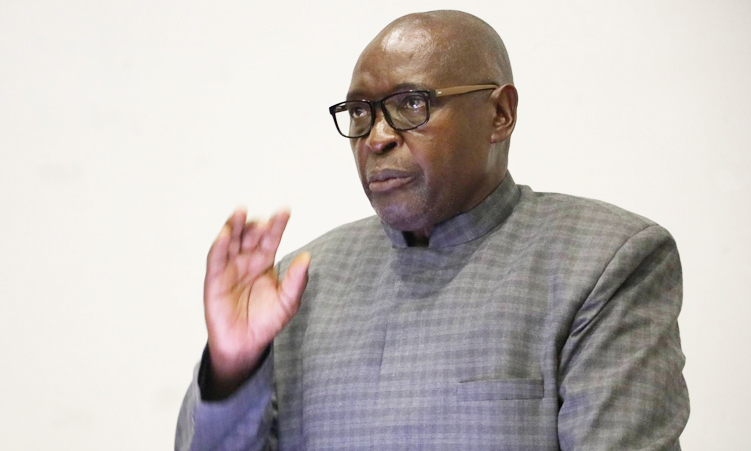
Kumbwa yesterday said the approach raises questions about how the government is conducting consultations on an issue directly affecting communities and traditional authorities in Bwabwata National Park.
“If the minister is serious about consultation, why must Munika and Chedau be instructed to come to Rundu? Why can the minister not go to Bwabwata and consult the people there?” he asked.
He said meaningful consultation should involve the government going to affected communities rather than expecting traditional leaders to travel to administrative centres.
“The government must meet people where they are. You cannot claim to be consulting communities while making it difficult for those communities to participate meaningfully,” he said.
Kumbwa said customary process must be respected, requesting the minister to instead go to the palace of the two traditional authorities to consult.
The letter raises questions about the historical administration of Bwabwata National Park before independence, its inhabitants under German and South African rule, the boundary between the Kavango and Caprivi regions, and whether the Khwe, as a distinct linguistic and cultural group, should have their own traditional authority and jurisdiction.
THE DISPUTE
The consultations come amid tensions over land, livestock and traditional authority in Bwabwata National Park.
The Hambukushu Traditional Authority has challenged the park’s 2007 proclamation and is seeking to overturn restrictions on cattle farming.
The resident Khwe community, meanwhile, has called for stricter enforcement against unauthorised livestock and illegal use of natural resources.
The then Ministry of Environment, Forestry and Tourism rejected calls to open the park to cattle farming, citing disease-control concerns, including the risk of foot-and-mouth disease, as well as the protection of Namibia’s beef industry.
Bwabwata was first proclaimed the Caprivi Game Reserve in 1966 and upgraded to the Caprivi Game Park in 1968.
It was gazetted as Bwabwata National Park in 2007 and incorporated in the former Mahango Game Reserve.
The park has a complex history, including its use as a military area during Namibia’s liberation struggle.
After independence in 1990, a survey assessed wildlife and the circumstances of about 5 000 people living in the area, contributing to the current management model, which seeks to balance conservation with community needs.
Bwabwata now comprises conservation and multiple-use areas where human settlement, community-based tourism and development are accommodated.