


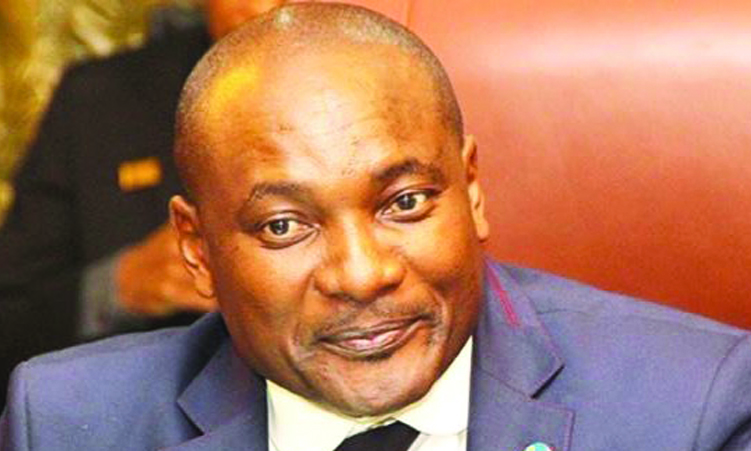
Tourism minister Pohamba Shifeta has said parliament’s anti-homosexual bills are not that radical and will not impact the country’s tourist arrivals.
Shifeta was responding to media questions yesterday after he presented the latest tourism statistics of 2022 in the capital.
“Of course, it is very much a radical change in definition, but I don’t think it will harm our sector,” he said.
The country’s tourist arrivals have been increasing in the aftermath of the Covid-19 pandemic, with more than 461 000 landing in the country last year. This increased from the 231 756 tourists who visited Namibia in 2021.
“I don’t think that from there, there will be a major shift in the tourism arrivals in the country because if not, nobody will be harassed, nobody even if you are whatever you are, and it has never happened before.
“… So, it is not really a radical kind of shifting from the definition, more a kind of moderate definition,” Shifeta said.
Parliament last month passed bills seeking to prohibit same-sex marriage, the solemnisation of same-sex marriages and to deny the recognition thereof.
The bills seek to define the term ‘spouse’, invoking articles 81 and 4 of the Namibian Constitution to contradict a decision of the Supreme Court of Namibia on same-sex marriage.
In Uganda, developed countries like the United States (US) and the United Kingdom (UK) issued travel advisories against visiting the east African nation.
“Reconsider travel to Uganda due to crime, terrorism, and anti-lesbian, gay, bisexual, transgender, queer/questioning, intersex and other (LGBTQI+) legislation. Some areas have increased risk,” reads the US state department’s travel advisory on their website.
This has led to a reduction of at least 30% of their tourist arrivals.
Uganda is also facing funding cuts from the World Bank and the US President’s Emergency Plan for AIDS Relief (Pepfar) as a result of the anti-homosexual laws.
“But I don’t think that it will really prevent our tourists from visiting Namibia, because maybe other countries have gone so far,” Shifeta said.
He said Uganda’s laws are too radical compared to the parliament’s bills.
“That’s one bill, one was more of measures to prevent promotion of some acts.
“You also have some kind of capital punishment. Something that we don’t have is that our law does not allow capital punishment,” he said about the bills.
The bills await the signature of president Hage Geingob to become laws.
TOURISM STATS
Travellers from the Southern African Development Community (SADC) topped Namibia’s tourist list, with visitors from South Africa, Angola, Zambia, and Botswana.
International visitors to Namibia were mainly from Germany, France, the United Kingdom, the United States, Italy and Switzerland.
“The majority of visitors, representing 53,1% of the total tourist arrivals, came to Namibia between September and December of 2022, 36,1% of the tourists travelled between May and August and 10,8% travelled between the months of January and April,” Shifeta said.
The minister said the increase of tourist arrivals are as a result of the overall confidence of tourists in Destination Namibia, ease of access to the country and a reformed visa regime.
“… the availability of more airline seats to Namibia, aggressive marketing and promotional campaigns, their presence and participation at international platforms, hosting of business meetings, events, the increase in the country’s brand awareness globally, quality of experience and offering,” he added.
In an age of information overload, Sunrise is The Namibian’s morning briefing, delivered at 6h00 from Monday to Friday. It offers a curated rundown of the most important stories from the past 24 hours – occasionally with a light, witty touch. It’s an essential way to stay informed. Subscribe and join our newsletter community.

The Namibian uses AI tools to assist with improved quality, accuracy and efficiency, while maintaining editorial oversight and journalistic integrity.
Stay informed with The Namibian – your source for credible journalism. Get in-depth reporting and opinions for
only N$85 a month. Invest in journalism, invest in democracy –
Subscribe Now!