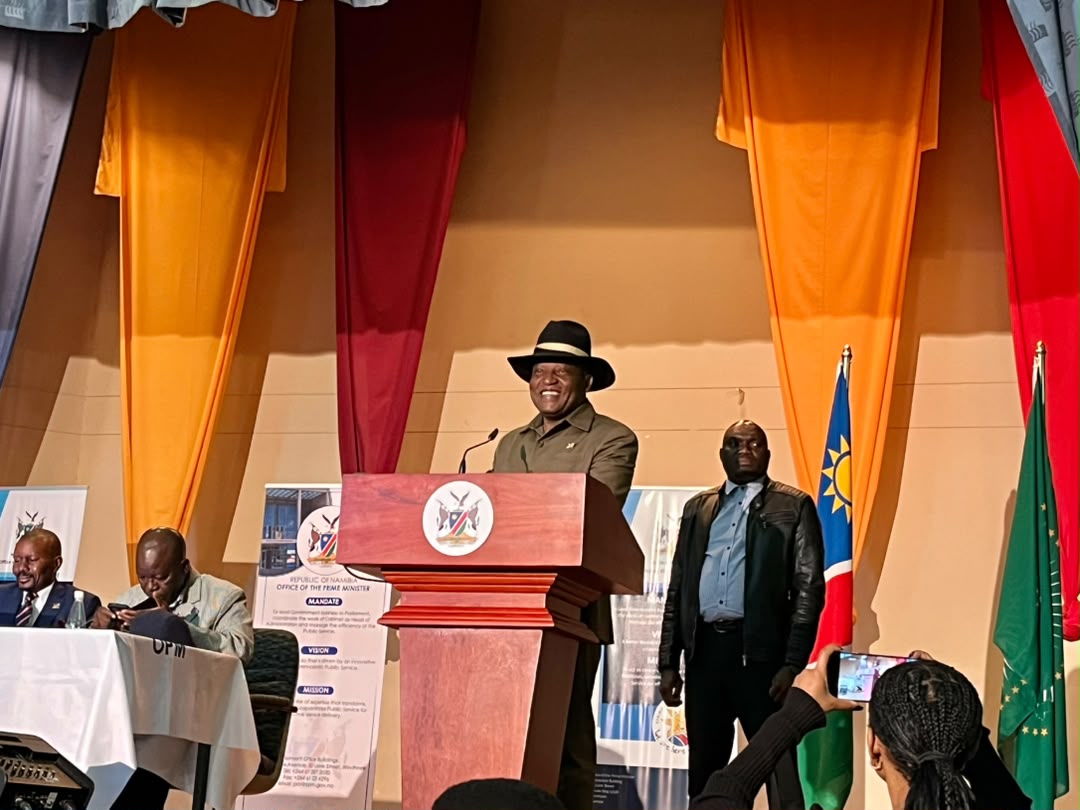







DEPUTY minister in the Office of the Prime Minister, Chief Samuel Ankama, wants the former Oniimwandi military base in Oshakati East declared a war museum.
He also wants the Uupindi mass grave, where executed former Plan combatants are buried, to be declared a national shrine.
Addressing a consultative meeting on the two issues at Oshakati yesterday, Ankama said he had applied to the National Heritage Council for the recognition of the two sites.
The deputy minister explained that growing up in the war zone during Namibia’s liberation struggle left a lot of unforgettable scars in the minds of many people who witnessed or experienced atrocities of war. “The former Koevoet base called Oniimwandi was well-known by the generations of that time in Namibia and internationally as a place where Namibians were detained without trial, tortured or killed,” Ankama stated.
He said the grave of the executed former combatants is a reminder of self-sacrifice and bravery of Namibians who sacrificed their lives for the country to attain independence. A war museum, Ankama stated, is a place where war materials are kept or preserved.
“A liberation war museum is essential for the collection, preservation and display of the objects, artefacts and all other materials related to the war of liberation. (As for the) national shrine, this is a place where citizens and other visitors would pay tribute to the fallen heroes and heroines”.
He further said: “History will judge us if we let go, forget accounts of our liberation struggle, forget all those who upheld the principles of Swapo as a liberation movement, and take for granted those who refused to disclose to the enemy the activities of the Plan combatants during the war.”
He cited President Hage Geingob’s remarks earlier this month requesting the management of the Asia-Africa Conference Museum to correct the caption on a picture of Namibian genocide victims. This was broadcast on the national broadcaster.
Geingob was on a state visit to Indonesia when he spotted the picture during a visit to the museum in the city of Bandung, West Java province.
The picture reportedly containing images of Namibians chained by German soldiers, is captioned as Zimbabweans who suffered genocide.
Geingob requested that accurate information be displayed with the photograph, and explained to those in charge of the museum that in southern Africa, Namibia is the only country that experienced genocide under German rule. Ankama told the director of the National Heritage Council, Salomon April, that researchers from credible academic institutions or individuals willing to join in writing the history of the country should be assisted by the council to do so. April urged those who are still living and can remember what happened to tell their stories as they will be teachers of future generations, as well as foreigners visiting the country and learning about its history.
The process to collect information was opened yesterday, and will be led by the team under April.
All survivors who were part or played a role in the liberation struggle with important information about the Oniimwandi military base are being urged to come forward and help the council to document the history.
– tuyeimo@namibian.com.na