In South Africa this week, the continent is set to settle a 15-year argument about how 1.4 billion people should choose their leaders. Namibia is in the room.
I am writing from the Pan-African Parliament (PAP) in Midrand, where the Extraordinary Session of the Seventh Legislature is set to open today to elect a new bureau.
One president. Four vice presidents. Three days of voting.
And behind the procedure, a story that explains a lot more about Africa than most Namibians have been told. Here is what happened.
When the PAP was inaugurated in Addis Ababa on 18 March 2004 – under the gavel of then African Union (AU) chair Joaquim Chissano of Angola – it was meant to be a consultative body that would one day become a real legislature.
For the first 18 years of its existence, every single president of the institution came from east, west or central Africa: Mongella of Tanzania. Moussa of Chad. Amadi of Nigeria. Nkodo Dang of Cameroon twice.
North Africa, never. Southern Africa, never.
The reason was arithmetic. Ecowas has 15 states. The East African caucus is large.
Central Africa straddles both blocs. North Africa has seven states. The Southern caucus has 10.
In a majority vote, the smaller blocs would always be outvoted. And for 18 years they were.
In May 2017, the PAP plenary decided to do something about it. It passed a resolution to amended the Rules of Procedure to introduce regional rotation of the presidency.
The AU Executive Council endorsed it through Decisions 979 of 2017 and 1018 of 2018.
The principle was simple: each of Africa’s five regions would get its turn.
Then came June 2021.
GRIPPING ‘VIEWING’
Many people will remember the footage.
Economic Freedom Fighters leader Julius Malema and African National Congress (ANC) chief whip Pemmy Majodina, on television.
Two female members of parliament ripping a white plastic ballot box out of each other’s hands. A water bottle in flight. A Portuguese-speaking voice over the speaker system pleading, “Please call the police. It is urgent.”
African Union Commission (AUC) chair Moussa Faki Mahamat tweeted that the scenes had “tarnished the image of this honourable institution”. He suspended PAP activities.
The continental parliament went dark for 12 months and 26 days.
When Mahamat returned to Midrand in June 2022, he asked the question that settled the argument.
“What is to be promoted?” he asked the chamber.
“The legal formalism resulting from the delays in the ratification of a text, or the commitment to a founding principle? Form or substance?”
On 29 June 2022, Fortune Charumbira of Zimbabwe was elected PAP president with 161 of 203 votes – the first southern African to hold the office in 18 years.
Now watch what happens next. The rotation that vindicated southern Africa in 2022 has cycled through. Charumbira’s mandate ended on 28 February.
The AU Executive Council called this Extraordinary Session through Decisions 1288 and 1663, complemented by a 27 March silence-procedure decision.
The rotation order this time, confirmed by the AU’s 22 April press release, is north Africa for the presidency, then East, west, central, and southern Africa as vice presidents one through four.
SCUFFLES AND SENSIBILITIES
Namibia has been here before. In May 2012, under president Bethel Amadi of Nigeria, Namibia’s Loide Kasingo was elected third vice president of the Pan-African Parliament for Southern Africa.
Our country’s only bureau seat in 22 years. We held the slot. We honoured it.
Rotation only works if the countries it benefit also accept their limits when their turn has passed.
Algeria is fielding a candidate. The Southern African development Community (SADC) will field its southern African nominee for the fourth vice presidency. We vote on Thursday.
What is at stake is not just five bureau positions.
What is at stake is whether African parliamentary democracy can govern itself without ballot box scuffles, without water bottles, without the AUC chairperson having to fly in from Addis to be a referee.
Mahmoud Ali Youssouf, the new AUC chair from Djibouti who beat Raila Odinga in the seventh round of voting in February 2025, is in Midrand this week.
But the rotation is real. The five regions are real.
And a country of three million is voting on an equal footing with Nigeria, Egypt and South Africa. That is the arithmetic of unity and for Namibia, it is the mathematics of dignity.
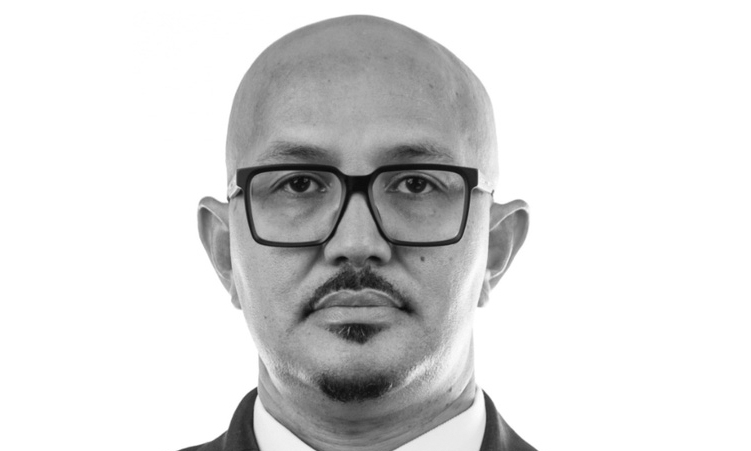
* Rodney Cloete is a member of parliament and Independent Patriots for Change shadow minister of international relations and trade. He is a member of Namibia’s delegation to the Pan-African Parliament. He writes in his personal capacity.