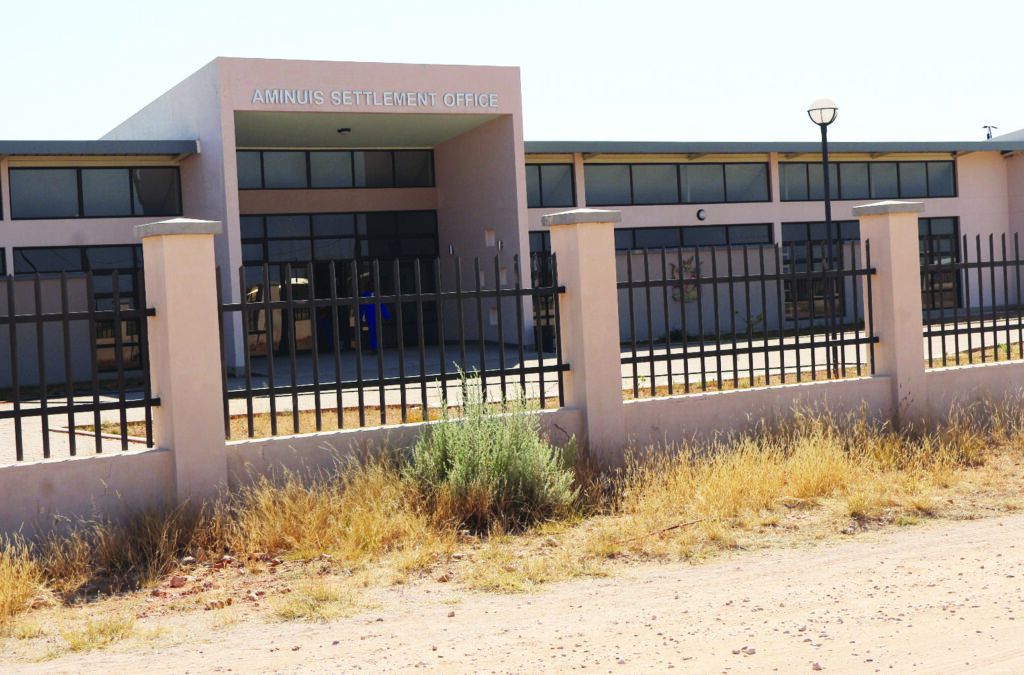
Aminus constituency leaders are lobbying for government and private investment to unlock the settlement’s massive agricultural, commercial salt harvesting, and tourism potential.
The settlement, about 150km south of Gobabis in the Omaheke region, has huge development potential that could transform the lives of the people living in the area, says constituency councillor Isando Kavari.
Apart from being a predominantly livestock farming area, Aminuis also has other natural resources that can be used to spur development in the area, he says.
Topping Kavari’s wish list is the development of a green scheme in the area to enhance food security.
“We have a lot of underground water that can be used to establish a green scheme in the area to boost food production for the people, as well as fodder for livestock,” he says.
This is echoed by Ovambanderu Traditional Authority councillor Tjazupi Kauaria, who says while the area has underground water, it does not have the infrastructure to tap into this water.
“This could help us establish projects that would take young people off the streets where they engage in social ills,” he says.
Kauaria says he hopes the government will meet the community halfway in establishing community gardens in the area.
Kavari says Aminuis also has vast salt pans which could create around 200 jobs for locals.
“We have a number of salt pans, the biggest of which is about 20 square kilometres, from which salt can be harvested on a commercial scale,” he says, adding this can be used as licks for cattle and other livestock or for human consumption.
Kauaria says there are plans to establish a conservancy for small wildlife that would attract more tourists to the area.
This is corroborated by Kavari.
“We plan to establish a conservancy near the salt pans to boost tourism. This can be used together with the Chief Hosea Kutako Memorial Museum and Shrine at Toasis to boost tourism in the area,” he says.
In addition to agriculture and tourism potential, Kauaria says harvesting firewood from the forest could also yield development.
“This activity was stopped by the Ministry of Environment and Tourism a few months ago although no explanation was given, and one can see piles of wood on the side of the highway,” he says.
Junior Ngueihita, a pastor in the area, says for development to take place, the government must attract investors and allocate resources to create employment.
– email: matthew@namibian.com.na