


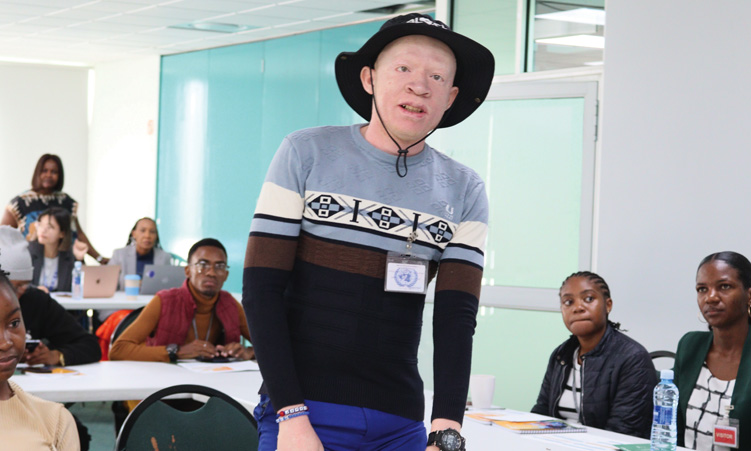
“We have a right to be seen.”
These are the words of Jakko Haiyambo (25), an albinism activist based at Nkurenkuru in the Kavango West region, who has just been elected into the United Nations Population Fund (UNFPA) Youth Advisory Panel.
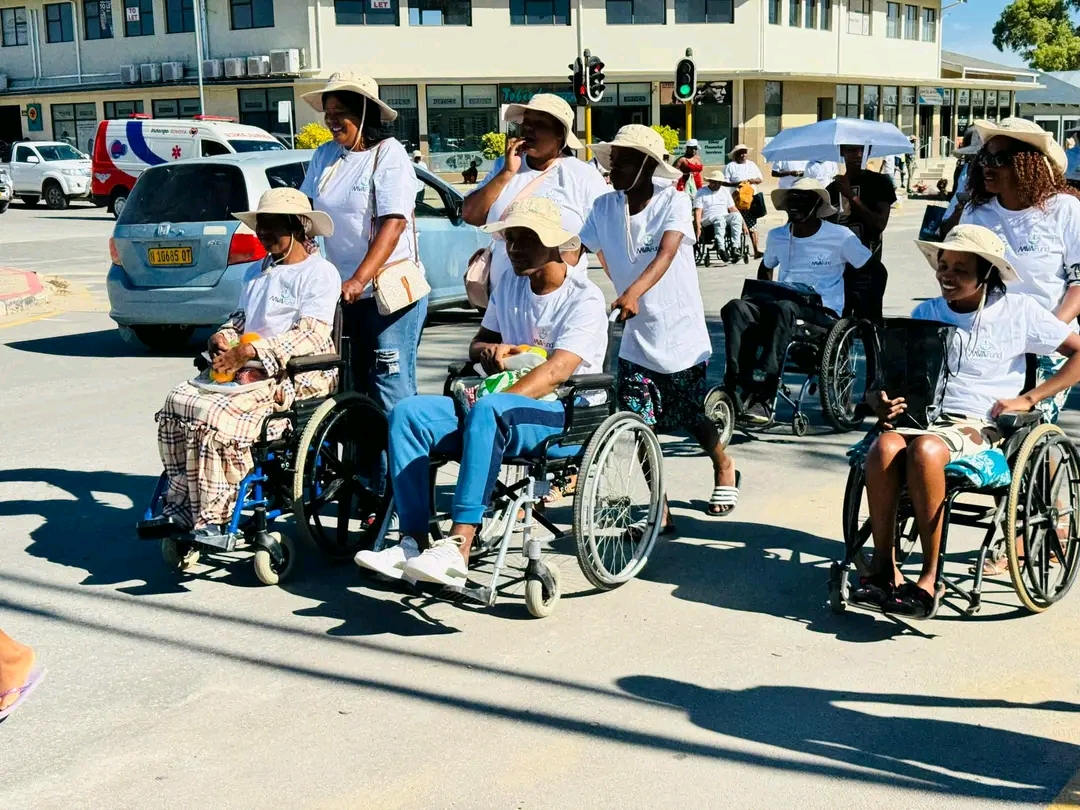
In his new role, he plans to see that all young people – particularly those with disabilities – are included in decision-making about their lives.
“For me, it’s not about a personal win, but about including other young people,” Haiyambo says.
“I want us young people to know we have a voice at the decision-making seat. Too many times our voice has been left out of decisions that affect our lives,” he says, adding that his recent appointment is not just for him.
Brought up at Nkurenkuru, Haiyambo says he endured the glares, gossip and criticism people with albinism are subjected to.
“People would ask me awkward questions,” he says.
“But I always knew I was more than my appearance. We don’t require sympathy, we require opportunity.”
It was through an unassuming social media flyer that he was made aware of the Youth Advisory Panel.
He did not initially believe he would be included on the list.
“I thought perhaps they need somebody else,” he says.
“But then I thought, if I don’t attempt it, how are things ever going to change for people like me?”
The panel, according to the UNFPA, brings together youth voices from across Namibia to offer advice on sexual and reproductive health, gender and youth development.
UNFPA representative for Namibia Erika Goldson during panel voting and a three-day national induction workshop held in Windhoek recently says the fund considers members of the Youth Advisory Panel to be drivers of change.
“We want their ideas, feedback, and leadership as we strive to leave no young person behind.”
Haiyambo says representation counts.
“When people with disabilities are included, it changes the design of programmes. It breaks assumptions and delivers real solutions.”
Haiyambo says simple but essential issues often go unfulfilled when it comes to people with albinism, such as sun protection lotion and proper eye care, which are not always available in remote areas.
“All teens with disabilities must have the right to speak about their bodies,” he says.
“We are all equal and have dreams, and we must be educated and empowered, like others.
“We need to make it the norm that we see young people with disabilities in positions of authority.”
Haiyambo says he dreams of a Namibia where disability does not mean exclusion, and where all young people feel they belong and can contribute to the local economy.
For now, he is proud to pull up his chair at the decision-making table and is determined to make space for others.
“This door opened for me,” Haiyambo adds, “and I’m going to hold it open for more young people to walk through.”
In an age of information overload, Sunrise is The Namibian’s morning briefing, delivered at 6h00 from Monday to Friday. It offers a curated rundown of the most important stories from the past 24 hours – occasionally with a light, witty touch. It’s an essential way to stay informed. Subscribe and join our newsletter community.

The Namibian uses AI tools to assist with improved quality, accuracy and efficiency, while maintaining editorial oversight and journalistic integrity.
Stay informed with The Namibian – your source for credible journalism. Get in-depth reporting and opinions for
only N$85 a month. Invest in journalism, invest in democracy –
Subscribe Now!