Africa seems to be right on track to miss the United Nations Sustainable Development Goal 7 target of universal access to cooking with clean energy by 2030.
Currently, 900 million of the world’s 2.1 billion people lacking access to clean cooking are concentrated in sub-Saharan Africa.
As the 2030 deadline approaches, the scale of this energy deficit indicates a critical need to pivot from high-level goals to localised, urgent implementation.
For too long, the clean energy drive has focused almost exclusively on electrifying households and businesses across the value chain, leaving clean cooking as an afterthought. However, recent initiatives, like Mission 300 (M300), a partnership between the World Bank and the African Development Bank, are changing the game.
With the goal of connecting 300 million Africans to electricity by 2030, M300 has elevated clean cooking to a core pillar of its strategy. Through the adoption of country-led National Energy Compacts, several African countries are now being encouraged to treat clean cooking as essential infrastructure rather than a secondary social issue.
HUMAN COST
The United Nations Development Programme reports that women and girls bear the heaviest burden of this deficit, often spending up to 50 hours a week collecting firewood – time stolen from education and economic opportunity.
Transitioning to clean solutions reduces deforestation, slashes carbon emissions, provides the opportunity to trade carbon credits, and helps to eliminate hazardous indoor air pollution.
The human cost of neglecting this is best illustrated by stories like that of Ngozi from Nigeria.
“I lost my daughter while cooking with wood. It had started raining, and we moved the cooking inside. We had no electricity, so I needed to light a lamp. As I poured kerosene, the heat from the cooking fire drew the fumes and caused an explosion.
“Only God saved my son and me, though we suffered severe burns. My daughter died at the entrance of the hospital as we arrived,” she says.
To achieve universal access by 2030, the sector requires an annual investment of approximately US$8 billion (about N$150 billion).
Currently, that figure stands at a mere US$2.5 billion (about N$41 billion).
Closing this gap requires a diverse portfolio, including liquefied petroleum gas (LPG), solar stoves, ethanol, and biogas.
We must also look at innovative business models that make these options viable for low-income households. While solar and ethanol-powered stoves are gaining traction, availability, accessibility and affordability remain the primary hurdles.
A poignant case study is the now-defunct Koko Networks in Kenya. Despite attracting nearly US$300 million (about N$5.6 billion) in investment and providing ethanol-powered clean cooking solutions to two million households in Kenya, the venture collapsed due to political resistance regarding carbon credit certification and temporary bans on ethanol imports.
This left the most vulnerable households with no choice but to return to the use of wood as fuel.
While this may have divergent views to the business model adopted by Koko Networks, it proved one thing to the world: that the availability, accessibility, and affordability of cleaner cooking solutions are in high demand, and the most vulnerable households are willing to adopt them.
In Nigeria, through the Energiz Project implemented by Lida Network, women in rural communities are being equipped with the knowledge and skills required to produce clean cook stoves and pallets.
For a lot of them, they had no idea about a cleaner and cheaper alternative to fuelwood, and LPG for these women was still considered expensive.
To achieve access to clean cooking by 2030, Africa must embrace a multidimensional strategy that integrates clean cooking into national energy plans and policies, global climate commitments such as the Paris Agreements, and development agendas.
This calls for innovative financing mechanisms, inclusive policy frameworks, and robust public-private partnerships. We must also rethink derisking investments and attracting patient capital.
According to UNDP, 45% of the 128 updated Nationally Determined Contributions submitted in December 2024 under the Climate Promise include specific clean cooking targets.
Technologies such as LPG, biogas, and electric cooking are gaining traction, but scaling requires a mix of approaches, including carbon credits, pay-as-you-go models, national financing mechanisms, and blended public-private investments.
Regionally, the African Union and its Energy Commission have released a strategic framework to tackle the continent’s clean cooking deficit.
Finally, further research should flow towards the use of charcoal as an additional alternative fuel, given its wide-scale adoption across the African continent, according to the International Renewable Energy Agency.
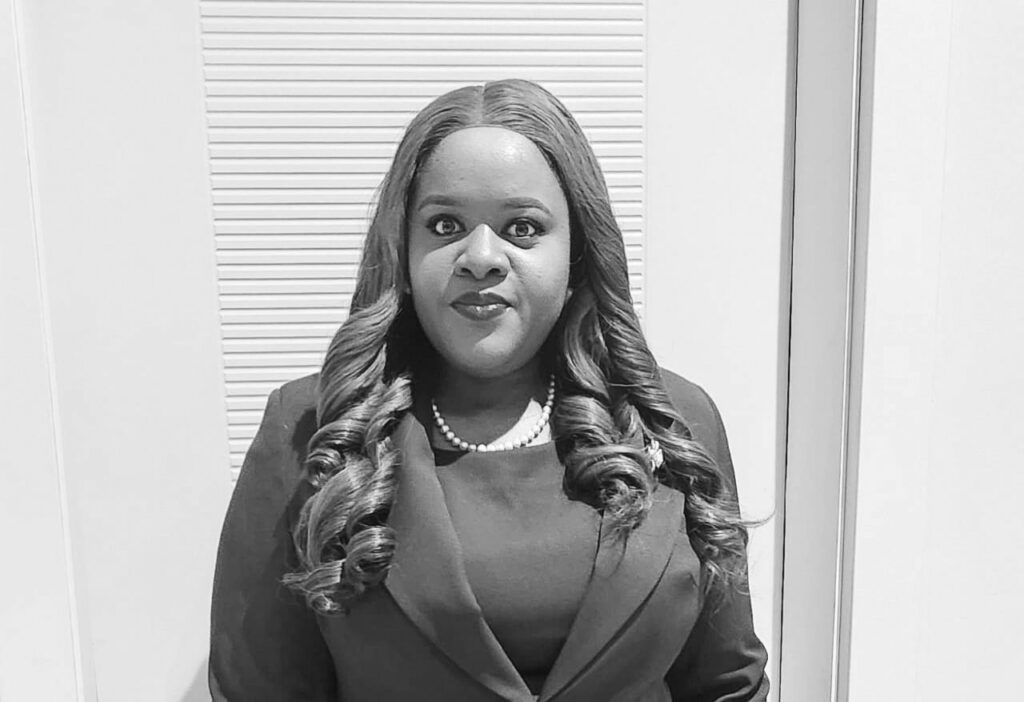
– Irene David-Arinze is an award-winning broadcast journalist and the founder of Lida Network, a media and development communication organisation. She is currently concluding her master’s degree in international affairs and diplomacy at Ahmadu Bello University Zaria, and is concurrently a master’s of business administration student at Miva Open University.