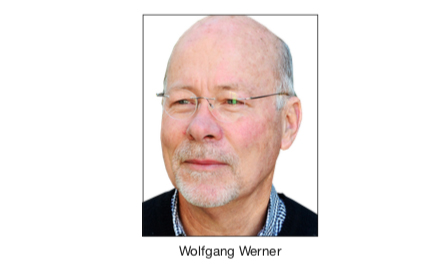
WOLFGANG WERNERON 9 JULY, a daily newspaper ran an article on the lack of post-resettlement support for the beneficiaries, arguing that this derailed productivity and profitability on resettlement farms.
Constraints mentioned included the absence of fencing infrastructure (and hence physical boundaries of allocations), dilapidated infrastructure as well as insufficient water infrastructure. One farmer complained he had spent a lot of his own money on his allocation before he could start farming.
In response, the executive director of the Ministry of Agriculture, Water and Land Reform, Percy Misika, was quoted as saying “the government is doing everything to empower resettlement farmers”. Among others, he said the government provided tenure security by issuing 99-year leases.
In terms of the National Resettlement Policy (ministry of lands, 2001) “the lease tenure system will be arranged so that the settlers can use the lease agreement as collateral to get loans from lending institutions for agricultural production purposes” (original emphasis).
The aim being “to bring small-holder farmers into the mainstream of the Namibian economy by producing for the open market and to contribute to the country’s gross domestic product”.
Regrettably, we have failed to achieve these important objectives. Beneficiaries remain dependent on the state for financial and other support.
Resolutions taken at the last land conference in October 2018 called for a review of tenure policy so that resettlement land would become bankable in order to attract investment and increase agricultural productivity and employment creation. Part of the problem is the way in which the policy and legal framework have been interpreted and implemented.
POOR IMPLEMENTATION
Existing frameworks provide for long-term leases to be registered at the Deeds Office. Once registered, they can be offered as security for loans.
However, poor implementation has prevented a large number of beneficiaries from exercising this option. Only about 450 beneficiaries out of 5 373 have been issued with lease agreements. Of this number, only six lease agreements for land allocated under the NRP had been registered by April 2016 with no mortgages registered over these leases.
Information from the Deeds Office suggests that the number of registered lease agreements is not likely to have increased since then. This implies that although the ACLRA prescribes that leases for land granted under the act shall be 99 years, and that the minister shall cause such leases to be registered at the Deeds Office, this has not happened.
Technically, hardly any beneficiary is able to use his/her land as collateral. One reason for this may be that beneficiaries are liable for registration fees and costs, which may outweigh perceived benefits in many cases.
Another difficulty is that by law, any registration of land rights must be accompanied by a survey diagram detailing the boundaries of the land. While such diagrams exist for the complete farms bought by the government, each subdivided portion needs to be surveyed for registration purposes. This requires 5 373 individual surveys to be carried out.
The same argument would apply to non-freehold areas if land rights holders wanted to register lease agreements. Even if all land held by smallholder farmers in non-freehold and the resettlement sector was surveyed and long-term leases registered, many would find it difficult to obtain loans by offering their land as collateral.
For an asset to acquire collateral value, it must be tradable to allow financial institutions to foreclose on defaulters. If this is not possible, land loses its attractiveness as collateral. Currently, the state does not permit the selling of leases for resettlement land. Consequently, commercial banks are not interested in granting loans to resettlement beneficiaries using their land as collateral.
Making registered leaseholds legally tradable is a necessary but not sufficient condition for beneficiaries to obtain credit because loan applicants must be creditworthy and able to service a loan. In Namibia, banks do not entertain security lending, i.e. granting a loan purely on collateral.
Even Agribank requires applicants for loans from the Post Settlement Support Fund to submit statements on assets and liabilities and income and expenditure to assess their ability to service a loan.
What should be done? A first step would be to register all lease agreements between the state and beneficiaries as provided for in the act. Secondly, a land market must be developed both in the resettlement sector and in non-freehold areas to enable lessees to trade their leases legally. This needs to be regulated to prevent compromising resettlement objectives.
The costs of transferring leaseholds need to be kept as low as possible. Once this is in place, commercial financial institutions are likely to provide much-needed loans to small-scale farmers. For asset-poor farmers unable to service loans, new financial instruments need to be developed.
A regulated land market would also make the resettlement model more flexible by enabling resource poor resettlement beneficiaries to sub-lease their allocations legally and obtain an income without having to give up their settlement rights.
Conversely, beneficiaries on an accumulation trajectory with an eye on becoming full-scale commercial farmers can legally lease land to add to their initial allocation. This is likely to improve agricultural productivity in the resettlement sector by enabling beneficiaries to act as economic subjects and not remain dependent on the state for support.
* Wolfgang Werner is an independent consultant and former associate professor in the Department of Land and Property Sciences at Nust.