



I cannot recall my first encounter with chillies. It may have been in the form of a dry powder I found in my mother’s spice rack. I am sure the spice was long past its expiry date.
Growing up, no one I knew liked chillies and I cannot recall even seeing a real fresh one until I was well past my formative years at school.
Anyway, my first encounter could not have been too impressive, or else I would have remembered it.
Sad, isn’t it? Well, that was rural Namibia during the 70s and even deep into the 80s.
Trips to Mexico and South-east Asia introduced me to the culinary wonder of balanced spicy food. Many of my most memorable meals were on these trips and most involved chillies in one form or the other.
In the restored historic haciendas of Mexico, I learned about moles, the traditional Mexican sauces that often combine chillies and chocolate. The sheer diversity of chillies and peppers is simply bewildering and so are the lists of ingredients to recipes that involve complex chilli flavours.
, one of Mexico’s iconic moles, requires, in addition to the standard aromatics such as onion and garlic: Whole spices like cinnamon, cloves, black pepper and cumin – also a plethora of dried (and) smoked chillies, pumpkin and sesame seeds, herbs like hoja santa (Piper auritum or Mexican pepperleaf) and cilantro, bread and sometimes dried fruit for extra sweetness. All this is combined with plenty of dark, bitter chocolate and cooked for enough hours to read a book. The ‘naughty’ has base ingredients that include whole spices, onions, garlic, seeds and chocolate. Mashed ripe plantain thickens the sauce and provides sweetness.
Late-night bar crawling in Thailand or Vietnam invariably resulted in many momentary lapses in reason which got filled with fried insects, garlic and heaps of chillies. Do not ask the innocent looking old lady selling strange looking bugs for ‘real Thai food’. It is a culinary booby trap designed to blow your head off. If someone offers you ‘, take it. Compared to ‘real Thai food’ you get less than a quarter of the chillies so even if you regard ” as an insult, the reduction in chilli-load is worth it. Trust me.
It is the Portuguese who brought chillies to Africa. The most unique variety found in southern Africa is the African Bird’s Eye Chilli which is also known as peri-peri or piri-piri or Red African Devil chilli pepper. It is related to the Tabasco chilli pepper and is found nowhere else but in Africa. Although Mozambique is known for its peri-peri production, this chilli is cultivated all over the African continent.
It is thus not surprising that the continent’s most famous chilli sauces such as Nali from Malawi and South Africa’s Nando’s are made from peri-peri chillies.
The peri-peri chilli has a Scoville ranking of 175 000, which means it is hot. In chilli speak, this is referred to as ‘torrid’. The Scoville scale measures the ‘heat’ in chillies and anything made from chillies. It is named after its inventor, Wilbur Scoville, a pharmacologist, who developed the Scoville scale in 1912.
I have been conducting a number of experiments with making chilli sauce over the past few years. I am particularly fond of fermented sauces which are more flavourful but most importantly, have a much longer shelf life.
The process is fairly easy and small batches for occasional use do not take very long. Perhaps six to eight days depending on the chillies and the weather.
There are two schools of thought on fermenting vegetables such as chillies. The first is a wild fermentation and requires mainly salt, and the second uses brine.
With regard to the first method, the chilli peppers are chopped, mixed with or left without aromatics such as garlic and ginger, and then treated with salt and sometimes sugar. The pulp or mash is then transferred to a fermentation vessel where it is left for a few days. With the second method, brine is made by combining water with salt (usually around 2% of the weight of the water) and keeping the mixture in a fermentation vessel for as long as it takes to ferment.
The fermented chillies are processed with a blender or food mill to extract all liquid and most of the pulp and then the seeds and skins are removed.
The chilli sauces can be flavoured with any number of ingredients: Fruit juice and pulp, condiments such as fish sauce or soy sauce, oils such as olive oil or roasted sesame oil, sugar to curb the heat, and the normal seasonings such as salt or dried chilli flakes.
Personally, I do not like my sauces to separate (a process known as syneresis or weeping), and since most chilli sauces do contain oil and water, they are bound to split. Furthermore, chilli sauce should not have the viscosity of water. It should be thicker and have some resistance when flowing, much like your commercial sauces. To prevent splitting, improve texture and to promote viscosity, one needs a hydrocolloid that acts as an emulsifier or thickener. Xanthan gum and guar gum are two options, readily available in supermarkets these days. But be cautious, a little goes a very long way.
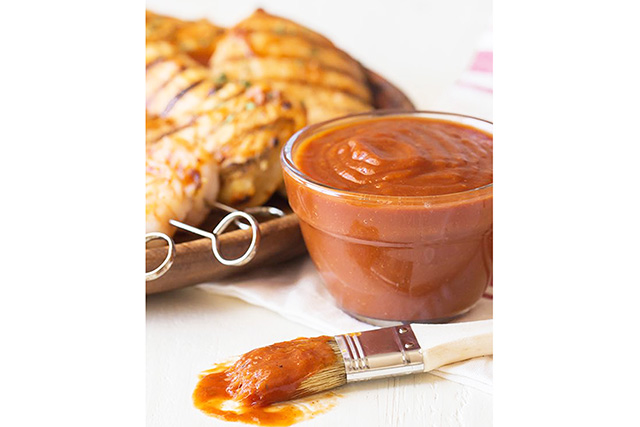
Once your fermented sauce is ready, you could add further value by mixing them with secondary sauces and marinades. Spicy BBQ sauces are the rage at the moment, so do not be afraid to spice up your or chicken skewers.
The skins and seeds left over after passing the fermented chillies through the food mill can be dried to make chilli flakes. These flakes are great to use as is, or to make chilli salt. Mix some chilli flakes with sea salt and some spices such as cardamom, cumin or coriander and nothing gets wasted.
One needs to be careful when processing or eating chillies or chilli products. Avoid contact with all sensitive parts, especially the eyes.
In the Chichewa language, the warning on the Nali sauce reads: ” Friends, take care!
• 1 small (cocktail) onion
• 3 habanero chillies, seeds removed
• 2 cloves garlic
• 1 cup chopped fresh mango
• 1 cup chopped fresh pineapple
In an age of information overload, Sunrise is The Namibian’s morning briefing, delivered at 6h00 from Monday to Friday. It offers a curated rundown of the most important stories from the past 24 hours – occasionally with a light, witty touch. It’s an essential way to stay informed. Subscribe and join our newsletter community.

The Namibian uses AI tools to assist with improved quality, accuracy and efficiency, while maintaining editorial oversight and journalistic integrity.
Stay informed with The Namibian – your source for credible journalism. Get in-depth reporting and opinions for
only N$85 a month. Invest in journalism, invest in democracy –
Subscribe Now!