Zambia’s ministry of transport and logistics permanent secretary, Fredrick Mwalusaka, says the recently introduced user-pays principle (UPP) levy will address persistent challenges such as infrastructure gaps, border inefficiencies and procedural bottlenecks.
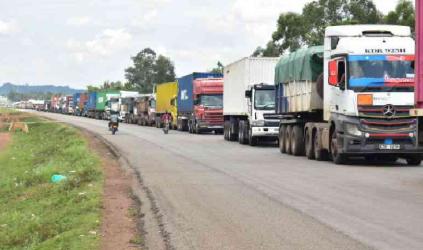
This comes after the Ministry of Works and Transport introduced a UPP levy of 90 cents per tonne on all cross-border cargo along the Walvis Bay-Ndola-Lubumbashi corridor.
The UPP, which is a levy where users bear the costs of its use, came into effect on 1 April.
“The introduction of the UPP is, therefore, both timely and necessary because it provides a sustainable mechanism to address these constraints and unlock the economic potential of the corridor.
The success of this initiative will, however, depend on sustained collaboration among the three member states, the private sector and cooperating partners. Therefore, it’s imperative that the resources mobilised under this UPP levy are managed to the highest form of transparency, efficiency and accountability,” he says.
Namibia, Zambia and the Democratic Republic of Congo – the three member states of the Walvis Bay-Ndola-Lubumbashi agreement – jointly launched the UPP levy at the Katima Mulilo Border Post yesterday.
This UPP levy aims to facilitate safe, efficient trade and the movement of people and goods both within and beyond the member states.
Deputy works minister Hans Haikali says through this initiative, those that are using the services will pay for them, as opposed to putting the cost on general taxpayers.
“The UPP levy is fair because non-users are not forced to subsidise it for the users, while it also encourages people to use resources wisely. Furthermore, it helps the governments to cover operating costs,” he says.
According to Haikali, the UPP will assist member states to fast-track deeper regional integration, which is vital for economic development.
“It’s worth noting that, as part of its contribution to the Walvis Bay Corridor Group (WBCG) agreement, Namibia has been the only country subsidising resources since 2010 (for and on behalf of all three member states) to the WBCG interim secretariat.
This gesture has assisted in facilitating and promoting trade along the corridor, the Southern African Development Community and beyond,” he says.
Haikali says going forward, they must ensure the development of a corridor performance monitoring system and the establishment of the One Stop Border Post at Katima Mulilo Border Post.
“We must develop and implement an integrated bond guarantee arrangement, the development of truck ports and inland hubs along the corridor and harmonisation of legislation and standards among member states. We must also collaborate with the Southern African Customs Union on the preferred trader programme,” he says.