




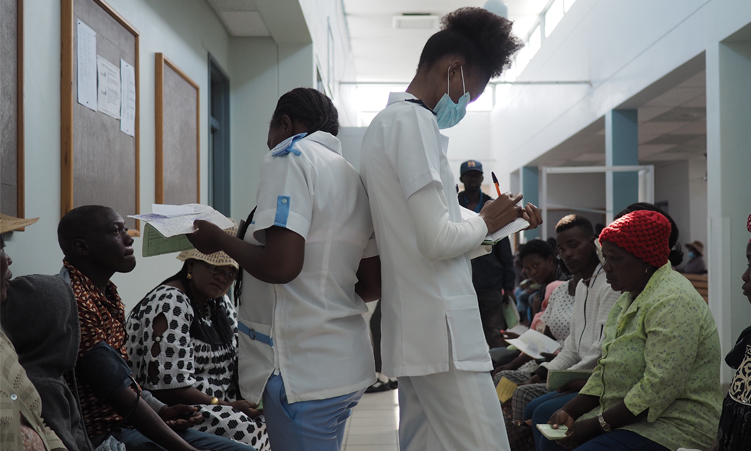
At least 87% of Namibia’s population of three million people live within 10 kilometres of a health facility, while 93% are covered by telecommunications networks.
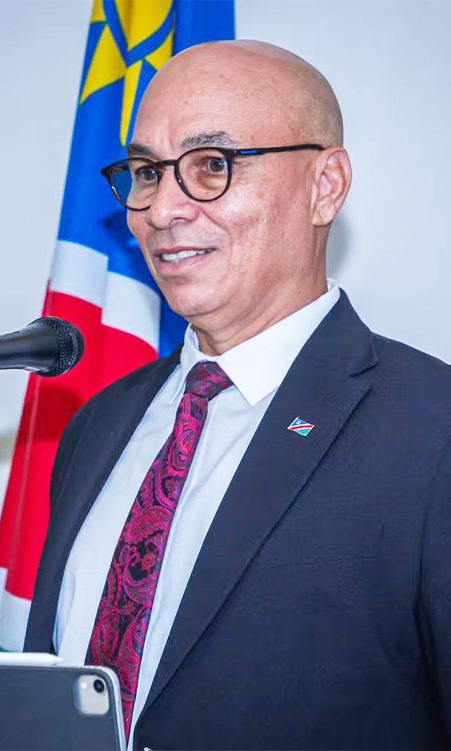
This was shared by Namibia Statistics Agency (NSA) chief executive Alex Shimuafeni when he launched the National Population Proximity Atlas yesterday.
Shimuafeni noted that urban areas achieved 99% network coverage, compared to 75.3% in rural areas.
The atlas is the first of a series produced from the 2023 Population and Housing Census basic report, released on 30 October.
It focuses on the Namibian population’s proximity to health facilities and telecommunications network coverage, Shimuafeni said.
Other atlases will focus on themes such as proximity to education facilities, transportation networks and other government infrastructure, he added.
Shimuafeni noted that the National Spatial Data Infrastructure (NSDI) currently hosts 530 health facilities that have mapped geographic locations consisting of 49 hospitals, 60 health centres and 421 clinics.
According to the atlas, the Windhoek health district has the highest percentage of mapped health facilities at 11.1% (or 59 out of 530), followed by Katima Mulilo and Engela at 7.2% (38 out of 530) and 4.5% (24 out of 530), respectively. Tsumkwe has the lowest at 0.8% (4 out of 530).
“The Windhoek health district, at 16.4%, has more than double the number of persons of the second highest district, which is Engela (6.5%). Rosh Pinah has the lowest at 0.4% of the population, followed by Tsumkwe at 0.5%,” said Shimuafeni.

The atlas indicates that Oshana has the highest ratio of one health facility to 9 617 persons, followed by Khomas at one to 8 383 persons. //Kharas had the lowest health facility to population ratio at one to 3 330, followed by Kunene at one health facility to 3 552 persons.
The report notes that communities in the Hardap region travel the farthest – up to 119.9 kilometres – to access the nearest health facility, illustrating the sparsely populated nature of the country, especially in the //Kharas, Hardap and Kunene regions.
“To illustrate the sparsely populated nature of the country, the referenced furthest locality in Hardap has a population of 63 persons only,” said the NSA boss.
He noted that generally, Namibia’s health facilities are well planned around population distribution.
“At national level, both health facilities and population had their geographic mean centres of their distribution in the Otjozondjupa region, with Etunda Clinic being the most central health facility in the country,” he said.
On population proximity to network coverage, Shimuafeni noted that 93% of the population receives 2G, 3G or 4G telecommunications networks coverage, showcasing Namibia’s growing telecommunication reach.
The Hardap, Khomas and Oshana regions have 100% telecommunications coverage for all their health facilities, he added.
The top five regions with the highest telecommunications coverage are Oshana with 99.8% of the population covered, Khomas (99%), Erongo (97.6%), Ohangwena (97.4%), while Kavango East and Omusati are tied on fifth with 96.5% population coverage each.