Despite various measures implemented aimed at curbing the high rate of teenage pregnancy and school dropouts in the Oshikoto region, the education directorate last year recorded a total of 567 pregnant pupils and 1 814 school dropouts last year.
Preventive measures include the training of life skills teachers for grades 4 to 7 pupils, the provision of psychosocial support, organising a regional career fair, and the provision of continuous professional development for teachers.
Oshikoto governor Penda ya Ndakolo says it is saddening to note that the rate of teenage pregnancy and school dropout remains high in the region.
He said this during his state of the region address at Omuthiya yesterday.
The Namibian reported in 2021 that a year earlier, a total of 442 girls fell pregnant in the region and 1 220 school dropouts were recorded.
Between 2019 and 2021, a total of 1 294 pregnancies were recorded, leaving girls facing adverse socio-economic circumstances with many opting to drop out of school for good.
Teen pregnancies compromises young girls’ development opportunities, as dropping out of school hinders their formal education, resulting in employment and productive disadvantages, while making them vulnerable to poverty, violence, crime and social exclusion.
“I would like to call on all of us as parents, guardians and the general community to play our part in ensuring that children complete school.
“The quality of life they will lead depends largely on their education.
“I would like to applaud the directorate for its commendable efforts,” Ya Ndakolo said..
Ya Ndakolo said other challenges facing the education fraternity include old school infrastructure, overcrowded classrooms, sandy roads, a lack of water and electricity and poor workmanship of some contractors.
“I would like to call upon works inspectors, as well as officials dealing with procurement to ensure that the issue of poor workmanship and abandoning construction projects is not condoned in the region.
“We cannot afford to waste already meagre resources on the people who are not serious about service delivery,” he said.
He said the region has made great strides in terms of early childhood development last year as it recorded a 50% increase in early childhood development enrolment, with 20% of that enrolment involving rural areas.
Ya Ndakolo said the growing demand for housing and sanitation remains a challenge in the region and needs more attention given that the region is largely rural.
“During the year under review, a total of N$2,1 million was allocated for the provision of sanitation in 10 constituencies, with the exemption of the Tsumeb constituency.
“The aim of this programme is to improve community health by reducing open defecation. The current progress rate for this project is at 30%.
“The surveying of Onyuulaye development, consisting of 282 plots, was successfully completed,” Ya Ndakolo said.
He said cases of gender-based violence (GBV) increased by 10% this year, compared to the previous year.
“In most cases these incidents happen because children are left alone at home without parental care.
“At the time of reporting, there were 81 rape cases, 46 domestic violence cases, and 246 stock theft cases reported in the region.
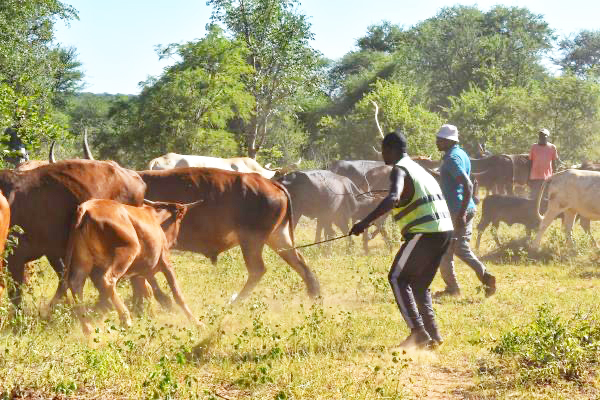
“However, I am delighted to report that 222 livestock have been recovered by the Namibian Police.
“The lack of mobility to combat crimes in remote areas is still a problem due to bad roads, and members of the public travel long distances in search of police services or wait too long to report a case,” he said.
“As mitigation measures for GBV and sexual abuse, awareness is critical. It is also important to give adolescents the knowledge and skills to comprehend sex and the underlying causes of violence in their communities, to educate and engage peers and other community members to work to prevent such violence, and to help them learn where they can access support if they experience violence,” Ya Ndakolo said.