
•Mark Musutu I first had an encounter with the Mitsubishi ASX at a Mitsubishi test drive.
The ASX was the first aid vehicle on the test drive trail.
At first sight, I perceived it as a Mitsubishi Evolution with off-road capability and because of the ASX’s resemblance to the Evolution, I quickly connected it to the Evolutions and Subaru Imprezas in the Need for Speed game. And from this, I drew a conclusion that it was a street racer.
The ASX can be traced back as far as 1991 to the Mitsubishi RVR which it was made to replace. RVR is an acronym for Recreation Vehicle Runner and it was a compact SUV. It had a convenient size passenger cabin and spacious four to five person capacity with a youth-oriented approach, therefore making it more appealing to young people.
RVR had gained popularity due to its ease-of-use sliding door on the passenger side. it was more of a blend between an off-roader, MPV and a hatch.
In 2007, Mitsubishi introduced the concept CX which was a pointer to the ASX. In the recent past, sliding doors have lost the edge they once put on cars and in an effort to recapture the sporty outdoor aura of the first gen, it was given four doors. This was also to do away with the family car touch it had. The result was a fresh new cross-over called ASX, also known as the Outlander Sport.
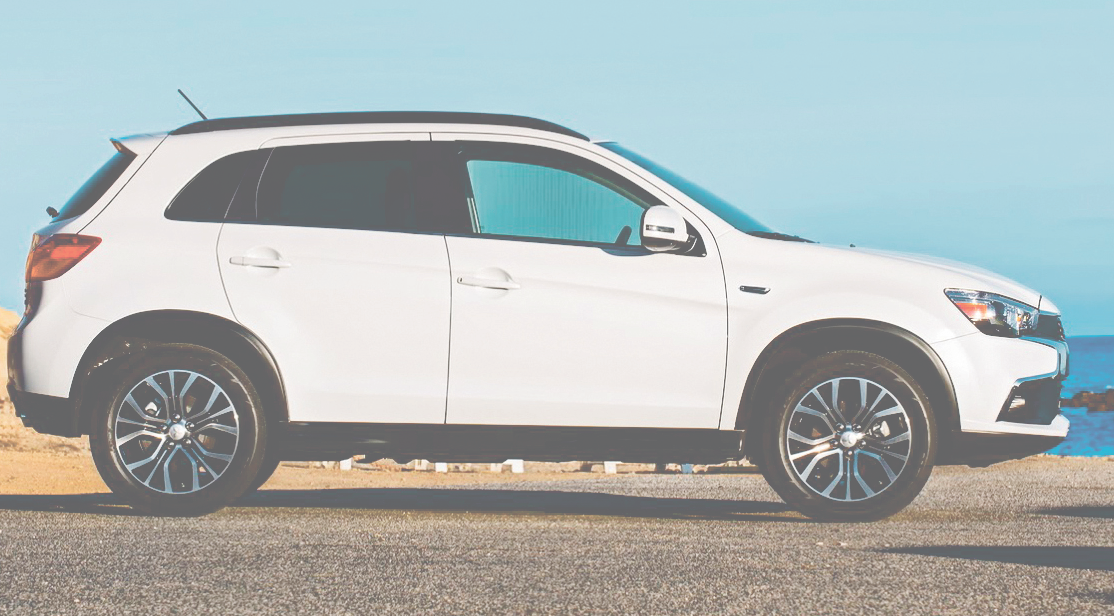
The ASX has a very strong design character, strong angular looks and an upright grille with a level of decent styling. It bears strong family resemblance. Mitsubishi ASX has attitude and an audacious design that depicts its outdoor semi-rugged character very clearly. It’s also worth noting that the ASX has been in production since 2010 and is nearing its end in its product life cycle, but it doesn’t look it and it can take on any of its fresher rivals and beat many in terms of appearance, thanks to Mitsubishi’s foresight and a timeless design.
Mitsubishi is very conservative and traditional and they seem to have an uncanny way of perfecting basics on their cars. They work on the basics so well that they make other cars seem too busy – Pajero is a perfect example. The ASX is a very basic car, but with refined basics – suspension, ride and handling, interior, build quality and drive train.
Exploring the interior, the ASX speaks of the weekend, holidays and sport, it’s made for outings. The panoramic roof is the most appealing feature on the inside, it also has the neatest interior I have come across; it’s very symmetrical, plain and easy on the eye with only three dials and a hazard button. The way Mitsubishi inserts aluminum strands on its black premium leather is nothing short of impressive.
Interior features include keyless entry and ignition; parking sensors; automatic lights and wipers; climate control; cruise control; heated seats; DAB radio; secven-inch touchscreen infotainment system with sat nav and a reversing camera, as well as an Alpine stereo system and two USB ports.
The ASX is nothing near the Need for Speed Evolution racer. It’s not a street racer but goes pretty well for a 2,0 litre. It has very little sporty appeal or performance. The ASX is more of a longer range runner.
When pressed hard, the ASX accelerates from 0 to 100km/h in nine seconds which is a very sane and sufficient acceleration for its class. Our test vehicle was a 2,0-litre four-cylinder aspirated, delivering a torque of 110kW/197Nm.
Mitsubishi offers a clever automatic gearbox known as a Constantly Variable Transmission, or CVT in its petrol XLS version. Instead of changing between pre-set gears, the gearbox adjusts the drive ratio by incrementally changing the size of the input and output pulleys. It’s complicated especially for a first timer but I am certain would be beneficial and fun once mastered. CVT is made to keep the torque curve climbing for maximum efficiency and grunt.
Talking about handling, the steering is sharp and feels very light, this is perfect for manoeuvering and gives a sense of ease and serenity at the wheel. The ASX its certainly made to offer a more comfy and relaxing ride than any of its rivals and it feels more at home on the long run, rather than starting and stopping in the urban jungle.
Made for softer handling, on sharper corners, however, the ASX gets a little jittery. Nevertheless, it handles above average thanks to an advanced multi-link suspension set-up and front Macpherson struts.
As per Mitsubishi tradition, it has a ‘straight to the point personality’, it has not brought anything new to the game, neither missing much. It’s hard to fault because the basics are on point. It’s an excellent compact SUV which will not disappoint for its purpose.
•Mark Musutu I first had an encounter with the Mitsubishi ASX at a Mitsubishi test drive.
The ASX was the first aid vehicle on the test drive trail.
At first sight, I perceived it as a Mitsubishi Evolution with off-road capability and because of the ASX’s resemblance to the Evolution, I quickly connected it to the Evolutions and Subaru Imprezas in the Need for Speed game. And from this, I drew a conclusion that it was a street racer.
The ASX can be traced back as far as 1991 to the Mitsubishi RVR which it was made to replace. RVR is an acronym for Recreation Vehicle Runner and it was a compact SUV. It had a convenient size passenger cabin and spacious four to five person capacity with a youth-oriented approach, therefore making it more appealing to young people.
RVR had gained popularity due to its ease-of-use sliding door on the passenger side. it was more of a blend between an off-roader, MPV and a hatch.
In 2007, Mitsubishi introduced the concept CX which was a pointer to the ASX. In the recent past, sliding doors have lost the edge they once put on cars and in an effort to recapture the sporty outdoor aura of the first gen, it was given four doors. This was also to do away with the family car touch it had. The result was a fresh new cross-over called ASX, also known as the Outlander Sport.
The ASX has a very strong design character, strong angular looks and an upright grille with a level of decent styling. It bears strong family resemblance. Mitsubishi ASX has attitude and an audacious design that depicts its outdoor semi-rugged character very clearly. It’s also worth noting that the ASX has been in production since 2010 and is nearing its end in its product life cycle, but it doesn’t look it and it can take on any of its fresher rivals and beat many in terms of appearance, thanks to Mitsubishi’s foresight and a timeless design.
Mitsubishi is very conservative and traditional and they seem to have an uncanny way of perfecting basics on their cars. They work on the basics so well that they make other cars seem too busy – Pajero is a perfect example. The ASX is a very basic car, but with refined basics – suspension, ride and handling, interior, build quality and drive train.
Exploring the interior, the ASX speaks of the weekend, holidays and sport, it’s made for outings. The panoramic roof is the most appealing feature on the inside, it also has the neatest interior I have come across; it’s very symmetrical, plain and easy on the eye with only three dials and a hazard button. The way Mitsubishi inserts aluminum strands on its black premium leather is nothing short of impressive.
Interior features include keyless entry and ignition; parking sensors; automatic lights and wipers; climate control; cruise control; heated seats; DAB radio; secven-inch touchscreen infotainment system with sat nav and a reversing camera, as well as an Alpine stereo system and two USB ports.
The ASX is nothing near the Need for Speed Evolution racer. It’s not a street racer but goes pretty well for a 2,0 litre. It has very little sporty appeal or performance. The ASX is more of a longer range runner.
When pressed hard, the ASX accelerates from 0 to 100km/h in nine seconds which is a very sane and sufficient acceleration for its class. Our test vehicle was a 2,0-litre four-cylinder aspirated, delivering a torque of 110kW/197Nm.
Mitsubishi offers a clever automatic gearbox known as a Constantly Variable Transmission, or CVT in its petrol XLS version. Instead of changing between pre-set gears, the gearbox adjusts the drive ratio by incrementally changing the size of the input and output pulleys. It’s complicated especially for a first timer but I am certain would be beneficial and fun once mastered. CVT is made to keep the torque curve climbing for maximum efficiency and grunt.
Talking about handling, the steering is sharp and feels very light, this is perfect for manoeuvering and gives a sense of ease and serenity at the wheel. The ASX its certainly made to offer a more comfy and relaxing ride than any of its rivals and it feels more at home on the long run, rather than starting and stopping in the urban jungle.
Made for softer handling, on sharper corners, however, the ASX gets a little jittery. Nevertheless, it handles above average thanks to an advanced multi-link suspension set-up and front Macpherson struts.
As per Mitsubishi tradition, it has a ‘straight to the point personality’, it has not brought anything new to the game, neither missing much. It’s hard to fault because the basics are on point. It’s an excellent compact SUV which will not disappoint for its purpose.
In an age of information overload, Sunrise is The Namibian’s morning briefing, delivered at 6h00 from Monday to Friday. It offers a curated rundown of the most important stories from the past 24 hours – occasionally with a light, witty touch. It’s an essential way to stay informed. Subscribe and join our newsletter community.

The Namibian uses AI tools to assist with improved quality, accuracy and efficiency, while maintaining editorial oversight and journalistic integrity.
Stay informed with The Namibian – your source for credible journalism. Get in-depth reporting and opinions for
only N$85 a month. Invest in journalism, invest in democracy –
Subscribe Now!