



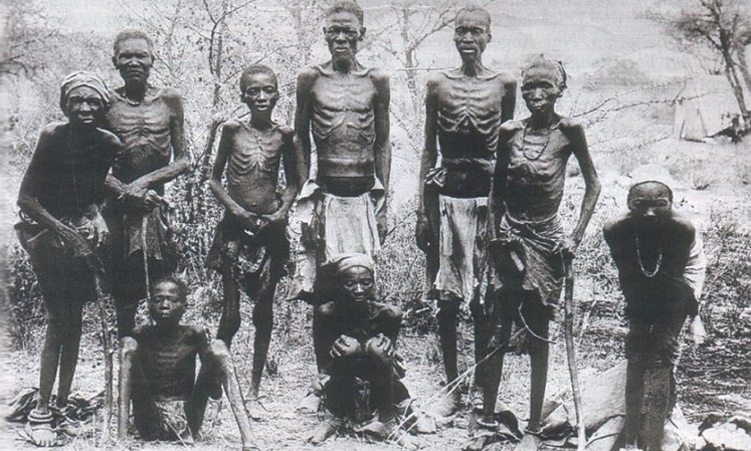
A dialogue in Namibia this week explored the divisive legacy of the 1904 to 1908 Nama-Ovaherero genocide, the role of women in seeking justice, and paths towards reconciliation with Germany.
Some quarters say the event, which wiped out over 100 000 Nama and Ovaherero people, was a genocide, while others say it is an unsolved crime against humanity which has been ignored for far too long and needs urgent redress.
All these thoughts were converged in one room at an Open Society Foundation for Africa (OSF) dialogue, themed ‘Understanding Namibia, the Land of the Brave’, earlier this week.
The discussion focussed on key issues, including the role of women leaders in dealing with restorative and reparative justice.
Speaking during a panel discussion, OSF managing director Brian Kagoro on Tuesday said Namibia needs to take a bold step and call the 1904 massacre a crime.
“When we speak of reconciliation, the perpetrator and the victim must both deal with the issue. The issue of the 1904 genocide in Namibia is one that is for Namibians to deal with. But it is important to note that the international community should stand in solidarity with Namibians.
“I believe for reconciliation, the perpetrator must admit to the crime they committed, apologise and own up. If we reconcile a crime that the perpetrator has not admitted to committing, then what exactly are we reconciling?” he asked.
STRONG LEADERSHIP
Kagoro said the current discussions between Germany and Namibia to find middle ground on reparation payment and restorative justice should be driven by the desire to restore justice and dignity for the affected communities.
“The amount of wealth and dignity lost by the affected communities cannot be quantified in monetary terms. “So the discussions going on should be guided by the fact that people were dehumanised and lost their dignity in the process.
“The same process [the genocide] has also created a cycle of generational poverty for the affected communities and privileges for the perpetrator. It is a crime that needs to be defined as such,” Kagoro said. He said Namibia and Germany should also recognise that the 1904 massacres have created deep scars that have left societies in Namibia struggling to deal with a culture of violence in different forms.
“It is important to note that at that time, the black man was the property of the white man, and that racism was wrong and continues to perpetuate even in a modern-day set-up where the affected communities deal with generational poverty.
“It’s important to have the perpetrator realise they were wrong and apologise first, then the process of reconciliation can take place. This is why today we see some of our brothers who cannot stand progress by women in our societies resort to violence.
“This violence has its roots in the violence the affected communities faced at the time,” he said.
Kagoro said the international community could offer Namibians solidarity during the negotiation process with the former colonial master.

‘FORGIVE AND MOVE FORWARD’
Speaking at the same gathering, Namibia’s vice president, Lucia Witbooi, emphasised the need for parties to find a way to forgive each other while negotiating and focusing on restorative and reparative justice.
“I say forgive , forgive and forgive. The issue of genocide and reparations is one that has to include the affected communities and find a way to restore what was lost. It should not only focus on the reparations but also cover environmental restoration,” she said.
Witbooi said the communities that were affected by the genocide need to play an integral role in the negotiation process for forgiveness and healing to come.
Witbooi said Namibian women have an important role to play in making sure the affected societies heal and find a future that is peaceful and inclusive.
She said baby steps are being made in dealing with the country’s dark past. One such step is the fact that Namibians will commemorate Genocide Day for the first ever time on 28 May.
“We do not need to fight over simple issues. We need to find each other and work together to deal with this issue and move forward.
“It is the first time we will commemorate Genocide Day after a thorough inclusive national process that included everyone’s input,” she said.
CAPTURE HISTORY CORRECTLY
Former minister of justice Yvonne Dausab said Namibians should capture history accurately, making sure the ugly face of the violence of years ago does not resurface.
She said the push for restorative justice in Namibia has also gained traction and support from many other countries which share the African Union Agenda 2025, dealing with past injustices.
The agenda is themed ‘Justice for Africans and People of African Descent Through Reparations’, and focuses on restorative justice. It addresses the lasting impact of slavery and colonialism.
The initiative aims to go beyond financial compensation and includes economic empowerment, structural transformation, and strengthening collaboration with the Caribbean community and the global African diaspora.
“We need to make sure we document history timely and avoid the recurrance of such issues,” Dausab said.
Meanwhile, Popular Democratic Movement parliamentarian Inna Hengari said there is need for constant open engagement on the impact of the genocide on modern communities.
“We expect that since we now have a new administration we need to deal with this issue better. There is a need to continue with an inclusive dialogue on this issue.
“It is very clear that some traditional leaders and society feel they were left behind,” she said.
In an age of information overload, Sunrise is The Namibian’s morning briefing, delivered at 6h00 from Monday to Friday. It offers a curated rundown of the most important stories from the past 24 hours – occasionally with a light, witty touch. It’s an essential way to stay informed. Subscribe and join our newsletter community.

The Namibian uses AI tools to assist with improved quality, accuracy and efficiency, while maintaining editorial oversight and journalistic integrity.
Stay informed with The Namibian – your source for credible journalism. Get in-depth reporting and opinions for
only N$85 a month. Invest in journalism, invest in democracy –
Subscribe Now!