


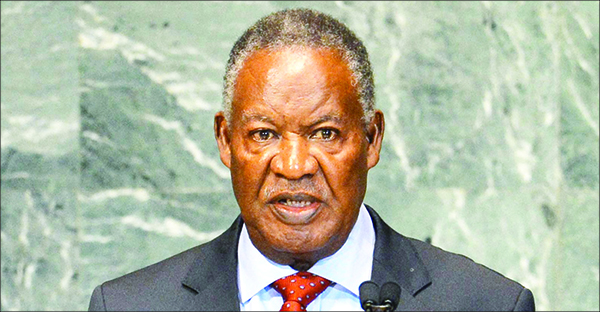
LUSAKA – Zambia, which votes today to elect a successor to president Michael Sata who died last October, is a copper-rich nation in the heart of Southern Africa.
GEOGRAPHY: Landlocked Zambia lies near Angola, the Democratic Republic of Congo and Zimbabwe, among other countries. It spans 752 614 square kilometres, slightly smaller than Chile and slightly larger than Myanmar.
POPULATION: 14.5 million, (World Bank, 2013). It also hosts hundreds of thousands of refugees from elsewhere in Africa.
CAPITAL: Lusaka.
LANGUAGES: English (official), several local languages including Bemba, Nyanja, Lozi, Tonga, Kaonde, Luvale and Lunda.
RELIGION: Mainly Christian with a small Muslim community.
HISTORY: Zambia came under British control in 1889 and became a protectorate in 1924 as Northern Rhodesia. It was renamed Zambia when it gained independence on October 24, 1964 and was ruled by founder president Kenneth Kaunda for 27 years.
After the introduction of a multi-party system in 1990, elections in 1991 brought Frederick Chiluba and his Movement for Multiparty Democracy (MMD) to power.
Chiluba was re-elected in 1996 but the results of the vote were contested by the opposition. His attempts to change the constitution in 2001 to win a third term failed due to public pressure and in December 2001, Levy Mwanawasa won the presidential election as the MMD candidate. He was elected to a second term in 2006.
Mwanawasa died in August 2008 in Paris, where he had been hospitalised for a stroke. He was replaced in October 2008 in a close race by Rupiah Banda.
Banda won just over 40 percent of that vote, but it was enough to defeat Michael Sata, who came in second.
Sata won the next election in 2011 but the vote was marred by violence in Lusaka and mining centres, and he was subsequently accused of abuse of power by opposition parties and of turning his back on former allies.
In October, 2014 Sata died aged 77 in London, succumbing to an undisclosed illness that had kept him off the public stage during parts of the year.
ECONOMY: Mining – copper, cobalt, lead, gold, silver, emeralds.
Copper is the country’s main export. Zambia is the seventh biggest producer worldwide and the second biggest when it comes to refined copper.
Agriculture – sugar cane, maize, tobacco, peanuts, cotton.
Since 1992, the majority of state enterprises have been privatised, notably the big copper companies which have been sold to foreign investors, notably Chinese.
Despite growth-oriented policies and a stable economy over the past few years, at least 60 percent of the population lives below the poverty line, according to World Bank figures.
Gross national income per capita was US$1 810 in 2013, according to the World Bank.
The CIA World Factbook says Zambian poverty is “made worse by a high birth rate, relatively high HIV/AIDS burden, and by market-distorting agricultural policies”.
– Nampa-AFP)
In an age of information overload, Sunrise is The Namibian’s morning briefing, delivered at 6h00 from Monday to Friday. It offers a curated rundown of the most important stories from the past 24 hours – occasionally with a light, witty touch. It’s an essential way to stay informed. Subscribe and join our newsletter community.

The Namibian uses AI tools to assist with improved quality, accuracy and efficiency, while maintaining editorial oversight and journalistic integrity.
Stay informed with The Namibian – your source for credible journalism. Get in-depth reporting and opinions for
only N$85 a month. Invest in journalism, invest in democracy –
Subscribe Now!