




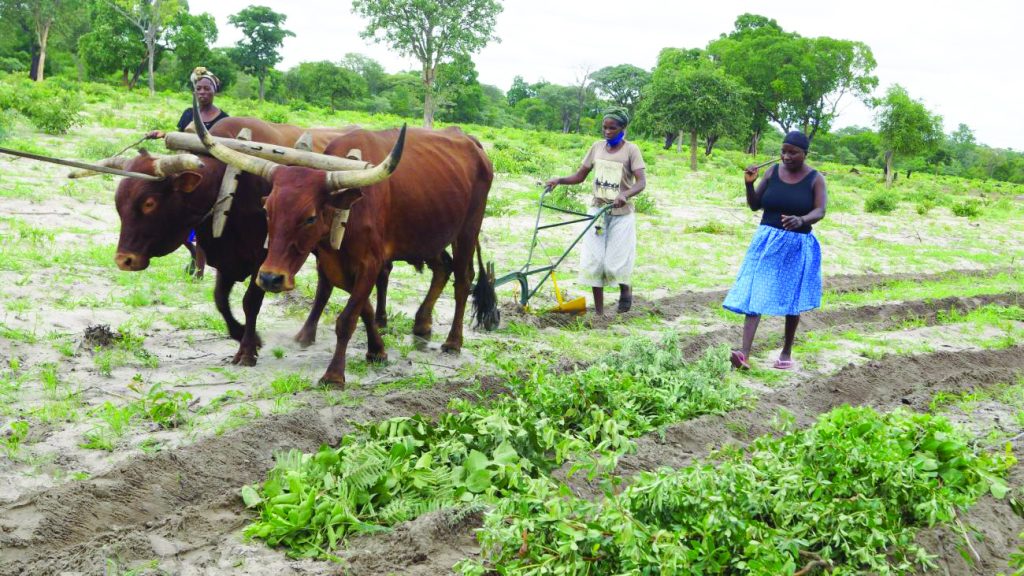
Farmers in the Zambezi region have been encouraged to continue preparing their fields for the ploughing season, despite a fresh outbreak of African migratory locusts in several parts of the region.
Former Kabbe constituency councillor Raphael Mbala yesterday urged farmers not to lose hope, saying the Ministry of Agriculture, Fisheries, Water and Land Reform has already deployed teams to spray and contain the outbreak.
“The farmers must just start ploughing, because if they don’t, they will not have something to harvest at the end of the season. There is hope that the agriculture spraying teams will be able to contain the outbreak.
“Furthermore, the rainy season is upon us, so we must just plough so as not to miss our window,” he said.
The affected areas include Kasaya, Nakabolelwa, Luhonono, Bukalo, Kabbe, Muyako, Masokotwani and Linyanti, where many farmers are reportedly concerned that the outbreak could destroy crops before they germinate.
A farmer in the Muyako area, John Matengu, yesterday said the outbreak is severe in his area, with several farmers doubting whether they should plough.
“The locusts are everywhere, and they are at the flying stage, which makes them worse. I will try and plough by the grace of God.
“The rain looks promising in our area, so hopefully I will have something to harvest amid the outbreak,” he said.
Matengu suggested that the ministry consider using drones to spray the locusts, saying vehicles often fail to reach the affected areas.
Agriculture minister Inge Zaamwani-Kamwi last week announced that the Zambezi region is battling a locust outbreak, adding that the ministry has deployed locust-spraying teams.
She said the outbreak is serious, especially in areas such as the floodplains of Muyako and Old Masokotwani, which are known breeding grounds for this species and have contributed to its rapid spread.
The minister said the outbreak has reached both the hopper and flying stages, which pose significant challenges to control efforts.
“We have equipped the teams with three Land Cruiser vehicles, seven mounted vehicle sprayers, and hand-held mist blowers and spraying machines.
“Furthermore, to supplement these efforts, we have mobilised additional vehicles from the directorate of veterinary services and the programme for communal land development. However, the scale of the outbreak demands broader support,” she said.
The minister cautioned traditional leaders and communities in the areas where spraying is taking place to avoid contact with sprayed dead locusts and to not eat them.