



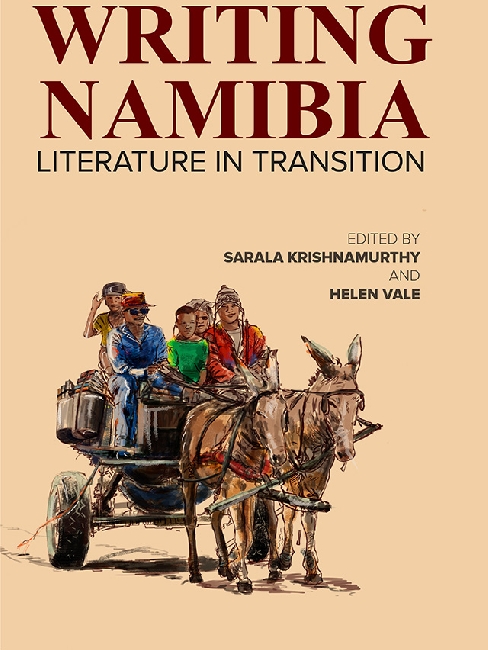
• Aase Geel’Writing Namibia: Literature in Transition’ edited by Dr Sarala Krishnamurthy and Helen Vale is a comprehensive overview of the development of all forms of literature in Namibia and not only takes the reader into the huge period of literature since independence (from 1990 to 2013), but presents the advent of a variety of novels, short stories, dramas, poetry, films, autobiographies and children’s literature, written in English, Otjiherero, Oshiwambo, Ju/’hoansi – Khoesan, Afrikaans and German – which were written in Namibia.
The writing has been interpreted widely, to include film, poetry and drama, narrative and fictional themes, and the founding of archives.
The different categories of writing are presented by specialists in their fields, and place the reader squarely in the Namibian history of liberation, but also in the custom of Namibian cultures. The different ways of Namibian life which still rule most of its people are expressed in the themes transferred into the written word.
In the first chapter, Henning Melber deals with the historical background and the shifting levels of emancipation from the anti-colonial struggle, to a critique of the post-colonial society. Activists and academics such as Andree-Jeanne Tötemeyer, Andre du Pisani and Peter Katjavivi produced scholarly treatises and documents on the situation in Namibia, which were published in other countries.
Whilst education after independence has encouraged Namibians to give written expression to the traditional oral literature of previous generations, the ‘Spoken Word’ in poetry, drama and film have remained popular. This consists of various categories such as folktales, myths, legends, fables and proverbs which perform various functions in the daily life for both entertainment and personal education, and are used to inculcate traditional norms and values in children.
Following independence, story tellers in Namibia began to translate valuable, historical and social information into writing. ‘Writing in Namibia’ tells of this exciting development. The collection of early literature not only presents a valuable picture of cultural custom and tradition, but adds historical information about the exile and transit years of the liberation period, especially of those who had lived in other countries and societies.
Most of the early writings after independence were expressed as autobiographies and memoirs and these formed a natural part of early Namibian literature. The themes concentrated mainly on experiences during the liberation war and life in exile.
The move from the oral presentations in orature gradually turned through autobiographies and short stories to create stories which had themes of fiction, and the Namibian novel was born.
Brian Harlech-Jones has written guidelines on the format and structure of the novel, using two of his own books as examples.
One of the earliest novels in English was Diescho’s ‘Born of the Sun’ (1988). Now however, novels were being written in local languages and Alfeus Tjiijoro has examined the development of a number of novels written in Otjiherero. But it was Neshani Andreas’ novel, ‘The Purple Violet of Oshaantu’ (2001), written in English, which was different in its approach away from the liberation theme, to challenge the patriarchal system, for the rights of women in Namibia.
In the 2000s, performance poetry experienced a resurgence in urban Namibia, especially among the youth, in both written and spoken poetry.
Frederick Philander as an early playwright published plays between 1985 and 2000. He is seen as the leader in Namibian drama. Sandy Rudd’s 33 years of theatre and the living art of story telling continue to give an expression of a richly diverse, multi-cultural and multi-lingual Namibian society. Nashilongweshipwe Mushaandja offers a thoughtful and experimental critique of contemporary practices in applied arts with specific reference to organisational theatre and the power relations to do with community involvement in the production of knowledge about society. He draws on his early childhood experiences of cultural ritual and storytelling.
Whereas Namibia had previously been a background for filming by the companies from other countries, Namibian film pioneers such as Bridget Pickering and Richard Pakleppa, followed by younger film-makers, have since developed a film industry based on the history and culture of Namibia.
Margie Orford has expressed her support with information on the archival material of Namibian literature. Concentrating on women’s writing, Orford has focussed mainly on the earliest texts on Namibia.
Jane Katjavivi has given valuable insight into the development of the publication world in Namibia. While several companies have merged or changed partnerships over the years, it is Gamsberg MacMillan and New Namibia Books which still stand out today.
‘Writing Namibia: Literature in Transition’, published by University of Namibia (Unam) Press will be launched on Wednesday, 18 April at the Unam Leisure Centre at 17h30.
In an age of information overload, Sunrise is The Namibian’s morning briefing, delivered at 6h00 from Monday to Friday. It offers a curated rundown of the most important stories from the past 24 hours – occasionally with a light, witty touch. It’s an essential way to stay informed. Subscribe and join our newsletter community.

The Namibian uses AI tools to assist with improved quality, accuracy and efficiency, while maintaining editorial oversight and journalistic integrity.
Stay informed with The Namibian – your source for credible journalism. Get in-depth reporting and opinions for
only N$85 a month. Invest in journalism, invest in democracy –
Subscribe Now!