



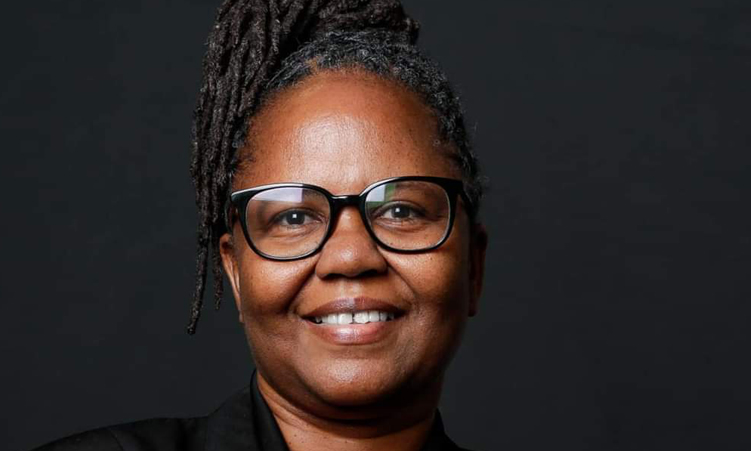
The mining commissioner in the Ministry of Mines and Energy says while small-scale mining activities are generally seen as illegal, Namibia is hard at work to ensure small-scale miners comply with environmental regulations.
Isabella Chirchir said this at a one-day workshop on environmental governance compliance in small-scale mining, held at Karibib yesterday.
“In Namibia, we are striving to do it right with the little resources we have.
We have strengthened our environmental governance compliance in small-scale mining,” she said.
Chirchir said despite these efforts, small-scale miners in Namibia are faced with a number of challenges, such as the rehabilitaion of closed mines to help safeguard the environment and ensure sustainability.
She said at the moment, there 900 small-scale mining claims in Namibia.
“Let us create an industry which can be respected and does not degrade the environment,” she said.
Anna Johannes from the United Nations Development Programme (UNDP) in Namibia made a presentation on the UNDP’s environmental programme.
She said the programme came as a result of a collaborative agreement between the Swedish Environmental Agency and the UNDP globally.
It aims to provide resources to mineral-rich nations to integrate environmental governance into their small-scale mining activities, so that these activities are conducted in an environmentally sound manner.
These countries include Equador, Colombia, Liberia, Mongolia, Peru, Namibia, Kenya and Zambia.
In Namibia, the programme is embedded in the UNDP’s ‘Sustainable Environmental Management for Enhanced Resilience’ portfolio, of which the focus areas are climate change adaptation, environment and waste management, climate change mitigation, natural resources management, and sustainable livelihoods.
Johannes said the UNDP has decided to collaborate with the Ministry of Mines and Energy on a project titled ‘Strengthening Environmental Governance and Improving Health and Safety in Critical Small-Scale Mining Hotspots in Namibia’.
A geologist from the division of small-scale mining in the Ministry of Mines and Energy, Sarti Makili, said the project gave the ministry technical support to help the country’s small-scale mining sector.
Some of the initial activities was to identify mining hotspots in the country, as well as to train small-scale miners on environmental protection obligations.
Small-scale mining hotspots in Namibia include Xoboxobos, Omapyu, Otjimboyo, Tubusis and Otjakatjongo.
Makili said the project has also trained small-scale miners on health and safety challenges related to their work, as well as unsafe mining practices.
“Health and safety guidelines for small-scale miners in Namibia were also developed to identify environmental health hazards,” she said.
The project has constructed toilets and placed waste bins at mining sites of small-scale miners, she said.
Makili said despite the achievements, there were also some challenges, which have resulted in some tenders not being successfully handled, and some consultants not complying with terms of references.
In his welcoming remarks, Karibib mayor Davey van Wyk said the town and its surrounding areas are blessed with semi-precious stones, which small-scale miners are mining to make an income.
Van Wyk said small-scale miners are, however, struggling to comply with laws governing small-scale mining as it is a costly exercise.He also bemoaned people buying miners’ precious stones “just because they are poor”.
Van Wyk said small-scale miners spend a lot of time in search of precious stones, and in many cases, the stones are only found after three or four months of mining.
“And because of hunger, they sell these precious stones cheaply,” he said.
Van Wyk suggested that a facility where these stones can be valued needs to be established, so that small-scale miners could sell their precious stones at a fair price.
The project runs from 2020 to 2023 and is funded to the tune of U$D220 000.
In an age of information overload, Sunrise is The Namibian’s morning briefing, delivered at 6h00 from Monday to Friday. It offers a curated rundown of the most important stories from the past 24 hours – occasionally with a light, witty touch. It’s an essential way to stay informed. Subscribe and join our newsletter community.

The Namibian uses AI tools to assist with improved quality, accuracy and efficiency, while maintaining editorial oversight and journalistic integrity.
Stay informed with The Namibian – your source for credible journalism. Get in-depth reporting and opinions for
only N$85 a month. Invest in journalism, invest in democracy –
Subscribe Now!