



The Namibia Statistics Agency (NSA) reports that the gross domestic product (GDP) increased by N$4 billion in the first quarter of 2025 to N$62.4 billion, up from N$58 billion in the same period of 2024.
It is time to rethink GDP, which weighs the monetary value of goods and services produced by a country over a given time period by measuring the level of economic output. It does not assess quality of life, social welfare, inequality or disparities among people.
For example, Namibia’s GDP increased by N$4 billion, but its people’s health and employment prospects are deteriorating.
However, while GDP might indicate economic growth, for an ordinary person battling to subsist, such data is mostly unusable.
Understanding the true definition of quality of life requires us to look beyond GDP to find the issues that affect 3 092 518 Namibians. With a 44% unemployment rate in the capital, with people struggling to find decent employment, struggling to pay for basic necessities, and no running water at home, who cares about a higher GDP?
Policymakers and stakeholders can foster more equitable and sustainable development by reinforcing GDP with additional indices that represent human and environmental aspects.
GDP figures do not reflect true development if they do not convert into better living conditions for the majority of people.
GDP says nothing about who owns the wealth, who profits from it, or whether it improves ordinary people’s lives.
A country where more than 36% of the population lives below the poverty line, public hospitals are in poor condition, millions of people depend on the black market for their livelihood, and civil servants receive less than a month’s worth of food is laughable for asserting to have a growing GDP.
Of the Namibian population, 62.07% are between the ages of 15 and 65, according to the Labour Force Survey.
Of the working-age population, 871 247 are between the ages of 35 and 65, and 63.1% of them are employed.
The unemployment rate for young people was 44.4%, meaning that 1 018 529 people between the ages of 15 and 34 are unemployed.
Namibians must analyse economic growth from a broad viewpoint to determine whether GDP is an inclusive indicator or simply a convenient statistical manipulation to support sociopolitical arguments.
NSA sources are unable to provide a convincing explanation of what such an increase in economic activity would imply for the average citizen, whether income disparities will be reduced, or whether every household will have access to electricity, safe drinking water and the internet.
GDP growth is pointless if it has no bearing on the hardships of unemployed graduates hawking apples, candy and airtime on the streets.
Without a clear roadmap or baseline indicators, officials never define what social, economic or infrastructure standards Namibians should expect to see by 2030.
Statisticians should tell us whether there is decent healthcare in every village where clinics are stocked with medicine and staff.
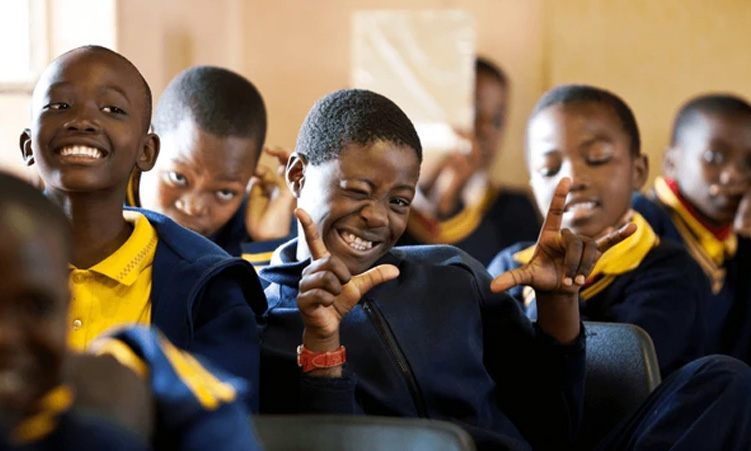
The NSA’s statistician general should tell us whether children are learning in well-built classrooms with textbooks and access to computers, rather than sitting on the floor or in classrooms built with sticks.
There is no denying that commercial activity is evident, with tertiary industries seeing 5.1% real value added growth in quarter one of 2025, up from 4.8% in quarter one of 2024.
Many Namibians remain excluded from meaningful participation in the formal economy. Informal trading remains the most common source of income, not because it is dynamic or innovative, but because formal job opportunities are nearly nonexistent.
What we require from our leaders is concrete, demonstrable progress in people’s lives.
Namibia’s future will be shaped by servant leadership, inclusive economic reform, and a sincere commitment to social justice.
Until then, GDP growth means little if it cannot put food on people’s tables, medicine in their clinics and hope in their hearts. Reducing poverty, raising salaries and putting an end to rampant corruption are all indispensable.
I am not asking for a halt in economic growth. I know it will be impossible to reduce poverty or find a long-term solution to the current cost-of-living crisis without it. I believe economic growth and people’s livelihoods should be explored in tandem, rather than separately.
I urge for a more effective methodology for designing and measuring economic success in Namibia. Inclusive growth means allowing as many individuals as possible to contribute to and benefit from economic growth.
It is about addressing inequalities by investing in people and productivity, as well as building conditions that allow economic opportunities to be distributed evenly among people and regions.
In an age of information overload, Sunrise is The Namibian’s morning briefing, delivered at 6h00 from Monday to Friday. It offers a curated rundown of the most important stories from the past 24 hours – occasionally with a light, witty touch. It’s an essential way to stay informed. Subscribe and join our newsletter community.

The Namibian uses AI tools to assist with improved quality, accuracy and efficiency, while maintaining editorial oversight and journalistic integrity.
Stay informed with The Namibian – your source for credible journalism. Get in-depth reporting and opinions for
only N$85 a month. Invest in journalism, invest in democracy –
Subscribe Now!