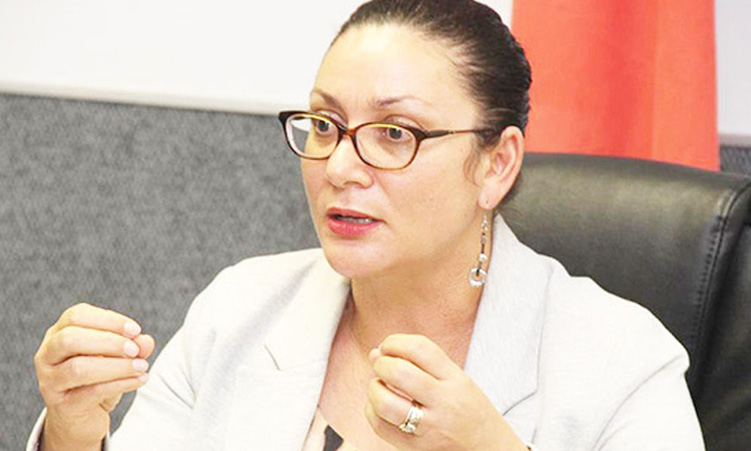
• Shireen HassimNo other woman – in life and after – occupies the place that Winnie Madikizela-Mandela does in South African politics.
A stalwart of the African National Congress (ANC), she nevertheless stands above, and at times outside, the party. Her iconic status transcends political parties and geographical boundaries, generations and genders. Poets have honoured her, writers have immortalised her and photographers have adored her.
Her life has been overburdened by tragedies and dramas, and by the expectations of a world hungry for godlike heroes on whom to pin all its dreams, and one-dimensional villains on whom to pour its rage. Yet perhaps it is in the smaller and more intimate stories of our stumbling to make a better world that we are best able to recognise and appreciate the meaning of the life of Madikizela-Mandela.
In her particular life, we may see more clearly the violence wrought by colonialism and apartheid, the profound consequences of fraternal political movements to whom women were primarily ornamental and, yes, the tragic mistakes made in the crucible of civil war.
Winnie’s political power stemmed from the visceral connection that she was able to make between the everyday lives of black people in a racist state, and her own individual life. State power, in all its vicious dimensions, was exaggerated in its response to her indomitable will – and in its stark visibility, personified.
Fearless in the face of torture, imprisonment, banishment and betrayal, she stood firm in her conviction that apartheid could be brought down. She said what she liked, and bore the consequences. Her very life was a form of bearing witness to the brutality of the system.
Many obituaries will outline the broad sweep of her life; few will mark the extent to which her revolutionary ideas were shaped before she even met Nelson Mandela.
To most of her social circle in the 1950s, for a long time into the 1980s, and certainly for Nelson Mandela’s biographers, Madikizela-Mandela was a young rural naif who charmed the most eligible (married) man in town.
This way of seeing her as primarily beautiful, and not as an emerging political figure, has coloured both contemporaneous accounts of Madikizela-Mandela (for she was surely too young and beautiful to have a serious political idea) as well as scholarly accounts of the period (which focused on the thoughts and actions of men).
This misrecognition resonated in the ANC, which had no way of accommodating Madikizela-Mandela’s political qualities other than by casting her in the familiar tropes of wife and mother.
Astutely, she embraced the role of mother and wife of a political leader and fashioned it into a platform for her own variant of radicalism, drawing on memories of the forcible dispossession of land and its impact on the Eastern Cape peasantry, and black consciousness.
She kept those traditions alive in the ANC, especially in the everyday politics of the townships, when the leadership of the party was crafting new forms of non-racialism and at times vilifying black consciousness.
Even though she was not part of the inner circle of the black consciousness movement, being older than the students leading it at its height, she was an ally in words and spirit.
In the tumult after the 1976 uprising, she built a bridge between different political factions. In the early 1990s, when Nelson Mandela was urging armed youths to give up violent strategies, it was Madikizela-Mandela they called on (along with the then leader of the South African Communist Party Chris Hani) to defend their change in tactics.
She played a similar role in brokering between moderates and radicals in the ANC and its breakaways up until her death.
This was a form of gendered politics made possible by her status as mother of the nation, uniting warring sons and holding together her political family, even if peace was maintained only in her presence.
Winnie Madikizela was born in a rural Eastern Cape village called Bizana in September 1936. Her parents, Columbus and Gertrude, were teachers and her childhood was marked by the stern Methodism of her mother and the radical Africanist orientation of her father.
Rural life, with its entrenched gender roles, shaped her childhood.
Not only was she aware of her mother’s desire to bear another son, but she and her sisters were expected to care for their male siblings.
She was barely eight when her mother died months after giving birth to Winnie’s brother. Her childhood was cut short, and she had to leave school for six months to work in the fields and to carry out, with her sisters, all the daily chores of the household, from preparing food to cleaning.
In Winnie’s large and rambunctious family in which her parents upheld discipline with physical punishment, she learned to defend herself with her fists, if necessary.
Her rural background made her aware of land dispossession as a central question of freedom. By her own account, she learnt about the racialised system of power early in her life. From her father, she learnt about the Xhosa wars against the colonisers, and later would imagine herself as picking up where her ancestors had failed
If they failed in those nine Xhosa wars, I am one of them of them and I will start from where those Xhosas left off and get my land back.
She was to retain the theme of land dispossession by colonialism throughout her political career. Associated with this was the idea that race was central to colonialism.
As with many other ANC members with Eastern Cape roots, she did not think of urban struggles as the only space of resistance, or workers as the only agents of change. She warned, in 1985, that
The white makes a mistake, thinking the tribal black is subservient and docile.
In an age of information overload, Sunrise is The Namibian’s morning briefing, delivered at 6h00 from Monday to Friday. It offers a curated rundown of the most important stories from the past 24 hours – occasionally with a light, witty touch. It’s an essential way to stay informed. Subscribe and join our newsletter community.

The Namibian uses AI tools to assist with improved quality, accuracy and efficiency, while maintaining editorial oversight and journalistic integrity.
Stay informed with The Namibian – your source for credible journalism. Get in-depth reporting and opinions for
only N$85 a month. Invest in journalism, invest in democracy –
Subscribe Now!