



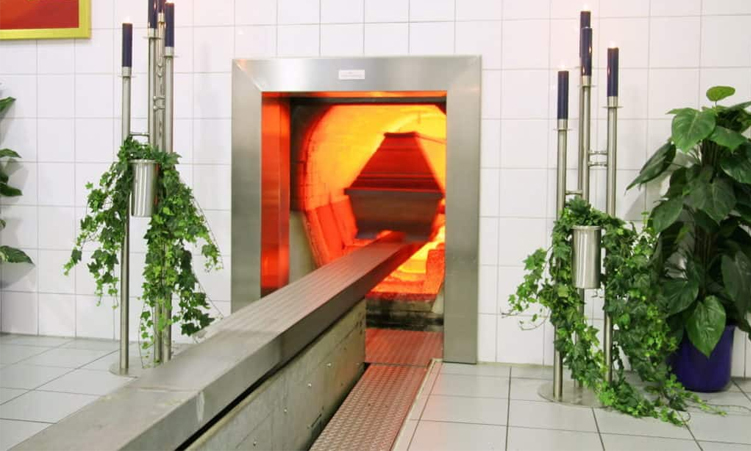
The City of Windhoek says it records approximately 960 burials per year amid a growing shortage of cemeteries.
The municipality has, therefore, urged residents to consider cremation as an alternative to traditional burial.
Out of seven cemeteries in Windhoek, five are at full capacity, leaving only two cemeteries with space – the Oponganda new extension and Pionespark cemeteries.
“The city is encouraging residents to consider cremation. Cremation uptake was taken into account in the planning projections,” municipal spokesperson Lydia Amutenya says.
“At present, approximately half of all burial services each month are cremations. The city continues to encourage residents to consider this option where appropriate, while ensuring that all burial choices remain available and culturally respected,” she adds.
Amutenya says the City of Windhoek records approximately 16 to 20 burials per week, or about 960 annually across its municipal cemeteries, along with around 480 cremations per year, averaging 40 per month.
She says the municipality has not yet identified additional burial sites should the Rocky Crest cemetery reach its full capacity.
“The cemetery is still under construction, close to completing phase one. The cemetery is estimated to have a lifespan of approximately 11 years or more. The city continues to explore measures aimed at optimising and extending the lifespan of existing cemetery space. These include practices such as second interments, which are already permitted,” Amutenya says.
Second interment is the practice where a second person is buried in the same grave without disturbing the existing remains. In Windhoek, the first burial is conducted at approximately 2.44m, and a second burial may take place above it at approximately 2m.
“This practice is increasingly being accepted by families, and the city records an average of six to 10 second interments per month,” she says.
The City of Windhoek does not currently implement burial reduction practices, such as grave reuse or exhumation and reburial. While such practices are applied in some cities internationally as a land management measure, the municipality has not adopted this option at this stage.
It remains a concept that may be explored in the future, although there is currently no formal plan or certainty regarding its implementation, Amutenya says.
RESERVED GRAVES
Amutenya says while five cemeteries are declared to have reached full capacities, there are people who have reserved graves and pay monthly reservation fees.
She says the municipality respects the cultural and religious significance of both burial and cremation practices and remains committed to providing dignified, culturally sensitive options, while also promoting sustainable land use through public awareness of available burial alternatives – which includes second interments and cremation.
Amutenya adds that cremation is currently the more affordable option, making the service more accessible to residents.
Affirmative Repositioning member of parliament Vaino Hangula says he supports cremation, saying it can save space.
“I suggest a museum where cremated ashes can be stored. It will save the city.”
However, Hangula says there is a need to educate the public.
“There might be cultural and religious reasons to object to cremation, but with the proper education, I believe people will be willing to be cremated,” he adds.
Bishop Lukas Katenda says Christianity has a history of burials and funerals; however, he does not object to cremation.
“If there is a lack of land, people can be buried and the ashes can be buried depending on the various cultural beliefs,” he says.
Ovaherero Traditional Authority traditional leader Uapimbi Ngareja says the Ovaherero culture does not permit cremation as it is against the culture.
“We believe in our forefathers. When one is cremated it is deemed as a sign of rejecting someone or abuse of the body. We will not know what happens to our loved ones after cremation. We bury and return the bodies to their origins,” he says.
A member of the Bahá’í Faith, Sophie Tekie, says cremation is not permitted and burial is prescribed as the proper method.
“It is forbidden for you to carry the body of the dead a greater distance than one hour’s journey from the city. Bury it with joy and gladness in a coffin of crystal, stone or hard fine wood,” she says.
The method of burial reflects respect for the human body, obedience to divine law and recognition of the soul’s continued existence, Tekie says.
CITY ACCUSED OF GIVING LAND TO THE DEAD
Windhoek resident and community leader Ndamono Kaxwadi says she is not pleased with the construction of a cemetery at Rocky Crest while there are people living in poor conditions, with no land or appropriate housing.
“The city can give us those plots reserved for the cemetery and take the cemetery to Havana or any remote area,” she says.
Meanwhile, Popular Democratic Movement president McHenry Venaani says the municipality must prioritise residents who are alive.
“We should minimise land for the dead and maximise it for the living,” he says.
Windhoek resident Orben Muluti says it is a sad reality that one is only guaranteed a piece of land when one dies.
Amutenya says the City of Windhoek wants to clarify that planning for burial space does not replace or diminish the municipality’s responsibility to provide land and services for the living.
“The city rejects the notion that it prioritises the dead over the living, and reaffirms its commitment to integrated urban development that responds to the full spectrum of community needs, from housing and livelihoods to public services and dignified burial facilities.
“The development of the new cemetery south of Rocky Crest extension eight forms part of long-term spatial and infrastructure planning to ensure that future needs for burial are taken care of, by providing dignified and well-managed burial facilities,” she says.
The tender has been awarded to Dema Construction, while the design, layout and civil engineering are to be handled by Lithon Consulting Engineers.
Construction began in September 2025 and is scheduled for completion by February 2027.
The municipality says Deneuve Schrader of Dema Construction has indicated that progress has been smooth so far, with the team confident it will finish ahead of schedule.
When complete, the cemetery will offer about 11 500 plots, with each plot providing space for approximately 40 graves.
A mortuary administrator at a local funeral undertaker in Windhoek, who prefers to remain anonymous, says a basic coffin or casket can cost around N$1 500, while more expensive options range from about N$56 000 to N$88 000.
Transporting the body, particularly to the north, costs around N$6 500.
“Keeping the body in a private morgue is N$150 per day, while at the state mortuary it is N$10,” she says.
She adds that other costs might be involved in preparing for a funeral, including clothing and embalming costs.
In an age of information overload, Sunrise is The Namibian’s morning briefing, delivered at 6h00 from Monday to Friday. It offers a curated rundown of the most important stories from the past 24 hours – occasionally with a light, witty touch. It’s an essential way to stay informed. Subscribe and join our newsletter community.

The Namibian uses AI tools to assist with improved quality, accuracy and efficiency, while maintaining editorial oversight and journalistic integrity.
Stay informed with The Namibian – your source for credible journalism. Get in-depth reporting and opinions for
only N$85 a month. Invest in journalism, invest in democracy –
Subscribe Now!